A new scale
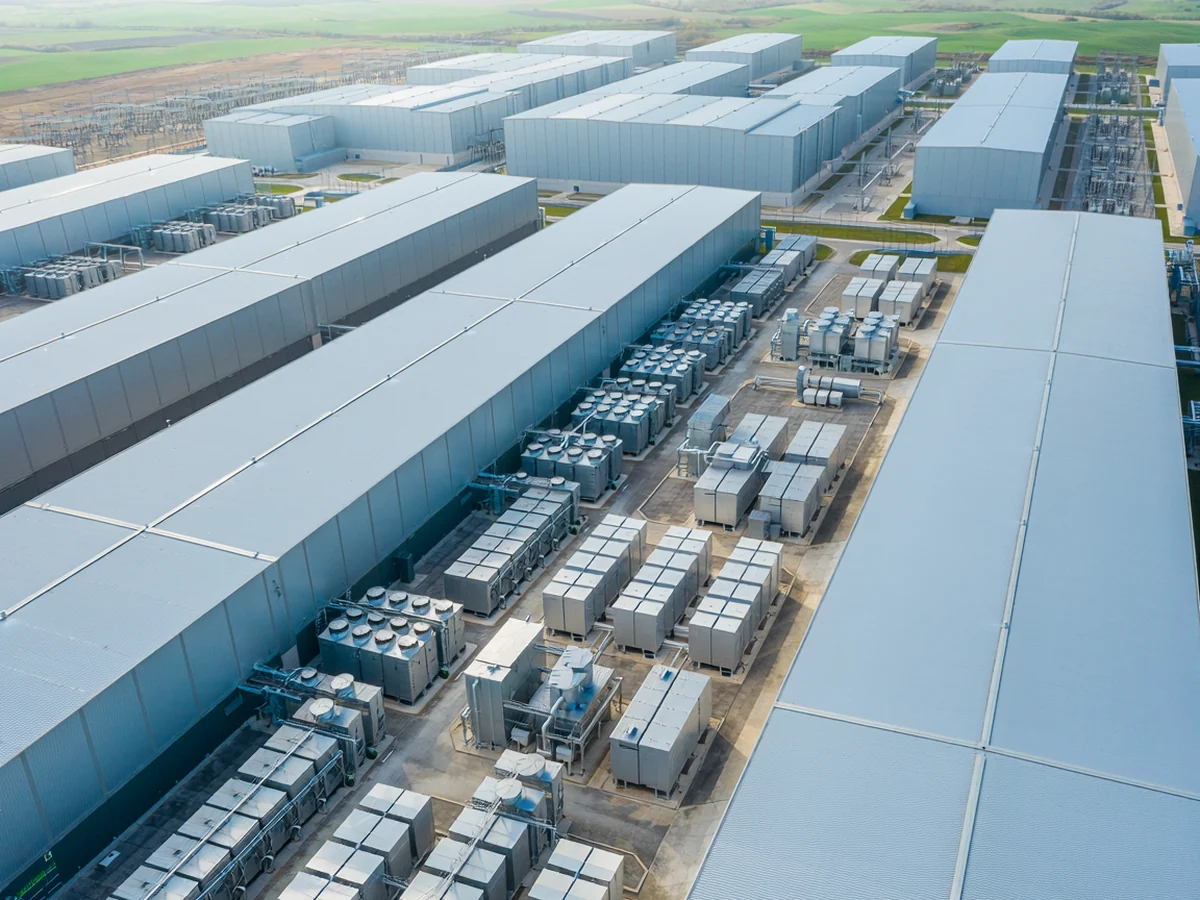
Traditional data centres, which host websites, email and business software, typically use tens of megawatts of power. AI data centres are on a completely different scale. Training and running frontier AI models requires hundreds of thousands of specialised chips working together, consuming enormous amounts of electricity. The largest AI facilities now draw power measured in gigawatts, comparable to large power stations or entire cities.
Tracking from space
Companies rarely publish full details about their data centres, so the research organisation Epoch AI built a database that tracks major AI data centres using high-resolution satellite images, permits, public documents and estimates of how such facilities are built. Cooling equipment, electrical substations and building outlines visible from space help estimate their power and computing capacity. Epoch notes that its figures are estimates with uncertainty.
The current leaders
In November 2026, Epoch estimated that the largest operating AI data centre by current IT power was Anthropic-Amazon New Carlisle in Indiana, at about 1,037 megawatts, followed by Colossus 2 in Memphis, built by Elon Musk's AI company, at about 946 megawatts, and OpenAI's Stargate Abilene in Texas at about 824 megawatts. Several other facilities run by Microsoft, Meta and Google are also approaching or exceeding the gigawatt scale.
Even bigger plans
Ranked by planned final capacity, Epoch's list is led by Microsoft's Fairwater site in Wisconsin, projected to reach about 2.3 gigawatts by 2028, followed by the expanded New Carlisle campus at about 1.9 gigawatts, OpenAI's Stargate site in New Mexico at about 1.75 gigawatts, Meta's Hyperion in Louisiana at about 1.6 gigawatts and Colossus 2 at about 1.5 gigawatts. Meta has said Hyperion is designed to grow to five gigawatts in the longer term.
What a gigawatt means
A gigawatt is a billion watts. According to Epoch, a single one-gigawatt site draws enough electricity to serve around a million US homes. The largest AI data centres therefore consume as much power as a mid-sized city. Supplying such amounts requires new power plants, transmission lines and substations, and utilities in several US states have reported record requests for power connections from data centre developers.
Built at record speed
Epoch found that among the facilities it tracked, the time from starting construction to reaching one gigawatt of facility power ranged from about one to three and a half years. xAI's Colossus projects in Memphis were built especially quickly, at times using temporary gas turbines for power, which drew criticism from local residents and environmental groups over air pollution. Speed has become a competitive advantage in the AI race.
The cost
Building and equipping a gigawatt-scale AI data centre can cost tens of billions of dollars, mostly for chips. The four largest US cloud and technology companies, Amazon, Google, Meta and Microsoft, together spent about 413 billion dollars on capital investment in 2025, much of it on AI infrastructure, according to analyses of their financial reports, up from about 224 billion dollars in 2024. Further increases were planned for 2026.
Mostly in America, but not only
Most of the largest AI data centres are in the United States, where land, power, capital and chips are most readily available. Large facilities are also being built elsewhere, including in China, Malaysia, India, Europe and the Gulf. In Abu Dhabi, the Stargate UAE campus, developed by G42 with OpenAI, Oracle, Nvidia and others, is planned as the first one-gigawatt cluster of a five-gigawatt UAE–US AI campus.
Local concerns
Giant data centres bring investment, construction jobs and tax revenue, but also concerns. Residents worry about electricity prices, water use for cooling, noise, air pollution from backup or temporary generators and the use of farmland. Some communities have welcomed data centres, while others have opposed them, and some states and countries have introduced rules on how data centres must pay for grid upgrades and source clean power.
Why it matters
The race to build ever-larger AI data centres shows how seriously companies are betting on AI's future and how physical the digital revolution has become. These facilities shape energy systems, local economies and the environment. Whether they deliver the expected returns, and whether they can be powered cleanly, are among the biggest questions for the AI industry and the communities that host it.
Sources & further reading
- Epoch AI · Largest AI data centers ranked by power capacity (November 2026) ↗
- Epoch AI · Introducing the Frontier Data Centers Hub ↗
- Yahoo Finance · AI data centers pass 1 GW ↗
Power figures are independent estimates and may differ from company figures. Photograph: original AI-generated illustration (Adobe Firefly). Reference organisations do not endorse this website.