The parts of a toilet
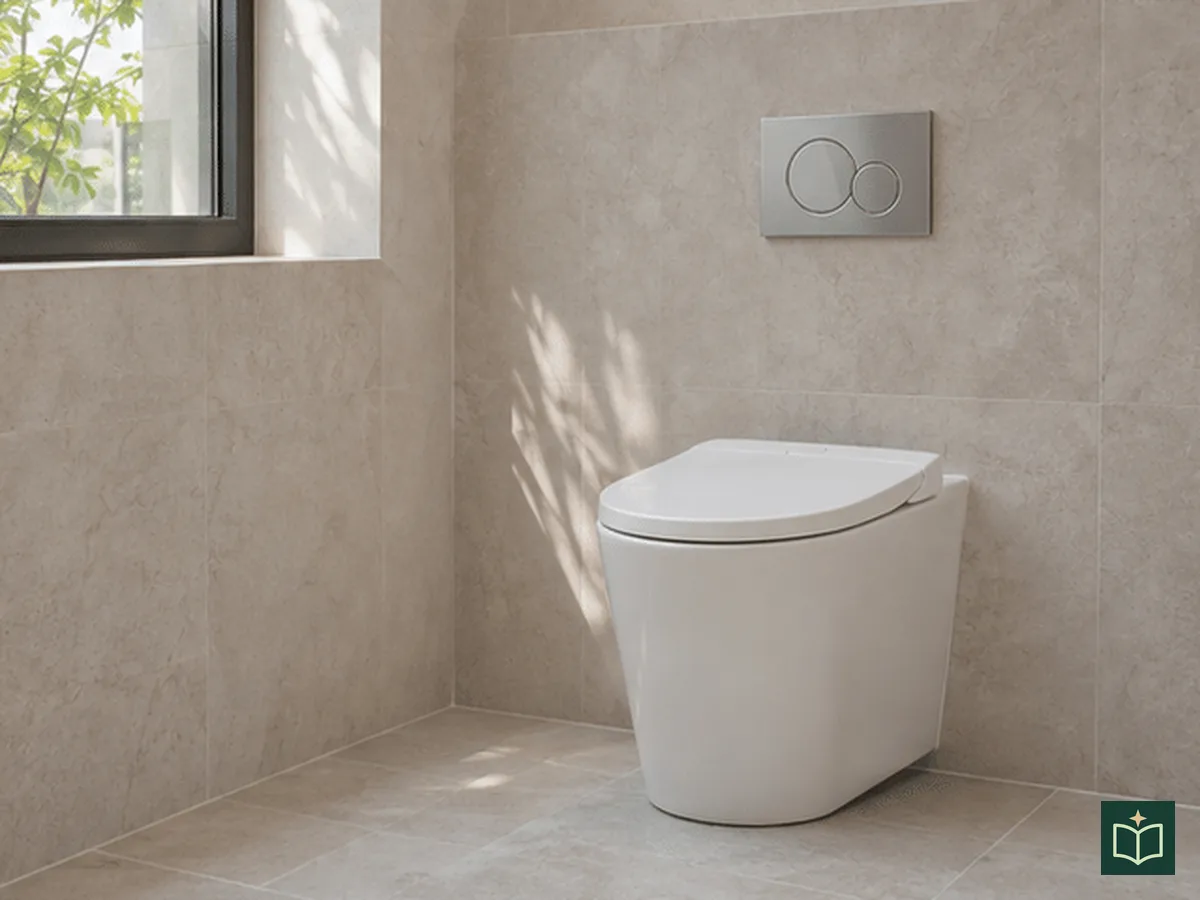
A typical toilet has two main parts. The cistern, the tank behind or above the bowl, stores water until it is needed. The bowl contains a permanent pool of water that sits in a curved channel moulded into the ceramic, called the trapway. That water does two jobs: it receives waste, and it forms a seal that stops sewer gases rising into the bathroom. Inside the cistern are a flush valve at the bottom, which releases water into the bowl, and a fill valve controlled by a float, which refills the tank. Most modern cisterns in the Gulf and Europe use push buttons; older designs use a lever and chain.
How the siphon works
A siphon is a tube that carries liquid over a high point and down to a lower one, driven by gravity. The trapway is shaped like this: it rises from the bowl, curves over and then drops to the drain. Normally the water in the bowl only reaches the top of the bend, so nothing flows. When you flush, several litres pour into the bowl within a couple of seconds, through holes under the rim and often a jet at the bottom. The water level rises quickly, spills over the bend and fills the downward leg completely. Once that leg is full, the falling water pulls everything behind it out of the bowl.
Gurgle and refill
The siphon keeps running until the bowl is nearly empty and air rushes into the trapway, breaking the column of water. That is the familiar gurgling sound at the end of a flush. Meanwhile, the falling water level in the cistern lowers the float, which opens the fill valve connected to the mains supply. Fresh water flows into the tank, and a small tube sends some of it into the bowl to restore the seal. When the float rises to the set level, it closes the valve. If a valve or seal is worn, water can trickle into the bowl constantly, a hidden leak that can waste hundreds of litres a day.
Counting the water
Flush volumes have fallen sharply. Many toilets installed before the 1990s used 13 litres or more each time. Building rules in many countries now require about 6 litres for a full flush, and dual-flush toilets add a half flush of around 3 litres. Imagine a household of four, each person flushing five times a day. With old 13-litre toilets, that is 260 litres a day. With dual flush, if each person uses one full and four half flushes, the total is 72 litres a day. Over a year, the difference is roughly 69,000 litres, a meaningful saving in water-scarce countries where much drinking water comes from desalination.
Where the ideas came from
Flushing toilets have a long history. Sir John Harington designed one for Queen Elizabeth I in the 1590s, and Alexander Cumming patented a valve closet with an S-shaped bend in 1775, the trap that kept smells out of homes. Reliable flush toilets spread with sewer systems in the nineteenth century. The dual-flush design was developed in Australia around 1980 by engineer Bruce Thompson, working with the manufacturer Caroma, to cut water use during droughts. Today there are several mechanisms. Siphonic toilets, common in North America, rely on a strong siphon. Washdown toilets, common in Europe and the Gulf, rely more on the force of the water itself.
Myths and practical points
A common belief is that wet wipes labelled flushable break down like toilet paper. Many do not, and they combine with fats to form blockages in pipes and sewers. Another myth is that a lower flush volume means weaker performance. Well-designed modern bowls use shape and water flow to clear waste with far less water than older models. Putting a brick in an old cistern to save water can backfire, because the reduced volume may not start a proper siphon, leading to double flushing. A simple dye test can reveal leaks: a few drops of food colouring in the cistern that appear in the bowl without flushing show a worn valve.
Sources & further reading
Figures are rounded and widely published; check the linked organisations for the latest editions. These organisations do not endorse this website.