A two-sided marketplace
A ride-hailing app does not own a fleet in the usual sense. It is a marketplace connecting two groups: riders who want trips and drivers, often independent, who choose when to work. The platform's job is to keep both sides satisfied at once. Riders want a car quickly at a fair price. Drivers want enough well-paid trips to make their time worthwhile. If there are too few drivers, waiting times stretch and riders leave. If there are too many, drivers sit idle and log off. Pricing is the main tool platforms use to balance the two groups minute by minute across a city.
Estimating the base fare
Before you confirm a trip, the app estimates its route and duration from maps, live traffic and past journeys. The base price usually combines a booking fee, a per-kilometre rate, a per-minute rate and a minimum fare, with surcharges for things such as airport pickups or tolls. Many apps now show an upfront fixed price instead of a meter, so the platform carries the risk if traffic is worse than predicted. In cities with regulated taxis, such as Dubai, authorities also set rules for licensed operators and partner fleets. The result is a starting fare before any demand adjustment is applied on top.
Matching riders and drivers
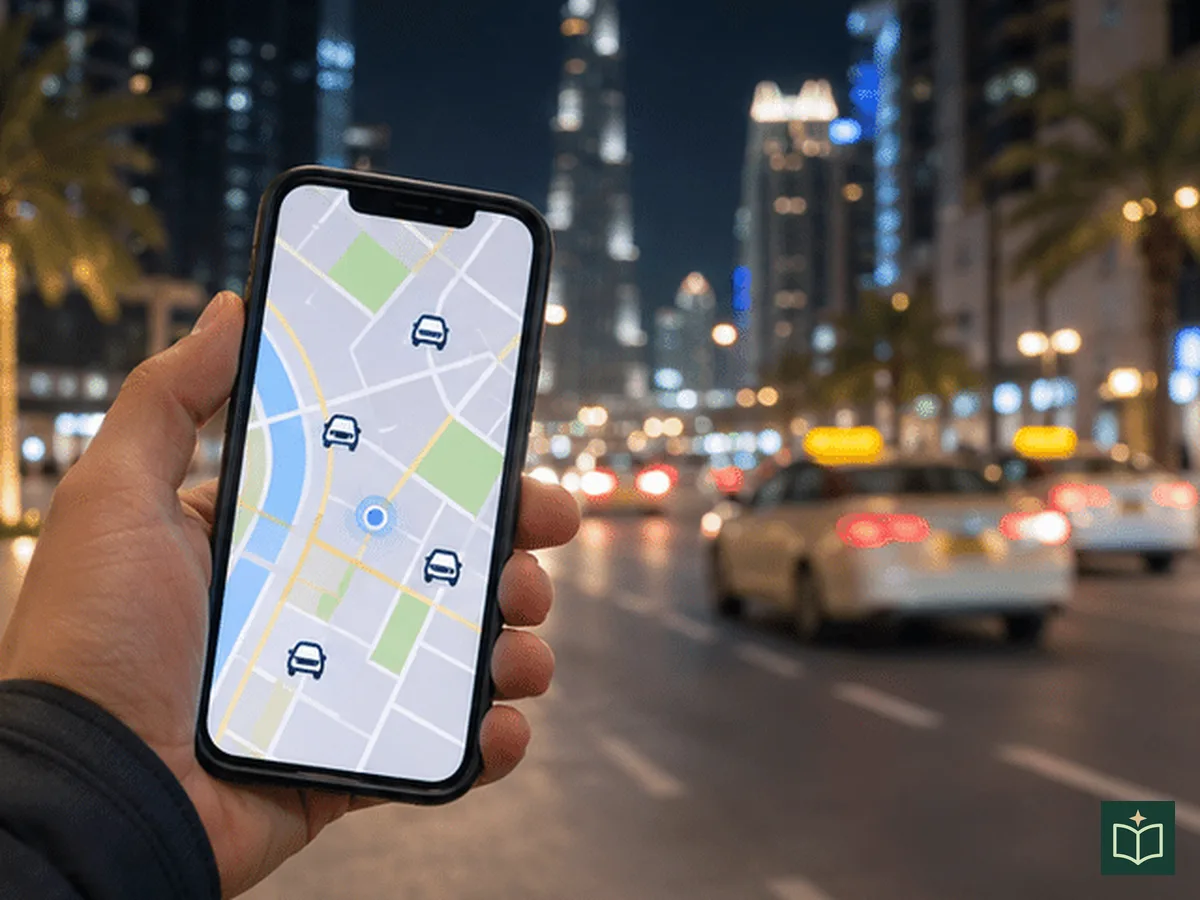
Matching is more than finding the nearest car. Systems estimate how long each available driver would take to reach the pickup, accounting for one-way streets and traffic. Many platforms batch requests over a few seconds and assign drivers to minimise total waiting across all riders, rather than serving each request greedily. They also consider drivers finishing a trip nearby. Algorithms forecast demand by area and time, using patterns such as rush hours, flights landing, prayer times, events and weather. These forecasts feed heat maps shown to drivers, nudging them towards busy areas before demand peaks, which can reduce the need for higher prices.
How surge pricing works
When ride requests in an area outnumber available drivers, the platform applies a multiplier or an extra fee. A trip that normally costs AED 30 with a 1.5 times multiplier would cost AED 45. The higher price does two things. It discourages some riders, who wait, walk or choose another option, and it attracts drivers from nearby areas and encourages others to log on. Economists describe this as letting price clear the market. Without it, the cars would still be scarce, but they would be allocated by luck, with longer waits for everyone. The surge usually fades as supply catches up or demand falls back.
History and criticism
Uber, founded in 2009, popularised surge pricing in the early 2010s, and many competitors adopted similar systems. Careem, launched in Dubai in 2012, grew into a regional rival before Uber bought it, and it continues to operate as a separate brand. Surge pricing has been controversial from the start. Critics say it can feel like price gouging during emergencies, and some platforms now cap multipliers during disasters. Others worry that opaque algorithms might charge different people different prices for reasons they cannot see. Regulators in several countries have examined pricing transparency, and some cities set limits on how high or how often fares can rise.
Common misconceptions
A common belief is that a surge simply pays drivers more. Whether it does depends on how the platform divides the fare; companies have changed these rules over time and practices differ by country. Another myth is that apps raise prices based on a phone's battery level or brand. Platforms have denied such practices, and the main drivers of price are time, location and the balance of supply and demand. Waiting a few minutes or walking a short distance out of a surge zone can lower a fare, because pricing is often set by small geographic areas. This article explains general mechanisms and is not a guide to any particular app.
Sources & further reading
Figures are rounded and widely published; check the linked organisations for the latest editions. These organisations do not endorse this website.