A common language for risk
After the Chernobyl accident in 1986, governments and the public struggled to judge how serious nuclear events were, as each country described them differently. In 1990 the International Atomic Energy Agency and the OECD's Nuclear Energy Agency introduced the International Nuclear and Radiological Event Scale, known as INES. It does for nuclear events roughly what magnitude scales do for earthquakes: it compresses complicated technical information into a single number that can be communicated quickly. The scale covers events at nuclear power plants and other facilities, and was later extended to include the transport, storage and use of radioactive sources, such as lost industrial or medical sources.
Incidents and accidents
The scale runs from 0 to 7. Level 0, a deviation, has no safety significance and is described as below the scale. Levels 1 to 3 are incidents: an anomaly, an incident and a serious incident. Levels 4 to 7 are accidents: an accident with local consequences, an accident with wider consequences, a serious accident and a major accident. The dividing line reflects real effects. An accident involves significant harm to people, the environment or the reactor core, such as fuel melting or a release of radioactivity beyond the site. An incident involves failures of safety systems or minor exposures that did not cause such harm.
How a level is chosen
Events are rated against three areas of impact. The first is people and the environment, including radiation doses and the amount of radioactive material released. The second is radiological barriers and control inside a facility, such as damage to fuel or contamination within a building. The third is defence in depth, which asks how many layers of protection failed, even if nothing escaped. An event's rating is the highest level it reaches in any area. Each step represents roughly a tenfold increase in severity. A level 5 event is therefore not a little worse than a level 4 event, but about ten times worse.
Benchmarks from history
Only two events have been rated at level 7: Chernobyl in 1986 and Fukushima Daiichi in 2011. Fukushima was initially rated level 5 and raised to 7 a month later, once the scale of the releases became clearer, which shows how early ratings can change. The 1957 explosion at the Kyshtym waste storage facility in the Soviet Union is rated level 6. Level 5 includes the 1979 core melt at Three Mile Island in the United States, the 1957 Windscale fire in Britain and the 1987 Goiânia incident in Brazil, where an abandoned medical source was broken open. The 1999 criticality accident at Tokaimura in Japan is rated level 4.
What the scale does not do
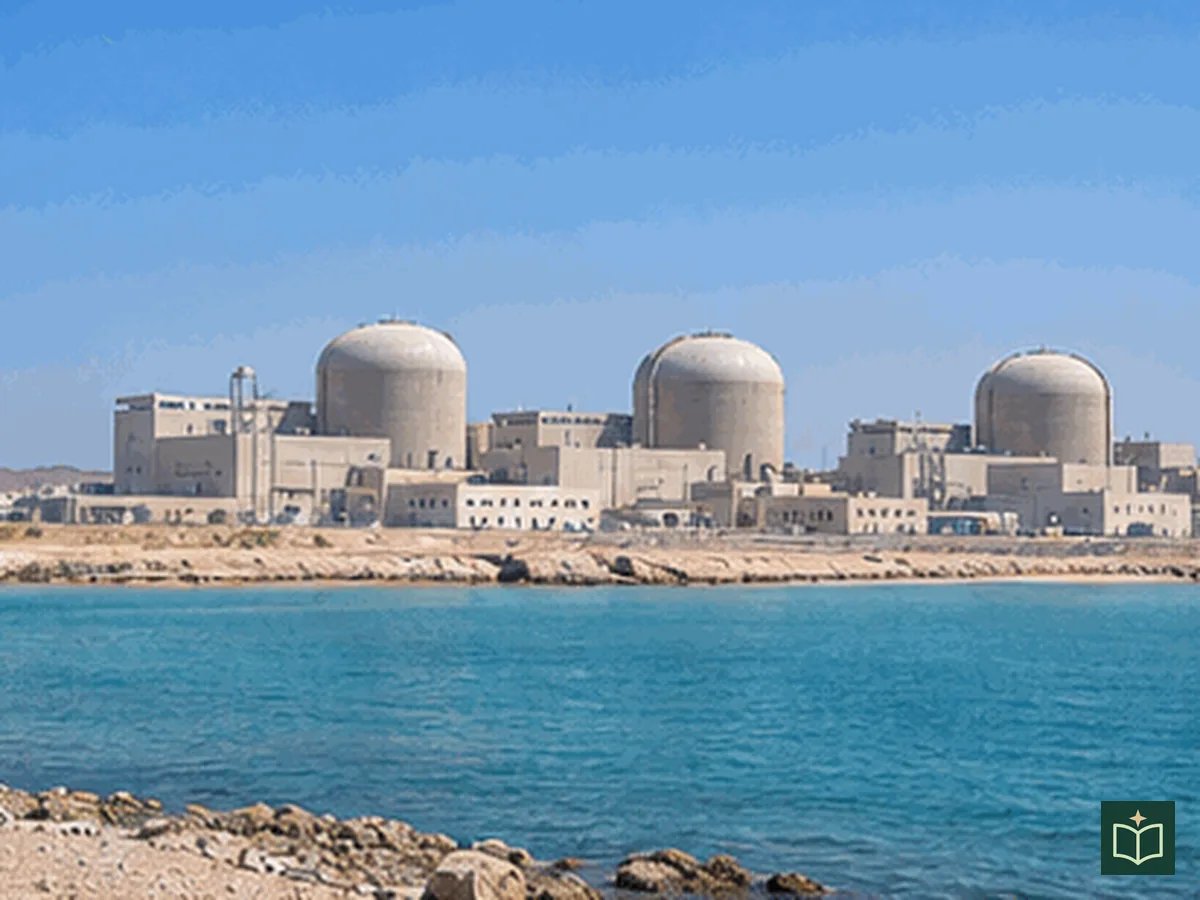
INES is a communication tool, not an emergency system. Protective actions, such as evacuation or sheltering, are decided by national authorities based on measurements, not on the rating. Most reported events sit at level 0 or 1, and many are rated only after investigation, sometimes weeks later. The scale is not meant for comparing safety records between countries or plants, since reporting practices vary. Nor does a level, on its own, describe health effects, which depend on where people were and for how long. The UAE's four-unit Barakah plant, regulated by the Federal Authority for Nuclear Regulation, operates within this international framework of event reporting and review.
Reading the headline
When a nuclear event is reported, first find the INES level and whether it is provisional. A level 0 or 1 event usually means a procedural or equipment problem with no effect on the public. Level 2 or 3 indicates a more significant failure of safety systems or worker exposure, still without major off-site impact. Level 4 and above signals real damage or releases. Then look for measurements: radiation readings near the site, any instructions to residents and statements from the national regulator, which are more useful than the number alone. Remember that each level is roughly ten times more severe, so the gaps between levels widen sharply at the top.
Sources & further reading
- IAEA · International Nuclear and Radiological Event Scale ↗
- OECD Nuclear Energy Agency ↗
- Federal Authority for Nuclear Regulation (UAE) ↗
Figures are rounded and widely published; check the linked organisations for the latest editions. These organisations do not endorse this website.