The problem of standing still
Plants form the base of almost every food chain, which makes them the target of a vast army of consumers, from camels and goats to caterpillars, aphids and fungi. Unlike animals, they cannot run or hide. Over hundreds of millions of years they have evolved defences instead, and these fall into a few broad strategies. Some are physical, making a plant hard to eat. Some are chemical, making it unpleasant or dangerous. Some are always present; others switch on only when an attack begins, saving energy until it is needed. And some plants enlist allies. Much of what makes herbs, spices, tea and coffee distinctive began as a defence.
Armour: thorns, hairs and tough leaves
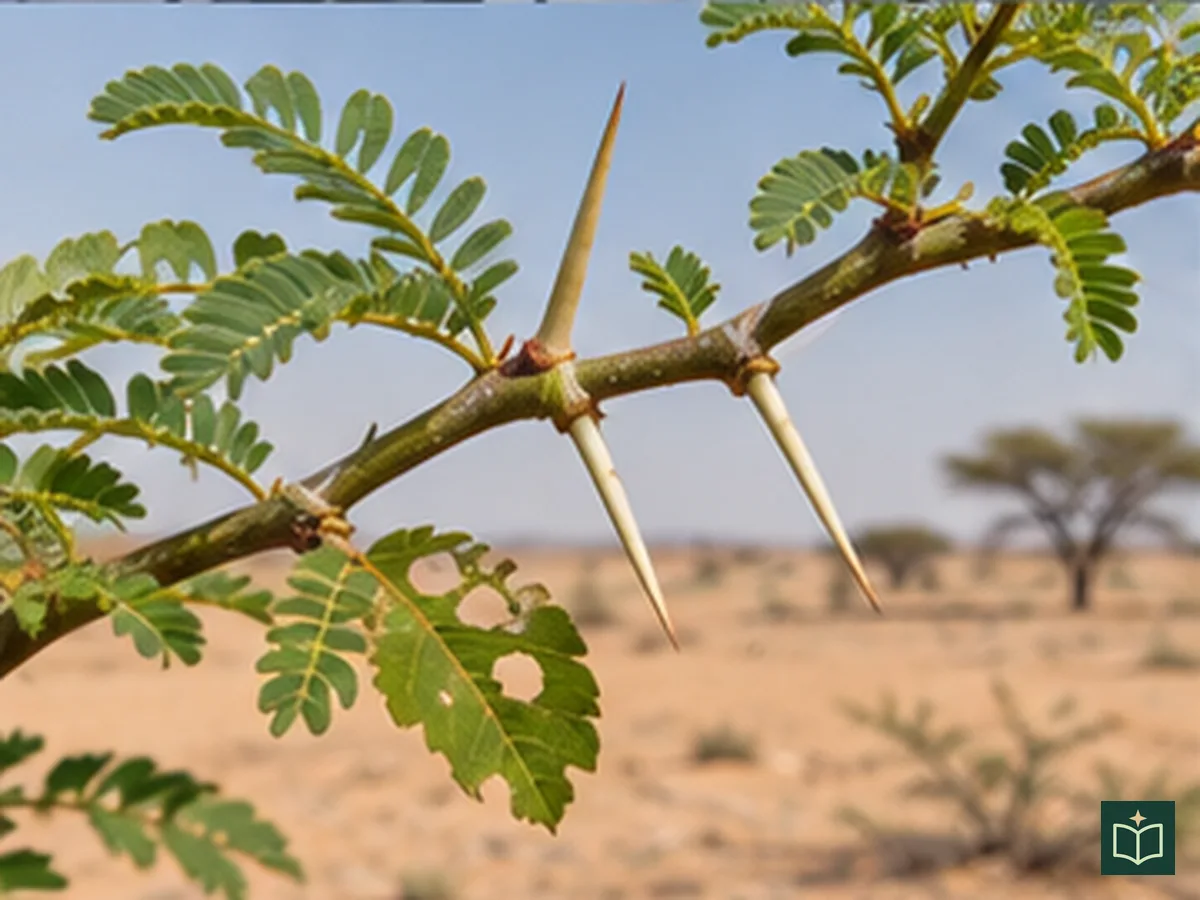
The most obvious defences are physical. Thorns, spines and prickles deter large grazers; the acacias of Africa and Arabia carry long, sharp thorns, and some grow more of them on branches within reach of browsing animals. Many leaves are covered with fine hairs, called trichomes, that hinder small insects or release sticky or irritating substances when touched. A nettle's sting comes from tiny hairs that snap and inject chemicals. Grasses accumulate silica, a glass-like mineral that wears down grazers' teeth. Thick, waxy or leathery leaves, typical of many desert shrubs, are hard to chew and digest. Each barrier makes feeding slower and less rewarding for the attacker.
Poisons and bitter tastes
Chemical defences are even more varied. Alkaloids such as nicotine and caffeine act as nerve poisons to insects. Tannins bind proteins and make leaves hard to digest, giving unripe fruit its dry, puckering taste. Cyanide-releasing compounds in cassava and bitter almonds are stored harmlessly until cells are crushed. The Sodom apple, Calotropis procera, a familiar shrub on disturbed ground across the UAE, has a milky sap containing compounds toxic to the heart, which is why grazing animals usually leave it alone. Many such chemicals are bitter, a taste that animals, including people, have evolved to treat as a warning. Humans have also turned many into flavourings and medicines.
Defences on demand
Making toxins all the time is costly, so many plants mount stronger defences only when attacked. When a caterpillar chews a tomato leaf, damaged cells release signals, including a hormone called jasmonic acid, that spread through the plant and switch on defence genes. Within hours the leaves can produce proteins that interfere with the insect's digestion. Some plants even recognise compounds in an attacker's saliva and tailor their response. Willows use a related signalling molecule, salicylic acid, to coordinate defences against microbes; compounds from willow bark inspired the development of aspirin. Induced defences explain why a plant that looks unharmed can become far less palatable after a first attack.
Calling bodyguards and warning neighbours
Damaged plants also release blends of airborne chemicals that act like a distress call. Maize attacked by caterpillars emits scents that attract parasitic wasps, which lay their eggs inside the caterpillars. Lima beans infested with spider mites release compounds that draw predatory mites. Some acacias go further, housing and feeding colonies of aggressive ants that attack any animal touching the tree. Neighbouring plants can detect these airborne signals too. Experiments have repeatedly shown that undamaged plants exposed to the scent of attacked neighbours prime their own defences and respond faster when attacked themselves. Whether this is true communication or simply eavesdropping remains debated, but the effect itself is well documented.
An evolutionary arms race
Plant defences have driven an evolutionary arms race. Insects evolve ways to detoxify or avoid poisons, and some turn them to their own advantage: monarch caterpillars feeding on milkweeds, relatives of the Sodom apple, store the plants' heart toxins and become poisonous to birds. Plants evolve new compounds in turn. The contest shapes agriculture too. Many crops have had their bitter defences bred out, making them tastier but more vulnerable to pests, so farmers rely on pesticides or on breeding resistance back in. Researchers are exploring ways to harness natural defences, such as planting crops alongside species whose scents repel pests or attract predators, to grow food with fewer chemicals.
Sources & further reading
Figures are rounded and widely published; check the linked organisations for the latest editions. These organisations do not endorse this website.