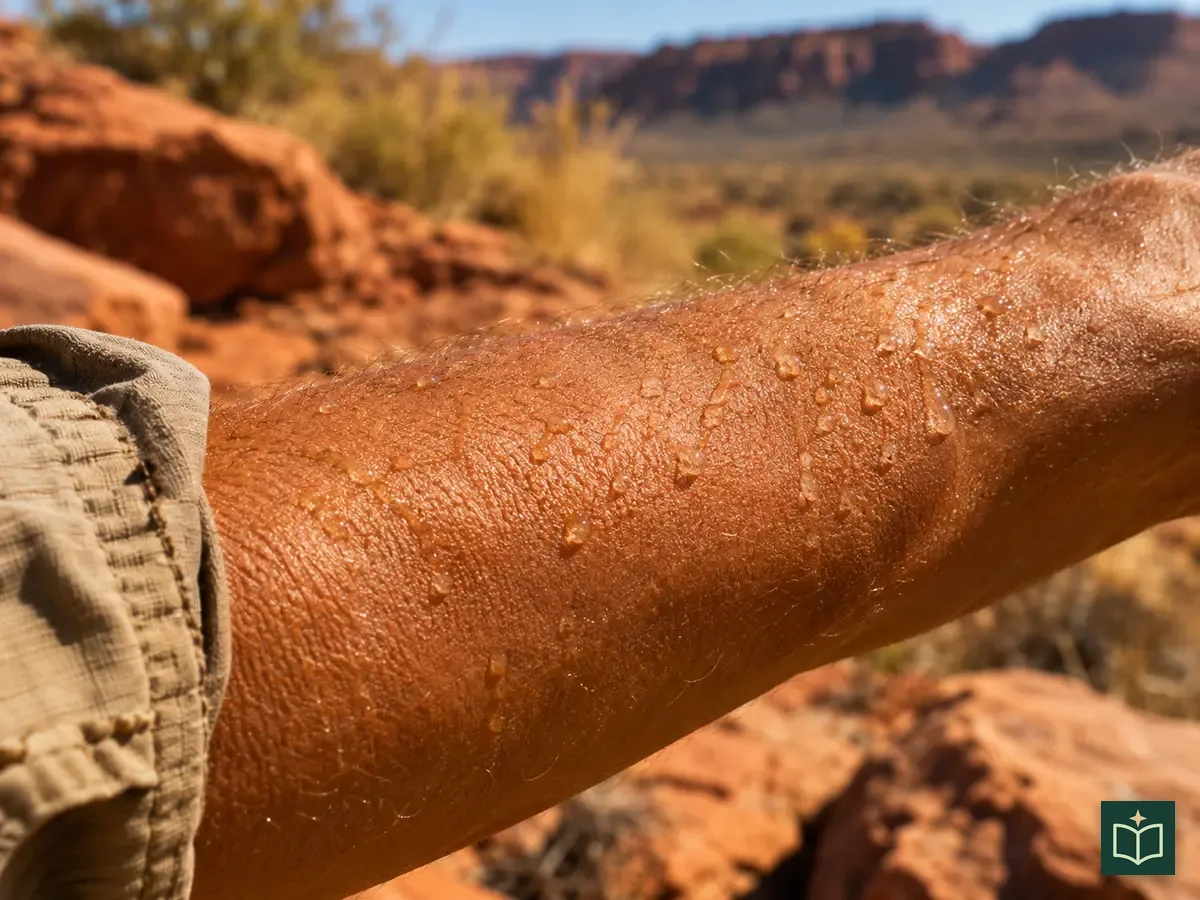
Built for heat loss
Humans are unusual among mammals in how heavily we rely on sweating. Most of our skin is covered with eccrine sweat glands, two to four million in total, and our relatively hairless bodies let air reach the skin easily. Many other animals pant, seek shade or wallow in mud instead. Scientists think this sweating ability helped early humans stay active during the heat of the day. Our core temperature needs to stay close to 37°C; a rise of just a few degrees begins to impair the brain and organs. The body generates heat constantly through metabolism and much more during exercise, so it needs reliable ways to get rid of it.
How evaporation removes heat
Sweat itself is mostly water with a little salt. The cooling comes from physics rather than from the fluid. For water molecules to escape as vapour, they need energy, and they take it from the surface they leave behind, in this case the skin. Each litre that evaporates carries away roughly 2,400 kilojoules of heat. When the air is cooler than the skin, the body can also lose heat by radiation and by warming the air around it. But once the air temperature rises above about 35°C, those routes stop working or even reverse, and evaporation becomes almost the only way to stay cool.
Why humidity changes everything
Evaporation depends on how much water vapour the air already holds. In dry desert air, sweat vanishes quickly and cools efficiently, which is why a dry 42°C day inland can feel more bearable than a humid 38°C day on the coast. When the air is close to saturated, sweat simply pools and drips, carrying little heat away. Scientists use a measure called the wet-bulb temperature, taken with a thermometer wrapped in wet cloth, to capture this combined effect. Around the Gulf, summer evenings near the sea can combine high heat with very high humidity, conditions in which outdoor work and exercise call for particular care and regular breaks.
How much we lose
Sweat rates vary widely. A resting person in mild weather may lose under half a litre a day without noticing. During hard physical work or sport in the heat, rates commonly exceed one litre per hour, and highly trained, heat-acclimatised athletes can produce even more. Sweat also contains sodium, so very heavy sweating over many hours can deplete salt as well as water. Bodies adapt to heat over roughly one to two weeks of gradual exposure: people begin sweating earlier, produce more sweat and lose less salt in it. This acclimatisation is one reason why newcomers to hot climates are advised to build up outdoor activity slowly.
Myths about sweat
Sweat itself does not smell. Odour appears when bacteria on the skin break down substances released by apocrine glands, concentrated in the armpits and groin. Heavy sweating is also not a reliable sign of fitness or of ‘toxins leaving the body’; the kidneys and liver handle waste removal, while sweat’s main job is temperature control. Nor does feeling less sweaty mean you are safe. In very dry heat, sweat may evaporate so fast that you barely notice it while still losing substantial fluid. Thirst lags behind need, so drinking regularly before feeling parched is sensible during long periods outdoors in summer heat.
When cooling fails
If heat gain outpaces heat loss, body temperature climbs. Heat exhaustion brings heavy sweating, weakness, dizziness, nausea and headache. Heatstroke is more serious: core temperature can exceed 40°C, confusion sets in, and sweating may even stop. It is a medical emergency requiring immediate cooling and professional care. The World Health Organization identifies heat as a growing health risk worldwide, particularly for older people, infants, outdoor workers and those with chronic illness. Shade, hydration, lighter clothing, rest breaks and avoiding the hottest hours all help the body’s cooling system work. Understanding that evaporation is the key explains why airflow from a fan helps, and why humid heat is so draining.
Sources & further reading
Figures are rounded and widely published; check the linked organisations for the latest editions. These organisations do not endorse this website.