One organ, two circuits
The heart is a muscle roughly the size of a clenched fist, sitting behind the breastbone and tilted slightly to the left. It is best understood as two pumps side by side. The right side receives blood that has delivered its oxygen to the body and sends it a short distance to the lungs, where it picks up oxygen and releases carbon dioxide. The left side receives that freshly oxygenated blood and pumps it out to every other organ through the aorta, the body’s largest artery. Because the left side must push blood around the whole body, its main pumping chamber has a much thicker muscular wall than the right.
Four chambers and four valves
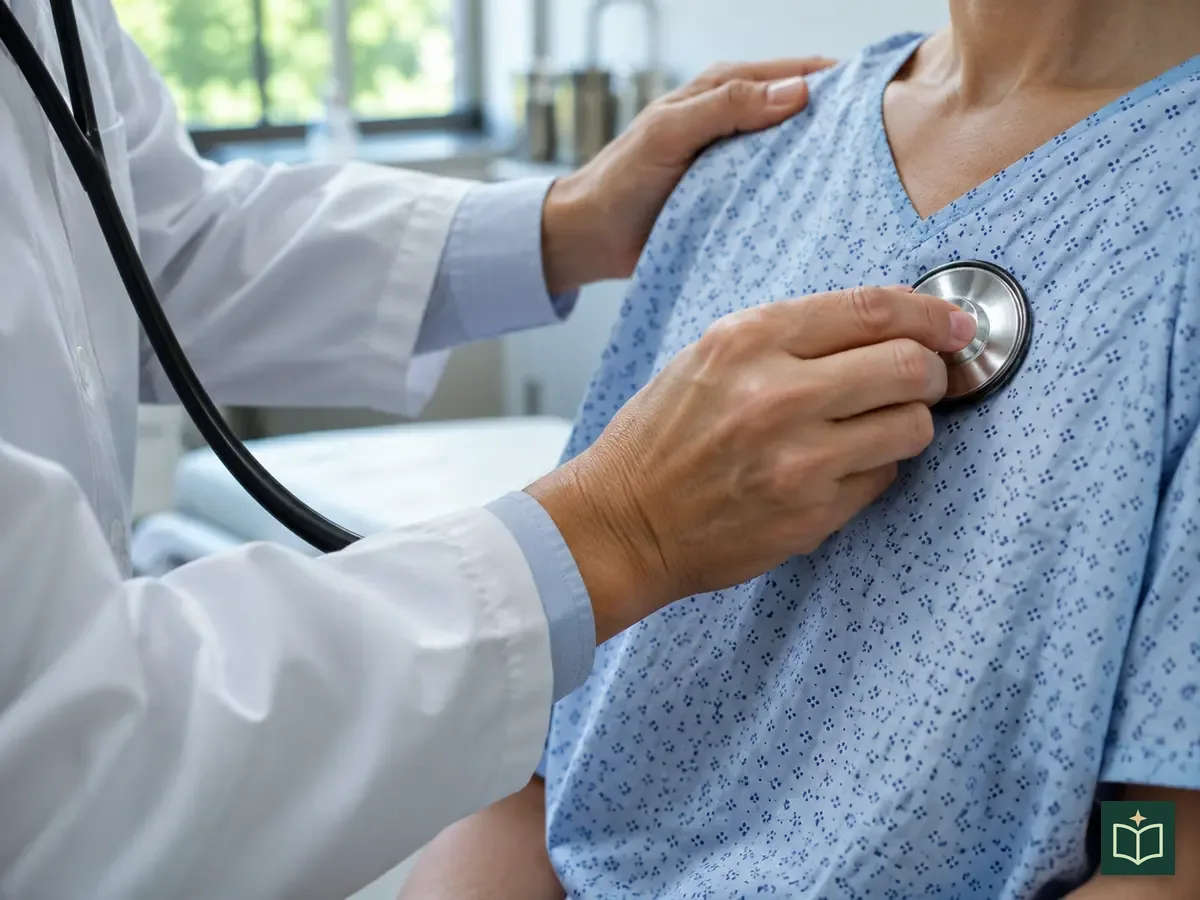
Each side of the heart has two chambers. The upper chamber, the atrium, collects incoming blood; the lower chamber, the ventricle, does the heavy pumping. Four valves keep the flow moving one way. Between each atrium and ventricle sits a valve that opens to let blood in and snaps shut when the ventricle contracts. Two more valves guard the exits to the lungs and to the aorta. The familiar ‘lub-dub’ heard through a stethoscope is not the muscle itself but the sound of these valves closing: first the inlet valves as the ventricles begin to squeeze, then the outlet valves as they relax.
The heart’s own electricity
Unlike the muscles of the arms or legs, the heart does not need a signal from the brain to contract. A small cluster of specialised cells in the right atrium, the sinoatrial node, fires electrical impulses on its own and acts as a natural pacemaker. Each impulse spreads across the atria, causing them to contract, then pauses briefly at a relay station called the atrioventricular node. That delay gives the ventricles time to fill before the signal races down specialised fibres and makes them contract from the bottom up, squeezing blood upwards and out. The nervous system and hormones such as adrenaline can speed this rhythm up or slow it down.
The work in numbers
At rest, an adult heart typically beats 60 to 100 times a minute and pumps around five litres of blood each minute, roughly the body’s entire blood volume. During intense exercise, output can rise four- or fivefold. Over a day that amounts to about 100,000 beats; over a long life, beats run into the billions. The heart muscle never fully rests, so it needs its own supply of oxygen, delivered by the coronary arteries wrapped around its surface. In hot climates, the heart also works harder on summer days, because more blood is directed to the skin to help shed heat, while sweating gradually reduces blood volume.
From Galen to Harvey
For many centuries, physicians followed ideas traced to the Roman-era physician Galen, who believed blood was continuously made by the liver and consumed by the body. In the 13th century, the Arab physician Ibn al-Nafis described blood passing through the lungs between the right and left sides of the heart, an important correction. In 1628, the English physician William Harvey published measurements showing that the heart pumps far more blood each hour than the body could possibly manufacture, so the same blood must circulate. The electrocardiogram, developed in the early 20th century, later made the heart’s electrical activity visible, and it remains one of medicine’s most widely used tests.
When the rhythm or supply fails
Cardiovascular disease is the leading cause of death worldwide, according to the World Health Organization. Many heart attacks occur when a coronary artery narrowed by fatty deposits becomes blocked, starving part of the muscle of oxygen. Problems can also arise in the electrical system, producing irregular rhythms such as atrial fibrillation, or in the valves. A common misconception is that a heart attack and cardiac arrest are the same thing; a heart attack is a blockage, while cardiac arrest is a sudden electrical failure in which the heart stops pumping effectively. Chest pain, breathlessness or fainting warrant urgent medical attention, and regular check-ups help catch risks early.
Sources & further reading
Figures are rounded and widely published; check the linked organisations for the latest editions. These organisations do not endorse this website.