Hearing without understanding
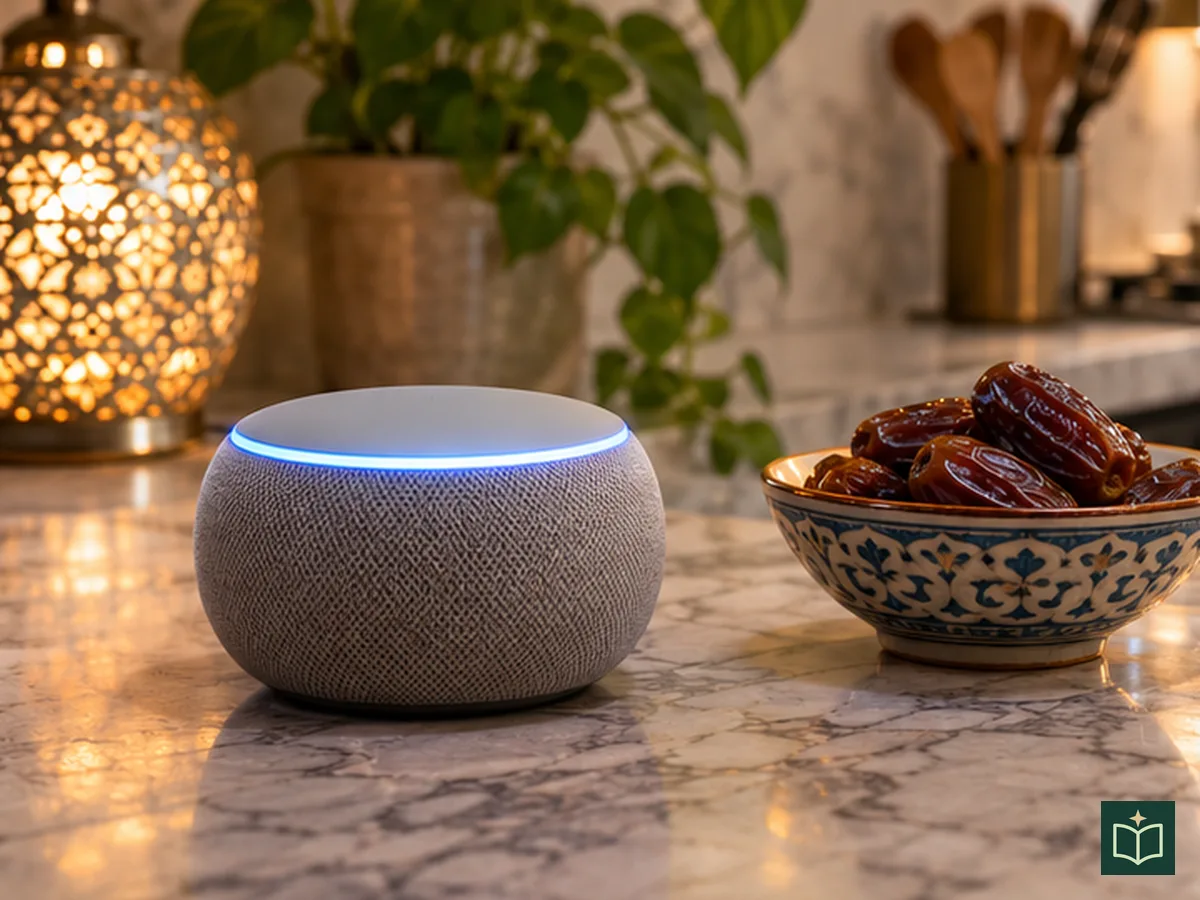
Smart speakers and voice assistants seem to listen all the time, and in a narrow sense they do. Their microphones are always on unless muted. But the device is not trying to understand everything you say. Full speech recognition is too demanding to run continuously on a cheap, low-power gadget. Instead, it runs a much simpler task called keyword spotting: deciding, moment by moment, whether someone has just said its wake word. Until that happens, the sound passes through a short memory buffer and is overwritten within seconds. Only once the wake word is detected does the device begin the expensive work of understanding a request, usually with help from powerful servers.
A tiny detector
The wake-word detector is a small neural network, trained on many thousands of recordings of people saying the word in different voices, accents and rooms, plus plenty of recordings of everything else. It often runs on a dedicated low-power processor that can stay awake while the main chip sleeps. Audio is sampled, typically 16,000 times a second, and turned into a picture of how the sound’s frequencies change over time. The network scores this continuously. Some systems use two stages: a very cheap first check, then a larger model that confirms the match before waking the rest of the device. Several microphones help by focusing on the direction of a voice and suppressing echoes.
What happens next
When the wake word is confirmed, the speaker typically lights up or makes a sound, then streams audio, often including a fraction of a second from before the wake word, to the company’s servers. There, larger models check the wake word again, convert speech to text, interpret the request and produce a reply, which is sent back and spoken aloud. The amount of data is modest. Speech sampled 16,000 times a second at 16 bits per sample produces 32 kilobytes a second before compression, so a two-second buffer holds about 64 kilobytes. Many newer devices handle simple commands, such as setting timers or controlling lights, entirely on the device without sending audio anywhere.
False wakes and stored clips
No detector is perfect. Words that sound similar to the wake word, voices on television or overlapping conversation can trigger it accidentally, after which a snippet of private speech may be uploaded. Manufacturers tune detectors to balance false wakes against missed ones, because a speaker that ignores its owner is also a failure. In 2019 reports revealed that several companies used human contractors to listen to a sample of recordings to improve accuracy, often without users realising. Following criticism, companies made human review optional or paused it and added controls to view and delete recordings. Policies continue to change, so it is worth checking the privacy settings of any device you own.
Controls that matter
Most speakers have a physical mute button that disconnects the microphones electrically, usually shown by a red light; software cannot override it on well-designed devices. Users can typically review and delete their voice history, set it to delete automatically after a period, and opt out of having recordings used to improve the service. Placing a speaker away from bedrooms and limiting which accounts and purchases it can access also reduces risk. In multilingual Gulf households, assistants that understand Arabic and English have become common, and some can recognise individual voices to personalise answers, which is convenient but means the system stores a voice profile for each person.
Where voice assistants are heading
Voice assistants are being rebuilt around large language models, which can hold more natural conversations and handle complicated, multi-step requests. That makes the cloud more central, because such models are large, although phones and some speakers are gaining chips powerful enough to run smaller versions locally. The basic privacy architecture is likely to remain: a small, private gatekeeper on the device, and heavier processing only once it opens the gate. Understanding that split helps separate realistic concerns, such as accidental recordings and data retention, from the common but inaccurate belief that the device is streaming every conversation in the home to a server around the clock.
Sources & further reading
Figures are rounded and widely published; check the linked organisations for the latest editions. These organisations do not endorse this website.