Wave power
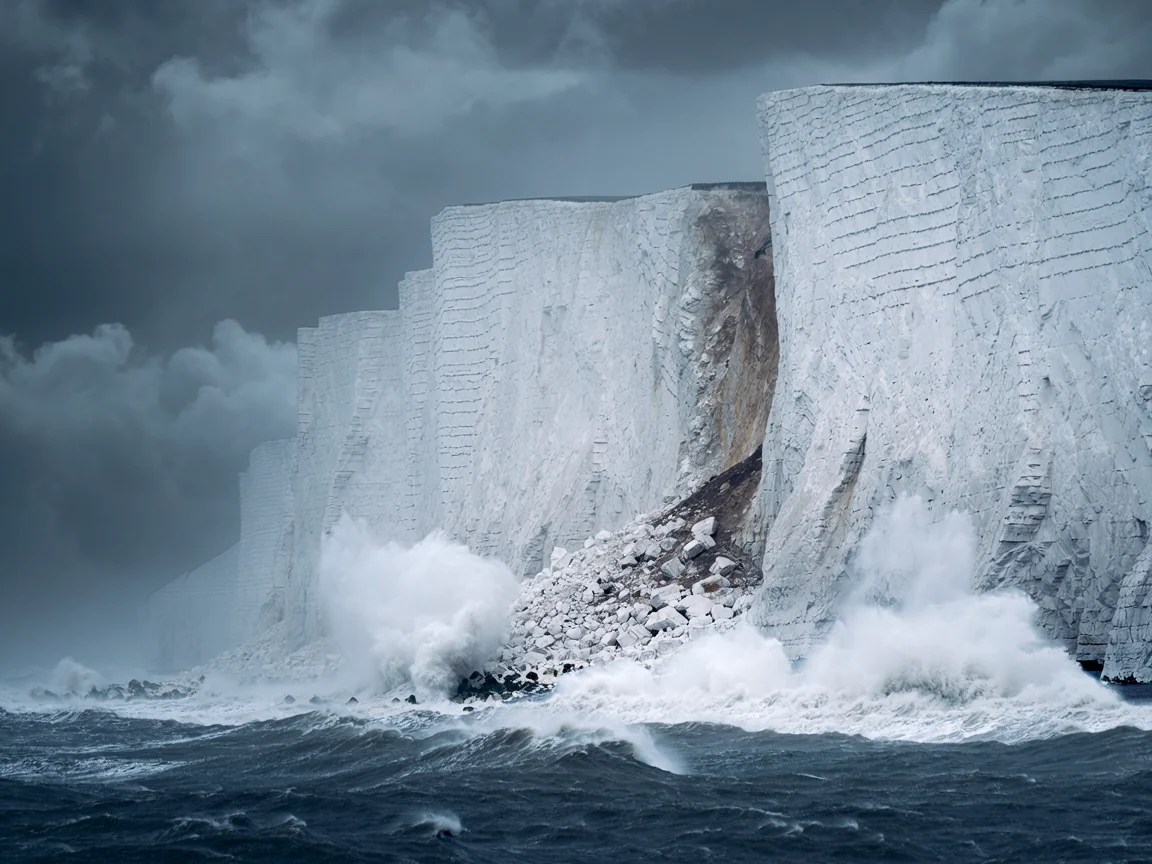
Waves erode cliffs by hydraulic action, forcing air and water into cracks; by abrasion, hurling sand and pebbles at the rock; and by dissolving some rocks such as chalk and limestone.
Undercutting
Most erosion happens near the high-tide line. Waves cut a wave-cut notch; when the overhanging rock becomes unstable, it collapses. Waves then remove the debris, leaving a wave-cut platform as the cliff retreats.
Landforms
Where rock is jointed or faulted, waves carve caves. Caves on both sides of a headland can join to form an arch; when the arch collapses, a stack remains. Famous examples include the Twelve Apostles in Australia and Old Harry Rocks in England.
Living with retreat
Soft cliffs made of clay or glacial deposits can retreat quickly, threatening homes and roads. Sea walls and rock armour can slow erosion locally but may increase it elsewhere by cutting off sediment supply.
Sources & further reading
Photograph: original AI-generated illustration (Adobe Firefly). Reference organisations do not endorse this website.