A tidal maze
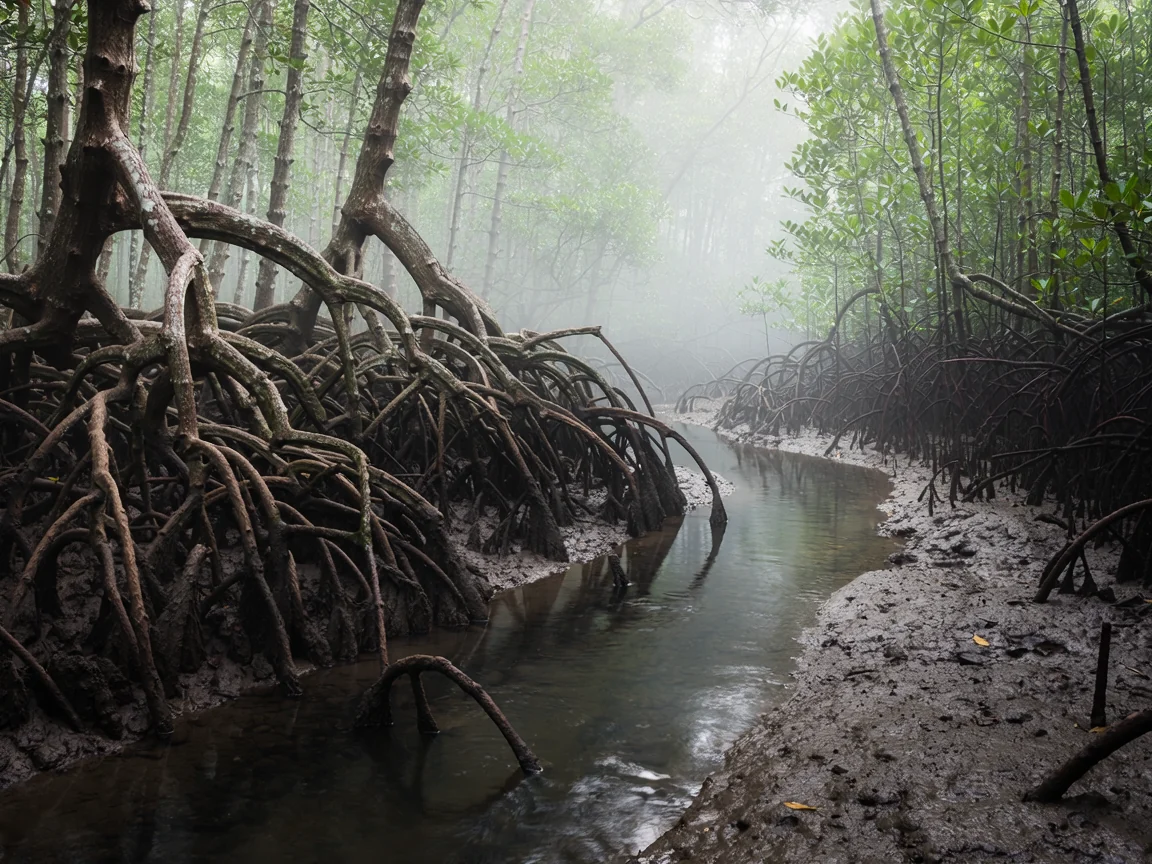
The Sundarbans is a vast network of tidal rivers, creeks, mudflats and islands covered with mangrove forest. Twice a day, tides flood much of the forest, and the land is constantly reshaped by sediment and currents.
Adapted trees
Mangroves tolerate salt water and waterlogged soils. Many species send up breathing roots, called pneumatophores, from the mud. The name Sundarbans may come from the sundari tree, a common species.
Tigers and wildlife
The forest is home to Bengal tigers adapted to swimming and hunting in tidal forest, as well as saltwater crocodiles, river dolphins, deer and many birds. Parts of the forest in both countries are UNESCO World Heritage Sites.
Threats
Cyclones, rising seas, increasing salinity, reduced freshwater flow and human pressure threaten the Sundarbans. Millions of people live around the forest, relying on fishing, honey and timber.
Sources & further reading
Area figures vary by definition. Photograph: original AI-generated illustration (Adobe Firefly). Reference organisations do not endorse this website.