How they form
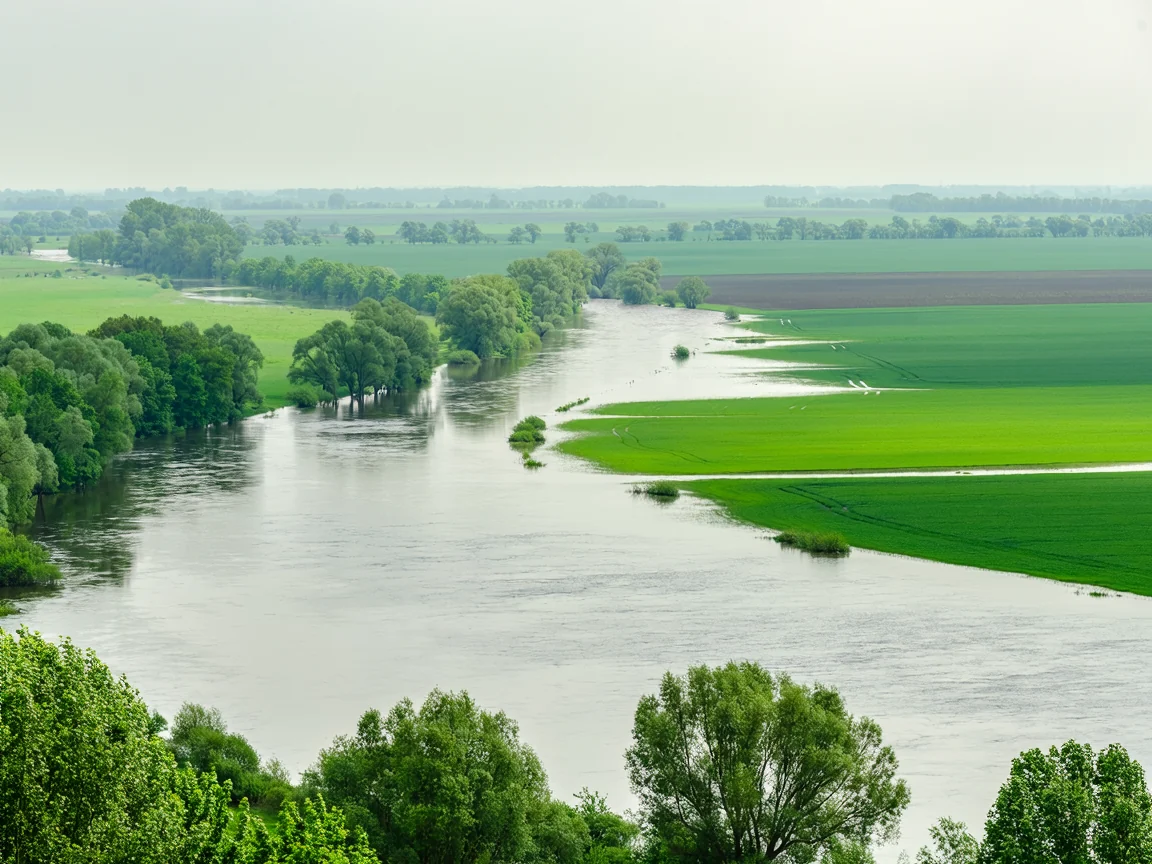
When a river floods, water spreads over the surrounding land and slows down, dropping sediment. Coarser material settles near the channel, forming natural levées, while fine silt and clay spread farther. Over thousands of years, floodplains grow wide and flat.
Fertile ground
Regular deposits of nutrient-rich silt made floodplains such as those of the Nile, Indus, Ganges and Yangtze centres of early agriculture and civilisation.
Natural flood control
Floodplains act as sponges, storing water during floods and releasing it slowly. Wetlands on floodplains support fish, birds and plants, and recharge groundwater.
Living with floods
Building homes and cities on floodplains increases flood risk. Many countries use flood maps, restrict development and restore floodplains by setting back embankments to give rivers room.
Sources & further reading
Photograph: original AI-generated illustration (Adobe Firefly). Reference organisations do not endorse this website.