The problem with a plastic card
A traditional card carries its long number, expiry date and name in plain sight, and the same details travel through the shop's systems with every purchase. If a retailer's database is breached, or a skimmer is fitted to a terminal, those details can be copied and used elsewhere, especially online. The chip in modern cards already made counterfeiting harder by producing a code for each transaction. Mobile wallets go a step further. They remove the real card number from the checkout entirely, so the merchant never sees it, never stores it and cannot lose it. What the shop receives instead is a substitute that is worthless outside a narrow set of circumstances.
What a token is
When a card is added to a phone wallet, the wallet sends the details once, encrypted, to the card network. The network and the issuing bank verify that the card is genuine and that the person adding it is the cardholder, sometimes with a code sent by text or a call to the bank. If all is well, the network's token service creates a device account number, or token. It looks like a card number and fits the same payment rails, but it is linked to that specific phone or watch. The mapping between token and real card is held in a secure vault run by the network or the bank, not on the phone and not by the shop.
The one-time code
A token alone would still be a reusable number, so every payment also carries a cryptogram. This short code is calculated from secret keys, the transaction amount and a counter that changes each time. On many phones the keys sit in a secure element, a tamper-resistant chip separate from the main processor; others use a cloud-based method with keys that are replenished regularly. The wallet only produces a cryptogram after the user unlocks it with a fingerprint, face or passcode. When the payment reaches the network, the cryptogram is checked, the token is swapped for the real card number and the request is forwarded to the bank for approval in the usual way.
A tap at a Dubai café
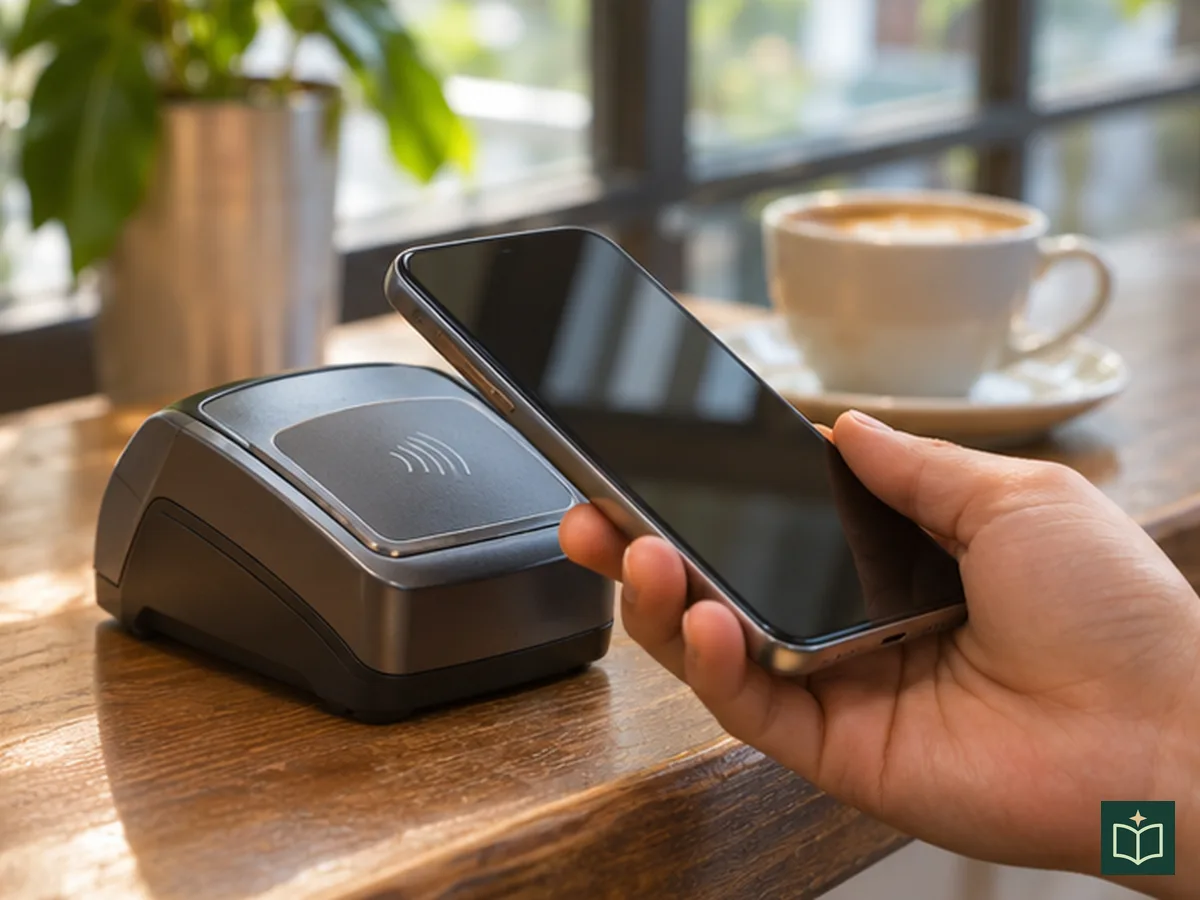
Picture a customer paying AED 18 for coffee by holding a phone near the terminal. The terminal receives the token, the cryptogram and the amount, exactly as it would from a contactless card. The café's payment processor sees only the token. The network recognises it, checks the cryptogram matches AED 18 and that counter value, swaps in the card number and asks the bank to approve. The receipt may show the last four digits of the token rather than of the card. If someone later stole the café's records, the token would be useless: it cannot be typed into a website, and a replayed cryptogram fails because the counter has moved on.
Where the idea came from
Tokenisation was used by merchants and processors to protect stored card data before phone wallets existed. The international standards body for chip payments, EMVCo, published a framework for payment tokens in 2014, the same year the first major phone wallets launched with tokenised cards. Since then the approach has spread beyond phones. Online shops and subscription services can now hold network tokens instead of card numbers, and those tokens can be updated automatically when a card is replaced. The underlying rule is the same everywhere: limit where the real number is stored, and make any substitute useful only in the specific place it was issued for.
What it does not protect
Tokens make stolen data far less useful, but they do not stop every fraud. A criminal who tricks a cardholder or a bank's call centre into approving a new device can obtain a legitimate token of their own, which is why banks add verification steps when a card is added. A phone that is unlocked and in the wrong hands can still pay. Tokens also do nothing about scams in which a person is persuaded to send money willingly. And a disputed purchase still follows normal card rules. The technology protects the number; protecting the passcode, the phone and one's own judgment remains the user's part of the bargain.
Sources & further reading
Figures are rounded and widely published; check the linked organisations for the latest editions. These organisations do not endorse this website.