How a healthy eye focuses
The eye works much like a camera. Light passes through the clear cornea at the front, which does most of the bending, and then through the lens, which fine-tunes the focus by changing shape. In a well-focused eye, light from distant objects meets at a sharp point exactly on the retina, the light-sensitive layer at the back. An adult eye is about 24 millimetres long, and the system is remarkably precise. During childhood the eye grows, and normally it adjusts its growth so that its length matches its focusing power, a process called emmetropisation. When that balance is lost, images fall out of focus.
When the eye grows too long
Myopia, or short-sightedness, is most often caused by the eyeball growing slightly too long from front to back. Light from distant objects then comes into focus in front of the retina rather than on it, so faraway signs, faces or a board in class look blurred, while close objects remain clear. The difference is small: an extra millimetre of length produces roughly two and a half to three dioptres of myopia, a level at which most people need glasses for everyday distance vision. Myopia usually begins in school-age children and tends to worsen as they grow, often stabilising in early adulthood. Glasses or contact lenses with diverging lenses correct the blur.
A rapid rise
Short-sightedness has become far more common in recent decades. A widely cited study published in 2016 estimated that about a quarter of the world's population was myopic in 2000 and projected that the share could reach about half by 2050. The rise is most dramatic in parts of East and South-East Asia. In cities in China, South Korea, Taiwan and Singapore, studies have found that around 80 to 90 per cent of young people finishing secondary school are short-sighted. The speed of the change, within a few generations, means genes alone cannot explain it, although children with short-sighted parents are at higher risk. Something in modern childhood appears to be driving it.
The outdoor light clue
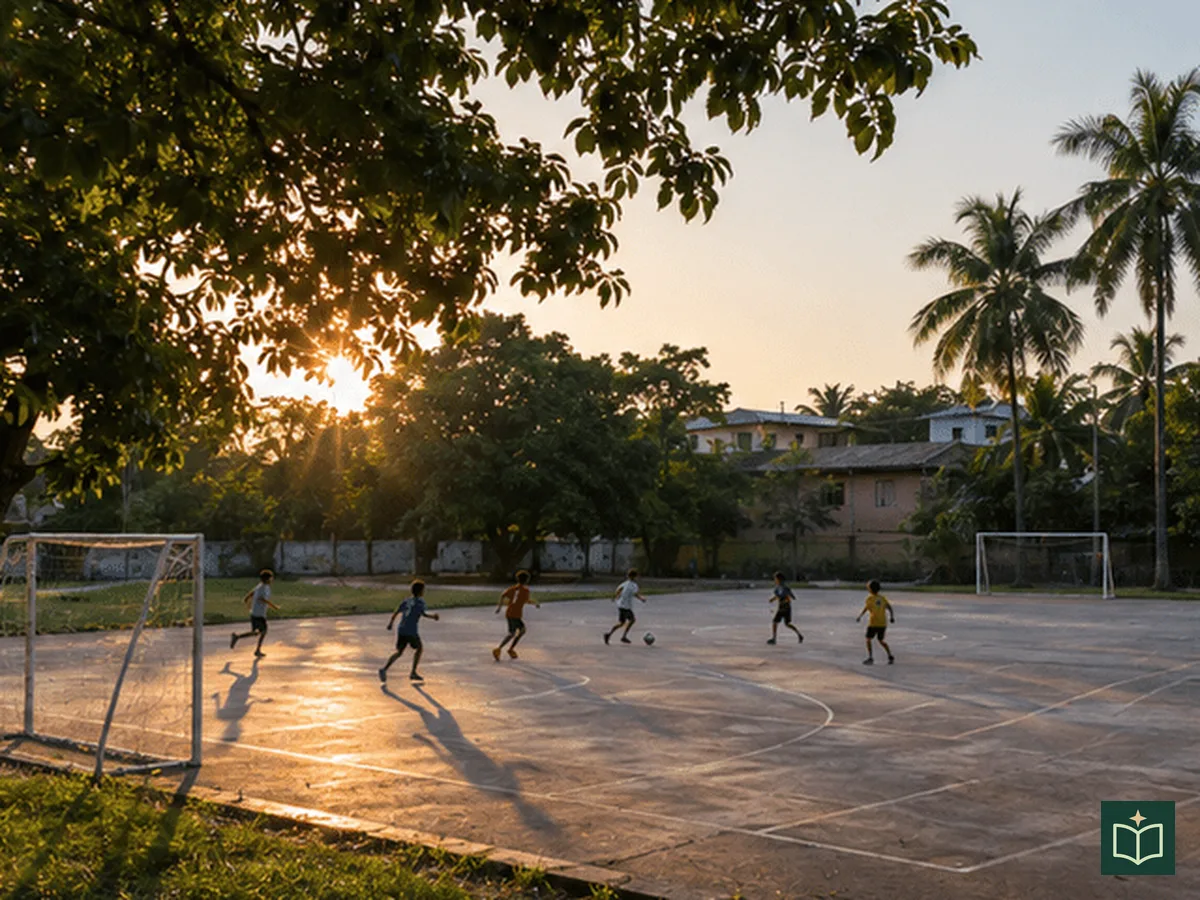
Research increasingly points to time spent outdoors. Daylight is far brighter than indoor lighting: even in shade outside, light levels can be ten or more times higher than in a typical classroom. Bright light is thought to stimulate the release of dopamine in the retina, which helps slow the eye's growth. Trials in China and Taiwan that added outdoor time to the school day, sometimes about 40 minutes or more, found fewer children became myopic. Many eye-health organisations now suggest that children spend around two hours a day outdoors. Prolonged close work, such as reading or screen use without breaks, is also associated with myopia, though its effect appears smaller.
The Gulf challenge
In hot climates the advice to go outside is harder to follow. Summer temperatures in the Gulf push children's play and sport indoors, into air-conditioned homes, malls and classrooms, often with screens close at hand. Researchers suggest practical adjustments: outdoor time in the cooler early morning or evening, shaded playgrounds, and more activity outdoors in the milder winter months. Daylight from bright windows may help a little, but glass and interiors reduce light levels considerably. Regular breaks from near work, such as looking into the distance every 20 minutes or so, are also commonly recommended, though evidence for that specific habit is weaker than for outdoor time.
Why it matters
Myopia is more than an inconvenience. Higher degrees of it stretch the tissues at the back of the eye and raise the long-term risk of serious conditions, including retinal detachment, glaucoma, cataract and myopic maculopathy, a degeneration of the central retina. Slowing progression in childhood is therefore a growing focus for eye doctors. Options include low-dose atropine eye drops, specially designed spectacle lenses and contact lenses, and overnight lenses that reshape the cornea, alongside outdoor time. Their suitability depends on the child. Regular eye tests in childhood help catch myopia early, and parents with concerns should consult an optometrist or ophthalmologist for advice suited to their child.
Sources & further reading
- WHO · Blindness and vision impairment ↗
- National Eye Institute · Nearsightedness ↗
- American Academy of Ophthalmology · Myopia ↗
Figures are rounded and widely published; check the linked organisations for the latest editions. These organisations do not endorse this website.