The riskiest part of a voyage
A ship can cross an ocean with plenty of room for error, but the final miles into port are different. Channels are narrow, water is shallow, currents and winds push sideways and other vessels crowd the approach. A large container ship may be 400 metres long, take several kilometres to stop and respond slowly to its rudder. For this stretch most ports require a marine pilot, a specialist with detailed knowledge of that particular harbour. Pilotage is compulsory for larger vessels in most major ports, including those in the Gulf. It is among the oldest maritime professions, regulated by port authorities or national bodies in much of the world.
Climbing aboard
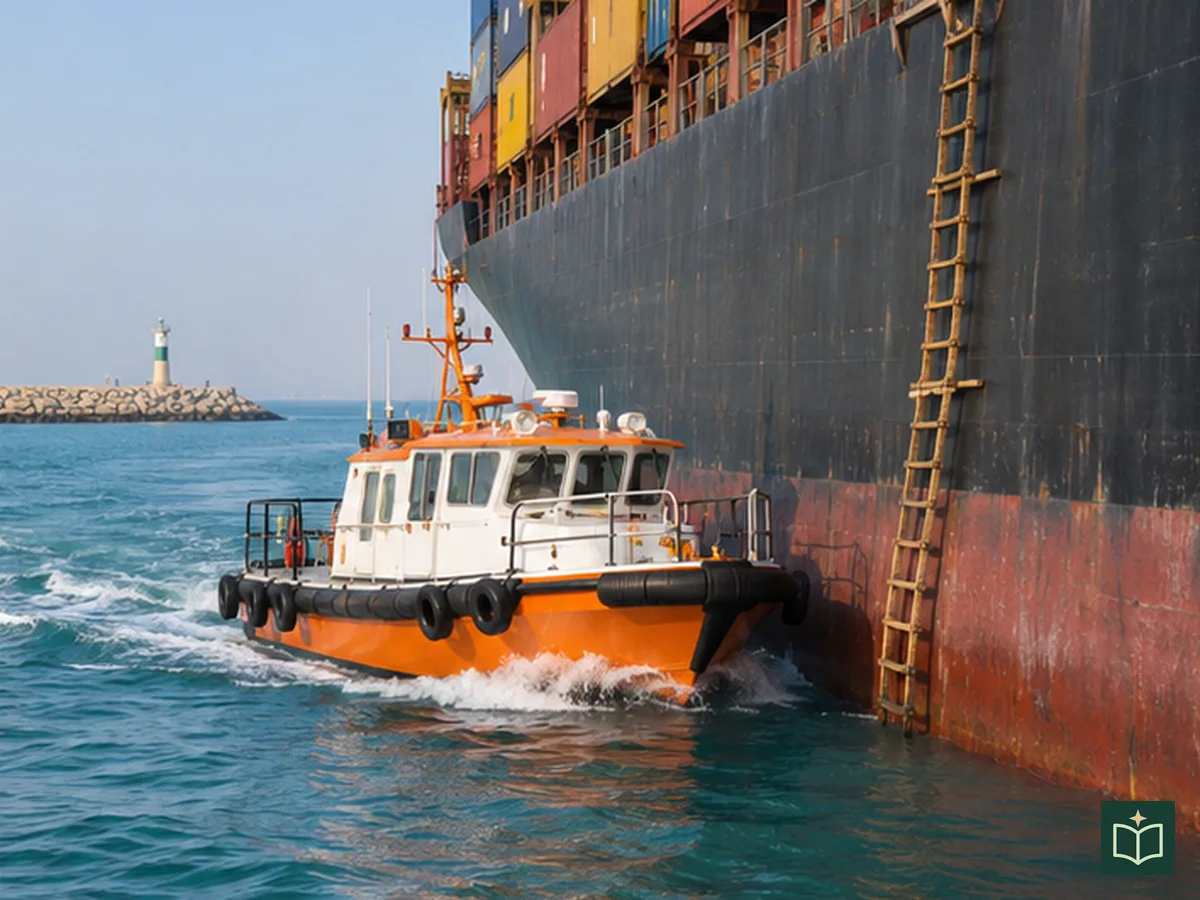
The pilot usually meets the ship at a boarding point outside the harbour. A small, fast pilot boat runs alongside the moving vessel, and the pilot steps across onto a rope ladder hanging down the hull, then climbs to the deck. It is one of the most hazardous moments of the job, especially in a swell or at night. International rules set by the International Maritime Organization specify how pilot ladders must be built, rigged and lit, and require an additional arrangement when the climb would exceed nine metres. At some ports pilots are delivered by helicopter instead, particularly to very large tankers or in rough seas.
Who is in charge
On the bridge the pilot and captain, called the master, exchange information: the ship's draught, engine response and quirks, the planned route, tide and expected traffic. The pilot then cons the ship, giving helm and engine orders that the crew carries out. In most jurisdictions the master keeps legal command and may intervene if the pilot's actions appear unsafe, which is why the relationship is described as a partnership. Pilots often carry a portable navigation unit with high-precision satellite positioning, giving them their own accurate picture independent of the ship's equipment. They also talk constantly with vessel traffic services, tugs and the berth by radio.
Physics in shallow water
Much of a pilot's expertise concerns forces that matter little in open sea. A ship moving through shallow water sinks lower in the water and trims, an effect called squat, which can reduce clearance under the keel to dangerous levels if speed is too high. Near a channel bank, water flow can suck the stern towards the bank and push the bow away. Passing another ship closely produces similar interactions. Wind acts on the huge flat sides of container ships stacked high with boxes, pushing them like sails. Pilots plan speed, timing and tug use around tides and these effects, adjusting moment by moment as conditions change.
Tugs and the final metres
Large ships cannot steer well at very low speed, so for berthing they rely on tugboats. Tugs are compact, extremely powerful vessels that can push against the hull or pull on a line from bow or stern. Modern tugs use rotating propeller units that let them apply force in any direction. As the ship slows near its berth, the pilot coordinates two or more tugs by radio, ordering them to push or pull to turn the ship and ease it sideways against the quay. Mooring crews then take the ship's lines ashore. At a large container terminal such as Jebel Ali, this choreography is repeated many times every day.
Why the system persists
Satellite navigation and electronic charts have made ships far better equipped than in the past, so pilotage is sometimes questioned. The case for it rests on risk. A grounding or collision in a port can block a channel, damage infrastructure and cause pollution affecting a whole region. Pilots handle the same waters every day and know how they behave in each tide and wind. Some ports grant exemptions to masters who regularly call there and have passed local examinations. Training is lengthy: pilots are usually experienced master mariners who then spend years learning a single port. Their job is to make the most dangerous hour of the voyage uneventful.
Sources & further reading
- International Maritime Organization · SOLAS Convention ↗
- International Maritime Pilots' Association ↗
Figures are rounded and widely published; check the linked organisations for the latest editions. These organisations do not endorse this website.