Two liquids, kept apart
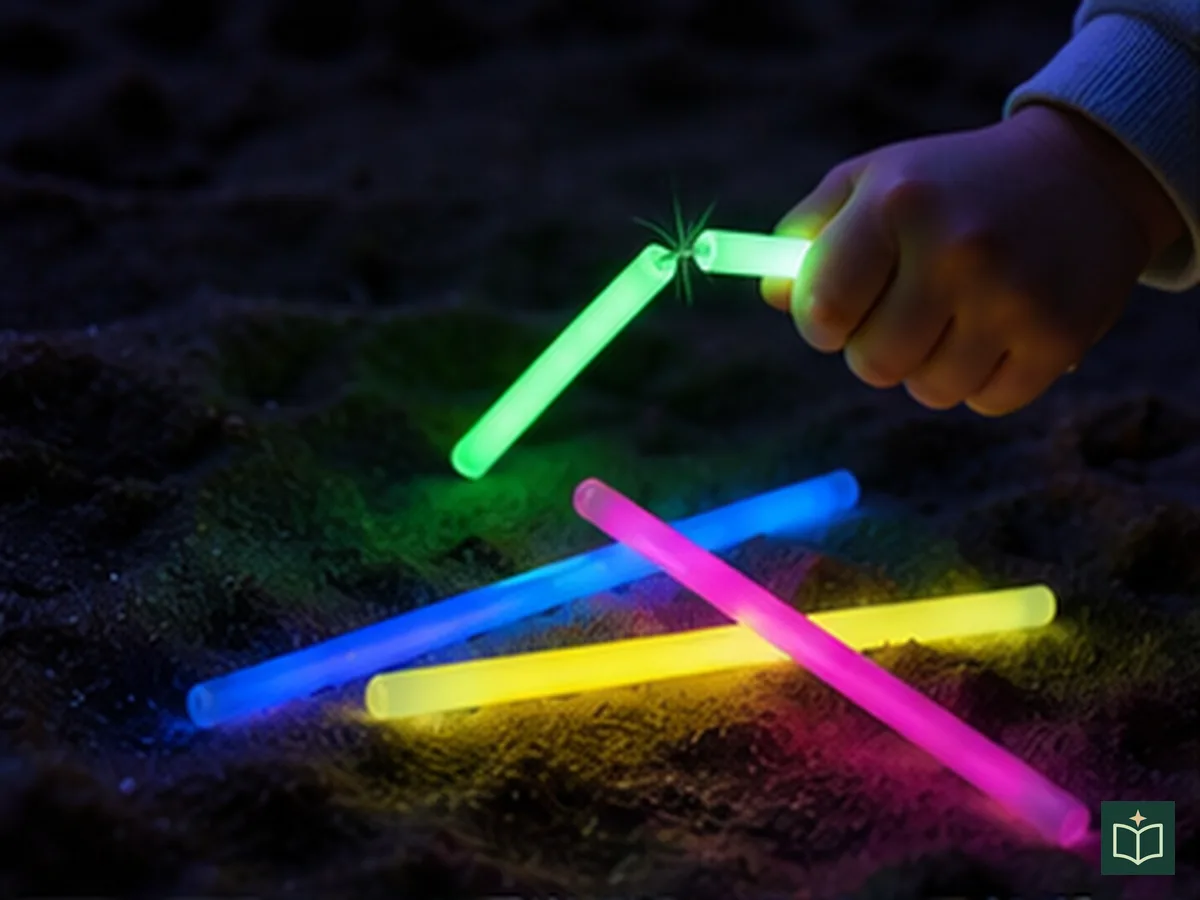
A glow stick is a sealed plastic tube containing two separate solutions. The outer tube holds an oxalate ester, a carbon-based compound, mixed with a fluorescent dye in a solvent. Floating inside it is a thin glass vial of hydrogen peroxide, the same compound used in bleaches and disinfectants, though in a different concentration. As long as the vial stays intact, nothing happens, and an unused glow stick can sit on a shelf for years. Bending the tube snaps the glass, and shaking mixes the two liquids. Within seconds the stick begins to glow. The plastic is flexible enough to bend but strong enough to keep the glass fragments safely inside.
Chemiluminescence
The light comes from chemiluminescence: a chemical reaction that releases energy directly as light rather than mainly as heat. Hydrogen peroxide reacts with the oxalate ester to produce a short-lived, energy-rich molecule. This intermediate is unstable and quickly breaks down into carbon dioxide. As it does, it hands its energy to a nearby dye molecule, lifting one of the dye's electrons into an excited state. When the electron falls back, the dye emits a photon of visible light. The dye, not the reaction itself, sets the colour. Different dyes produce green, yellow, blue, red or orange, and green often looks brightest because the eye is most sensitive to it.
Light without a flame
A candle or an old filament bulb makes light by being hot. Any object heated enough glows, first dull red and then yellow-white, a process called incandescence, and much of its energy is lost as heat. A glow stick is entirely different. Its reaction runs at room temperature and the tube feels cool in the hand. That makes glow sticks safe where a spark or flame could be dangerous, such as near leaking fuel or gas, and they cannot start fires. Similar cold light occurs in nature as bioluminescence, produced by fireflies and many deep-sea creatures, although living things use different molecules, typically enzymes acting on compounds called luciferins.
Why temperature changes the glow
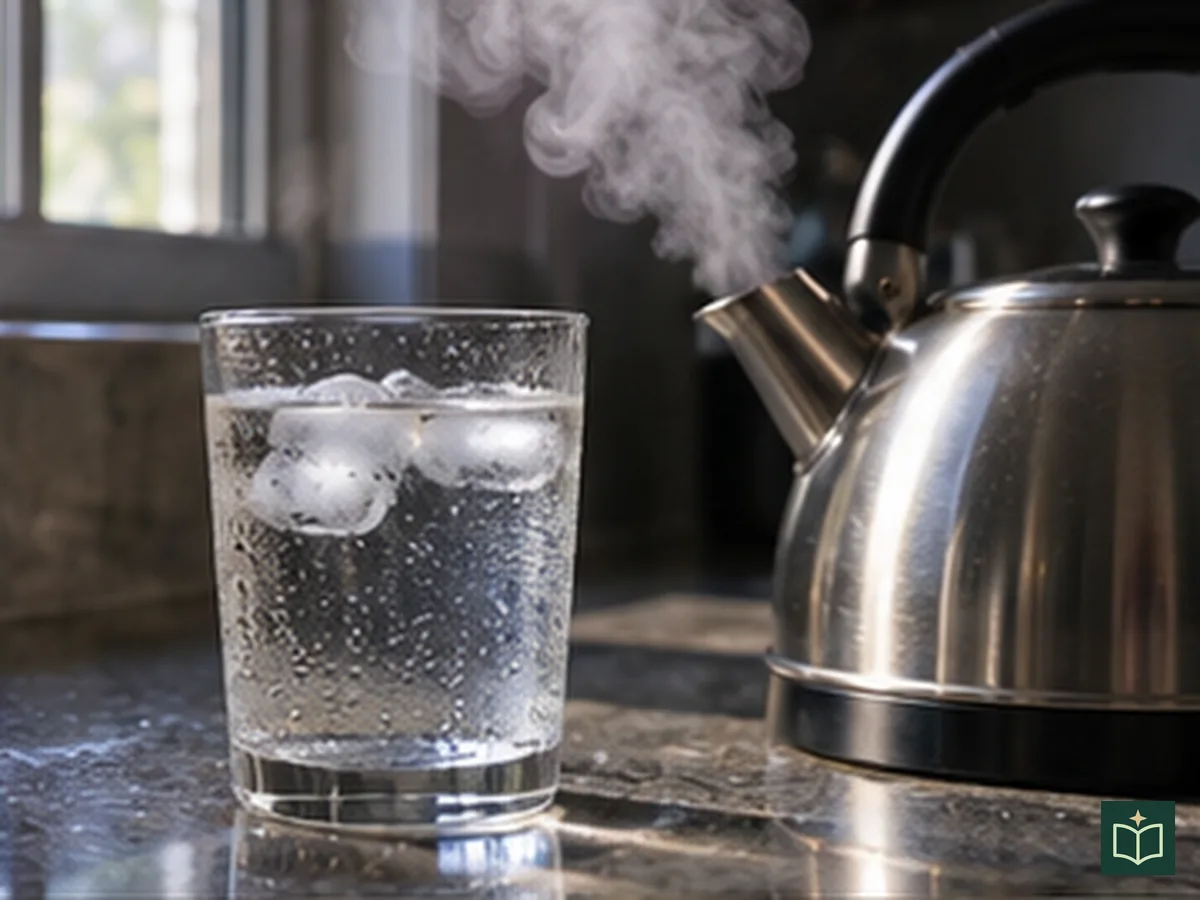
Like most chemical reactions, the glow stick's reaction speeds up as temperature rises, because molecules move faster and collide more often and more forcefully. Warm a glow stick in hot water and it shines more brightly, but it uses up its chemicals sooner and fades faster. Put it in a freezer and the reaction slows almost to a halt; the glow dims, but the stick lasts much longer, brightening again when it warms. This trade-off is a vivid demonstration of reaction rates, often used in school laboratories. A common rule of thumb is that many reactions roughly double in speed for every 10°C rise, although the exact factor varies from one reaction to another.
From navies to night-time fishing
The chemistry was developed in the 1960s by researchers in the United States, who found that oxalate esters gave far brighter, longer-lasting light than earlier chemiluminescent compounds. Light sticks were soon adopted by navies and armies, divers and emergency services as safe, waterproof lights needing no batteries, and they remain standard in survival kits and on life jackets. Fishermen attach them to lines to attract fish at night. Concerts, sports events and festivals turned them into toys and decorations, and children wave them at celebrations across the Gulf. A typical stick glows brightly for a few hours, then more faintly for many more, depending on its design and temperature.
Safety and disposal
Glow sticks are designed to be safe, but their contents are not meant to be handled. The liquids can irritate skin and eyes, so if a stick breaks the contents should be washed off with plenty of water. They are of low toxicity in the small amounts involved, but if a child bites through a stick and shows any symptoms, a doctor or poison information service can advise. Used sticks cannot be recharged or refilled, and their mixed materials are rarely recyclable, so they add to waste when used in large numbers. Reusable LED alternatives exist. Still, as a sealed, cold, instant light source, the glow stick is a clever piece of everyday chemistry.
Sources & further reading
Figures are rounded and widely published; check the linked organisations for the latest editions. These organisations do not endorse this website.