Steel’s weakness
Steel is strong and cheap, but its iron reacts with oxygen and water to form rust. Rust flakes away, exposing fresh metal, so unprotected steel can weaken steadily in rain, sea spray or damp soil. Paint helps, but once it is scratched, corrosion can creep underneath.
Into the bath
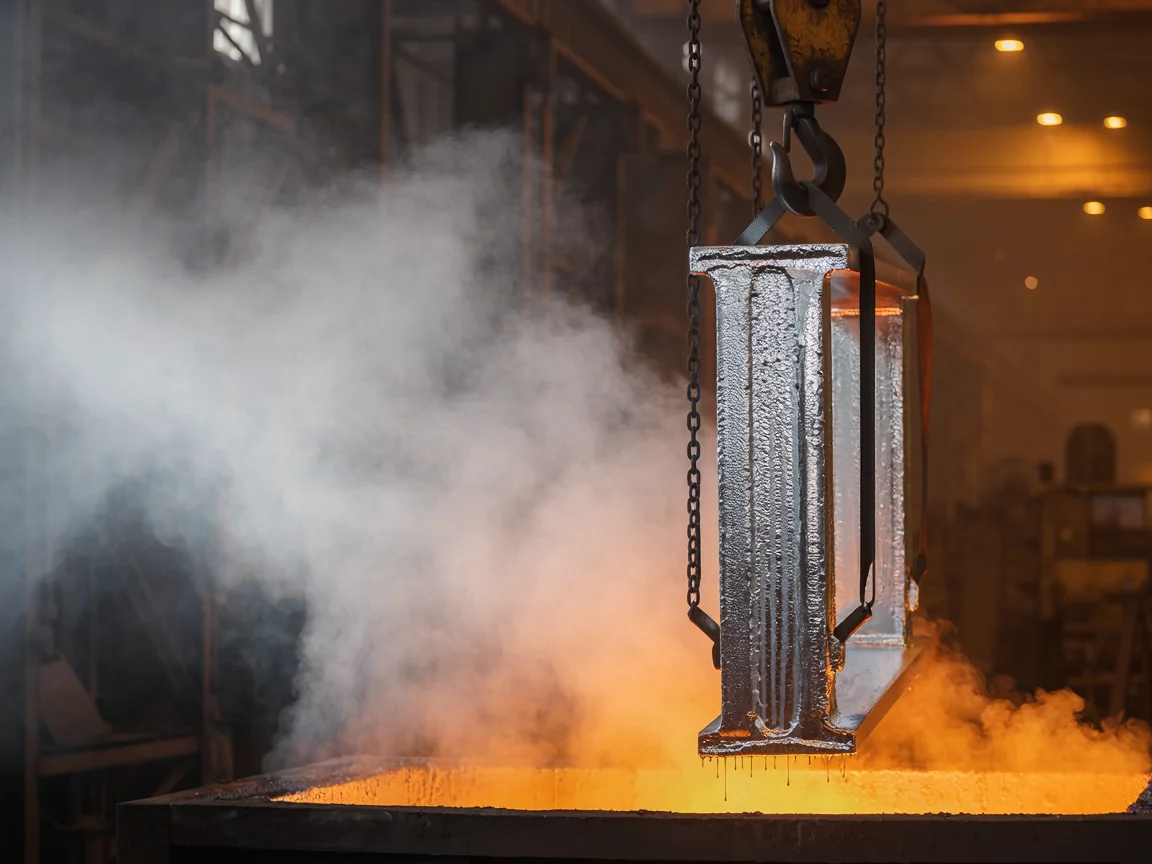
In hot-dip galvanising, steel parts are cleaned, dipped in acid to remove scale and coated with a flux. They are then lowered into molten zinc at about 450 °C. The zinc reacts with the surface, forming tough zinc–iron alloy layers topped with nearly pure zinc that is metallurgically bonded to the steel.
Two kinds of protection
The coating first acts as a barrier, keeping water and oxygen away. It also offers sacrificial protection: zinc is more reactive than iron, so where the coating is damaged, the surrounding zinc corrodes instead of the steel. Over time zinc forms a stable patina of zinc carbonate that slows its own wear.
Everywhere outdoors
Look for the dull, spangled grey of galvanised steel on motorway barriers, pylons, lamp posts, farm gates, bolts and building frames. Depending on the environment, a coating can protect for decades before maintenance is needed. Galvanising is one of the largest uses of zinc worldwide.
Sources & further reading
Coating life depends on thickness and environment; values are typical and rounded. Photograph: original AI-generated illustration (Adobe Firefly). Reference organisations do not endorse this website.