What a calorie is
A calorie is a unit of energy. In nutrition, the figure on a label is actually a kilocalorie: the energy needed to warm one kilogram of water by one degree Celsius. Many countries also print kilojoules, the international scientific unit, and one kilocalorie equals about 4.184 kilojoules. The energy in food is stored in the chemical bonds of fats, proteins, carbohydrates and alcohol. When the body breaks those molecules down, it releases that energy to power muscles, maintain body temperature and run cells. The label tries to estimate how much usable energy a serving provides, which turns out to be a more complicated question than it looks.
Burning food in a bomb
The classic way to measure food energy is the bomb calorimeter. A dried sample is sealed in a strong steel container filled with pure oxygen and submerged in a measured amount of water. An electrical spark ignites it, and the food burns completely. The rise in water temperature shows how much heat was released. This gives the gross energy of the food. But the human body is not a furnace. It does not digest everything, and it excretes some energy in waste. Protein in particular releases more energy in the calorimeter than the body gets from it, because its nitrogen leaves the body in urea that still contains energy.
Atwater's shortcut
In the late nineteenth century the American chemist Wilbur Atwater combined calorimeter results with careful studies of what people ate and excreted. He worked out average energy values that the body actually obtains from each nutrient. These became the familiar factors: about 4 kilocalories per gram of protein, 4 per gram of carbohydrate, 9 per gram of fat and 7 per gram of alcohol. Dietary fibre, which is only partly fermented in the gut, is often counted at about 2 per gram. Most labels today are calculated with these factors rather than by burning each product, because nutrient analysis is cheaper and the factors are written into regulations.
A worked example
Take a snack bar containing 10 grams of protein, 15 grams of fat and 30 grams of carbohydrate. Protein supplies 10 times 4, or 40 kilocalories. Fat supplies 15 times 9, or 135. Carbohydrate supplies 30 times 4, or 120. The total is 295 kilocalories, which equals about 1,234 kilojoules. Fat is less than a third of the bar's weight in this example but supplies nearly half its energy, which is why fatty foods are so energy-dense. Manufacturers can use laboratory analysis or recognised food composition databases to find the nutrient weights, and regulators allow some tolerance between the declared and actual values.
Where the numbers mislead
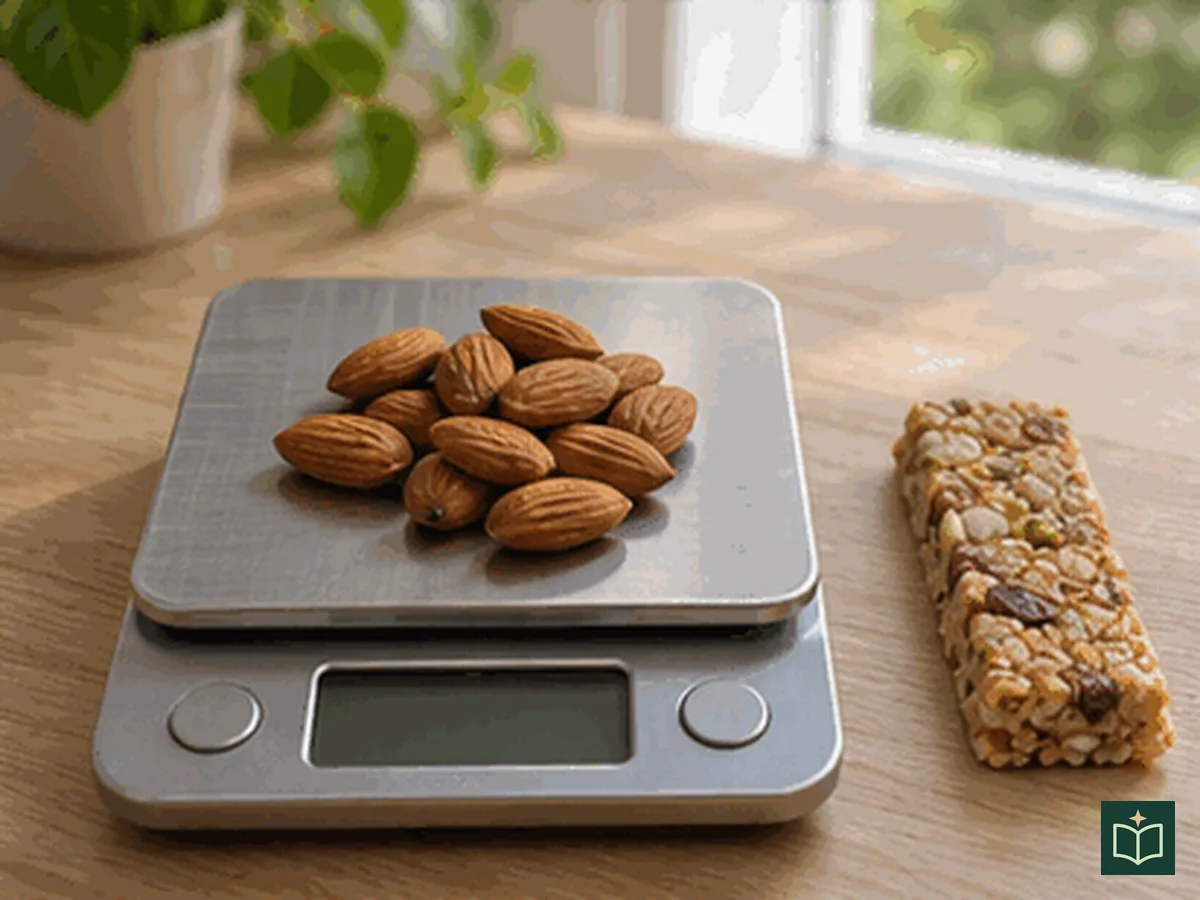
Atwater's factors are averages, and real digestion varies. Studies have found that people absorb fewer calories from whole nuts than labels suggest, because some of the fat stays locked in cell walls that pass through undigested. Cooking, grinding and processing generally make food easier to digest, so the same ingredient can yield different energy depending on preparation. Individuals also differ, influenced by gut bacteria, age and activity. Labels add another layer of uncertainty because nutrient content varies between batches and the rules allow a margin of error. None of this makes calorie counts useless, but it does mean they are best treated as useful approximations.
Using the label sensibly
Calorie labels are most useful for comparison: choosing between two similar products, or understanding how a large portion adds up. Health authorities often use a reference intake of about 2,000 kilocalories a day for an adult, though real needs vary widely with size, age, sex and activity. The label also lists the nutrients behind the energy, which matter for health as much as the total. Health authorities in several countries have encouraged or required restaurants to show calorie information on menus. For personal dietary changes or medical conditions, advice from a doctor or registered dietitian is more reliable than counting numbers alone.
Sources & further reading
Figures are rounded and widely published; check the linked organisations for the latest editions. These organisations do not endorse this website.