A different idea of a screen
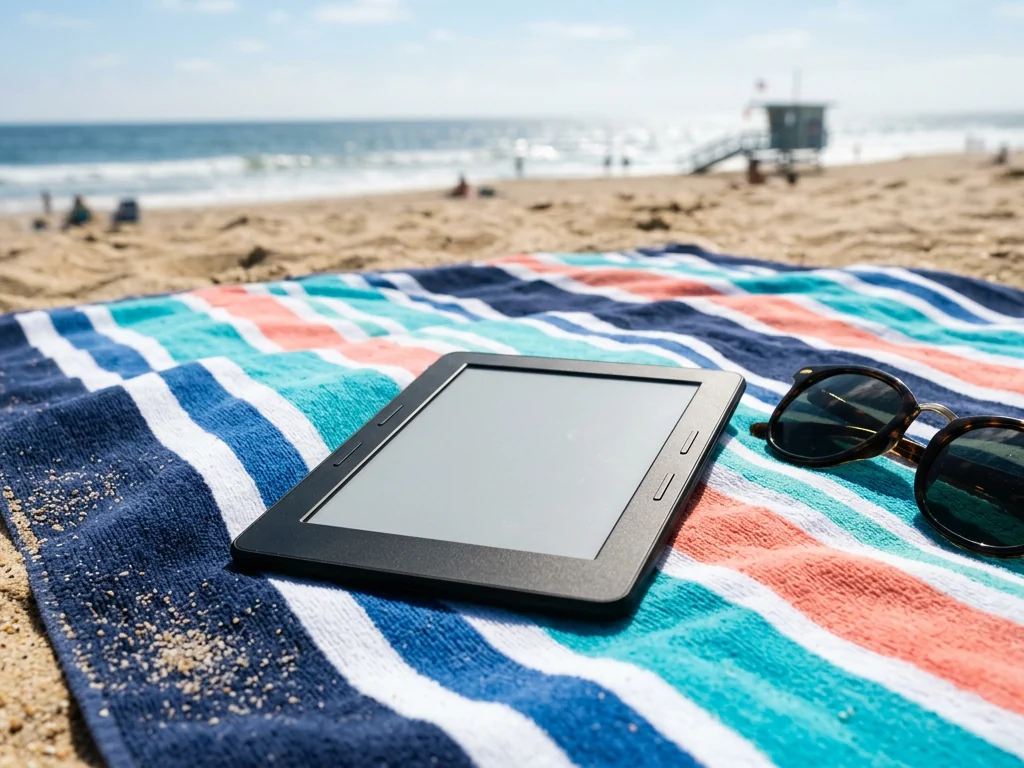
Phone and laptop screens make their own light. Electronic paper does not: like a printed page, it reflects the light already in the room. That is why it stays readable in direct sunshine and feels gentler for long reading sessions, though it needs a front light in the dark.
Particles in capsules
The best-known technology, electrophoretic display, packs millions of microcapsules thinner than a human hair between two electrodes. Inside each one, white particles carry one electric charge and black particles the other. Applying a voltage drags one set to the top and the other to the bottom, so each tiny area shows black, white or a mix.
Bistable by design
Once the particles have moved, they stay put without any further power. Engineers call this bistability. An e-reader therefore spends energy only when you turn a page, which is how batteries can last for weeks. Electronic shelf labels in supermarkets use the same property to show prices for years on a small battery.
The compromises
Moving physical particles is slower than switching a light, so pages refresh with a brief flash and video is impractical. Colour versions add coloured filters or coloured pigments but look more muted than glossy phone screens. The technology wins wherever text is static and battery life matters more than speed.
Sources & further reading
Simplified explanation of electrophoretic displays; other electronic-paper technologies also exist. Photograph: original AI-generated illustration (Adobe Firefly). Reference organisations do not endorse this website.