The brake that built skylines
Hoists existed for centuries, but people feared riding them in case a rope snapped. In 1854, Elisha Otis demonstrated a safety brake: when tension was lost, springs pushed teeth into ratchets on the guide rails and stopped the platform. Safe passenger elevators made tall buildings practical, and the modern skyscraper—up to the Burj Khalifa—depends on them.
Counterweight economics
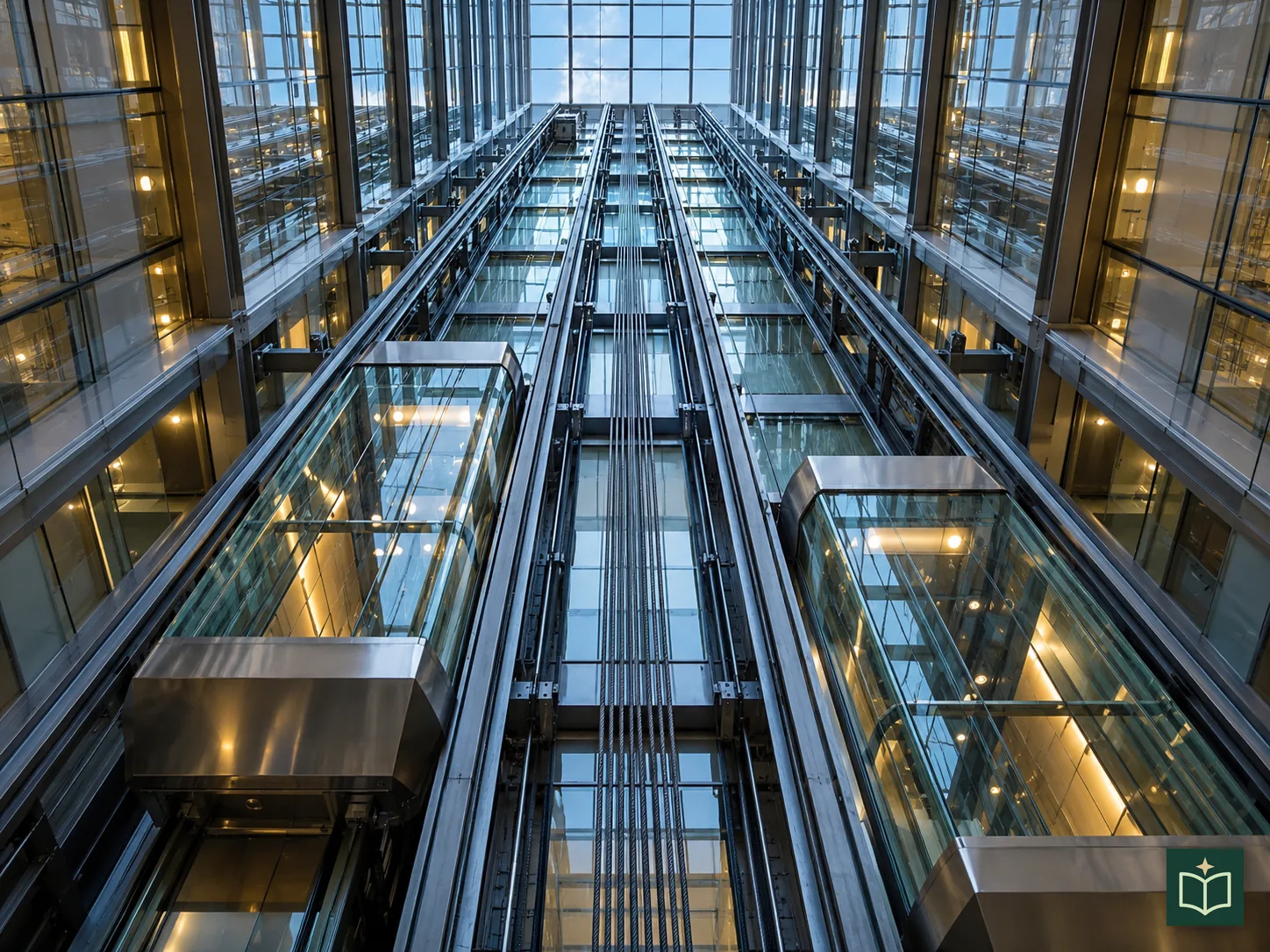
Most traction elevators hang the car on steel ropes or belts that pass over a motor-driven sheave to a counterweight. The counterweight usually equals the car’s weight plus about 40–50% of its rated load, so the motor only needs to move the difference. That saves a great deal of energy, and some modern elevators recover energy when braking.
Layers of protection
Elevators typically use several ropes, each capable of holding the car alone. A speed governor, a separate rope-driven device, monitors speed; if the car overspeeds, it trips safety gears that wedge against the rails. Door interlocks stop the car from moving unless doors are shut. Buffers at the bottom of the shaft absorb energy as a last resort.
Going very high
Very tall buildings face a rope problem: long steel ropes become extremely heavy. Designers use sky lobbies where passengers change elevators, double-deck cars and lighter materials such as carbon-fibre belts. Express elevators in supertall towers travel at around 10 metres per second or more, with cabins pressurised gently to keep passengers’ ears comfortable.
Sources & further reading
Figures are rounded and widely published; check the linked organisations for the latest editions. These organisations do not endorse this website.