A misleading name
Dry cleaning is not dry at all. Clothes are immersed and tumbled in a liquid, but that liquid is a solvent rather than water, which is where the name comes from. The method suits fabrics that water can damage, such as wool, silk, rayon and structured garments like suits, coats and some traditional and formal wear. Water makes many natural fibres swell; when they dry, they can shrink, lose their shape, felt or pucker, and some dyes bleed. Solvents do not swell fibres in the same way, and they are excellent at dissolving oils and grease, such as body oils, cosmetics and food stains, which are often the hardest marks to remove.
Spotting the stains
Work begins at the counter. Each item is tagged, checked for damage, loose buttons and items left in pockets, and inspected for stains. Solvents are good at removing oily marks, but they do little for water-based stains such as sugar, sweat, tea or fruit juice. So before the main wash, a specialist called a spotter treats individual stains at a spotting board, using steam, vacuum suction and a range of chemicals matched to the type of mark. Telling the cleaner what caused a stain helps, because the wrong treatment can set it permanently. In hot climates such as the Gulf's, perspiration stains are among the most common challenges.
Inside the machine
Modern dry-cleaning machines look like large front-loading washing machines but work as closed systems. Garments are loaded into a perforated drum, which is filled with solvent, often with a small amount of detergent to help lift soil. The drum tumbles the clothes for several minutes, then spins at speed to extract most of the solvent. Warm air circulates to dry the garments, and the solvent vapour in that air is cooled until it condenses back into liquid, with further traces captured by filters. The used solvent is filtered and distilled so that dirt and residues are removed, and the clean solvent is reused many times.
Changing solvents
The trade is often traced to Paris in the mid-nineteenth century, when a dyer noticed that a spill of lamp fuel had cleaned a tablecloth. Early cleaners used petrol and similar flammable liquids, which caused fires. From the mid-twentieth century, perchloroethylene, known as perc, became the industry standard because it cleans well and does not burn. However, perc is classified by the International Agency for Research on Cancer as probably carcinogenic to humans, and it can contaminate soil and groundwater if mishandled. Regulators in several places, including California and later the United States federal government, have moved to phase it out of dry cleaning, and many cleaners have already switched.
The alternatives
Several replacements are now in use. Hydrocarbon solvents, refined from petroleum, are gentler on fabrics and less toxic, though they are combustible and need careful handling. Silicone-based solvents and liquid carbon dioxide, kept under high pressure, are also used in some shops. Another option is professional wet cleaning, which returns to water but uses computer-controlled machines, mild detergents, precise temperatures and gentle drying and finishing equipment to clean many garments once considered dry-clean only. Care labels reflect these choices. A circle means professional cleaning: the letter P or F inside shows which solvents are suitable, while W indicates wet cleaning, and a crossed-out circle means the item should not be dry-cleaned.
Why it matters
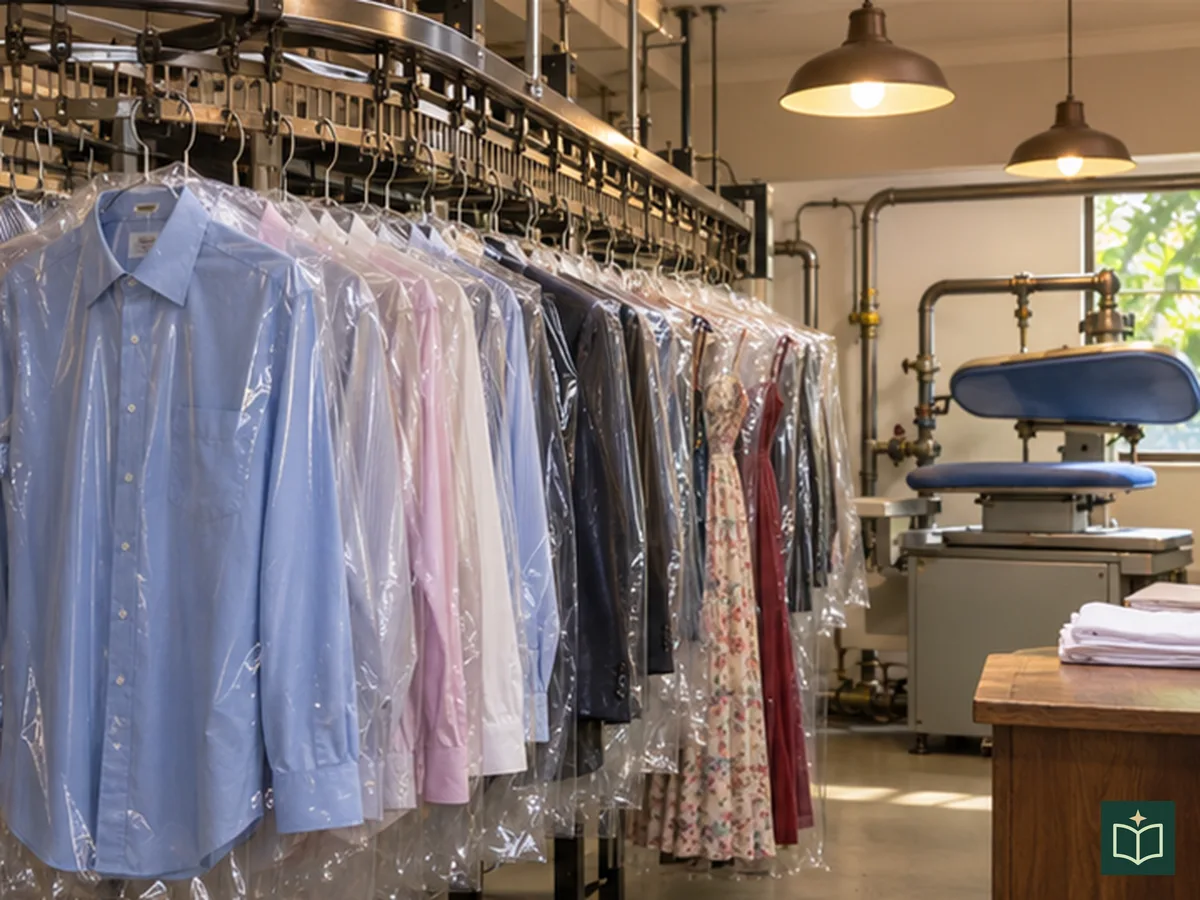
Dry cleaning keeps valuable and delicate garments wearable for years, but its chemicals and energy use have made it a target for environmental and health regulation. The shift to safer solvents and wet cleaning is changing equipment, costs and the skills cleaners need. For customers, a few practical points help: follow the care label, point out stains and their causes, avoid ironing over stains before cleaning, which can set them, and air garments after collection by removing the plastic bag, which can trap moisture and residual vapours. Not every item labelled dry clean only must be dry-cleaned, but testing water on an expensive garment is a risk best left to professionals.
Sources & further reading
- IARC · Monographs on carcinogenic hazards ↗
- US EPA · Chemicals under TSCA ↗
- Britannica · Dry cleaning ↗
Figures are rounded and widely published; check the linked organisations for the latest editions. These organisations do not endorse this website.