More than a wall of water
Dams are built to store water for irrigation and drinking, to generate hydroelectric power, to control floods and to make rivers navigable. Tens of thousands of large dams now block the world’s rivers, and their benefits are real. But a dam does more than hold back water. It turns a flowing river into a lake, alters the timing and size of floods, changes the water’s temperature and chemistry, blocks fish migration and, above all, traps the sediment that rivers carry. These effects can extend hundreds of kilometres downstream, all the way to the coast, long after the construction crews have left.
Where the sediment goes
A river carries vast quantities of sand, silt and clay, eroded from its catchment. When it enters a reservoir, the water slows almost to a standstill and loses the energy to carry that load. Coarse material drops near the head of the reservoir, finer particles further in, gradually filling the lake and reducing its storage. Water released below the dam is therefore unusually clear. Engineers call it “hungry water”, because it picks up sediment from the riverbed and banks downstream to replace what it lost. The channel below a dam often deepens and narrows, sandbars vanish and riverside structures can be undermined.
The Aswan High Dam
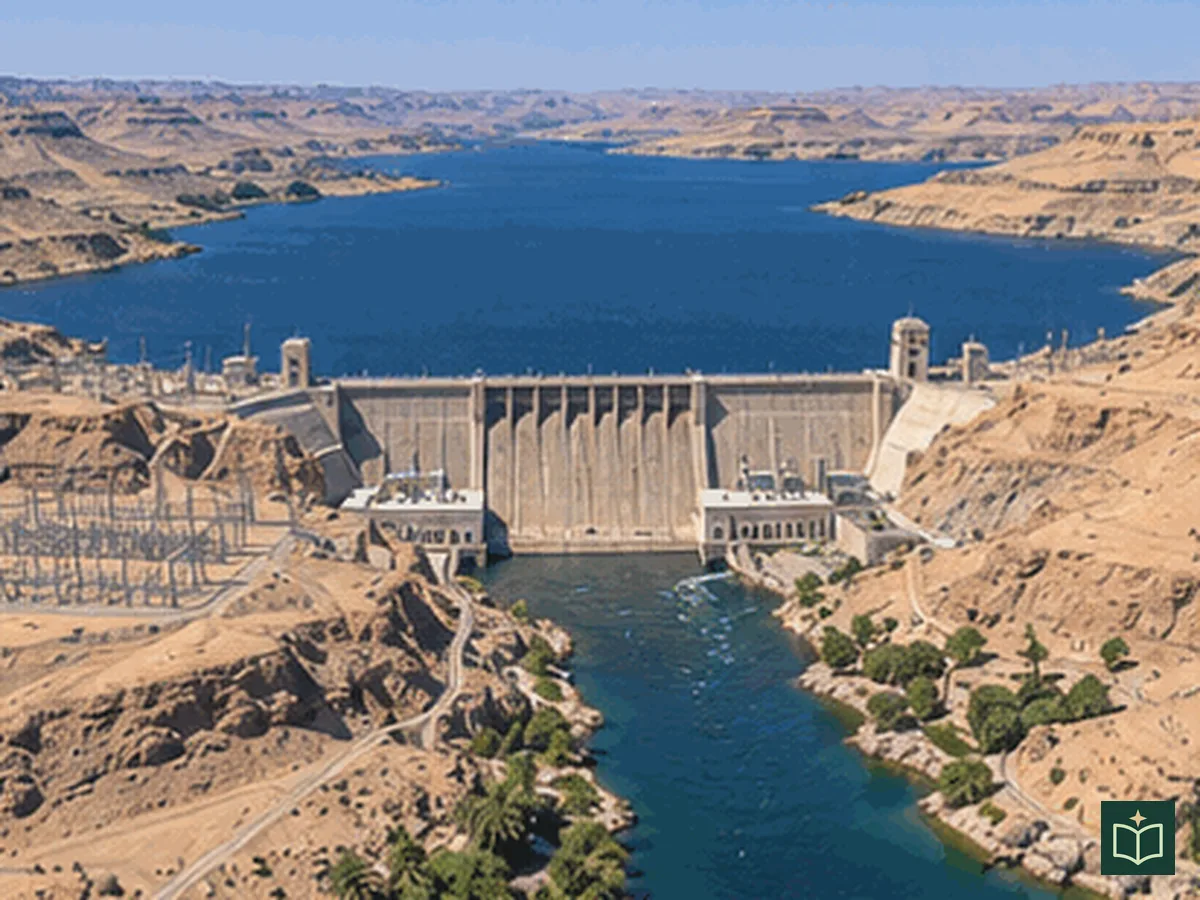
Egypt’s Aswan High Dam, completed in 1970, shows the trade-offs most clearly. It ended the Nile’s annual flood, protecting Egypt from both floods and droughts, allowing year-round irrigation and supplying a large share of the country’s electricity at the time. But it also stopped the flood’s gift of silt. Lake Nasser, about 500 kilometres long, now traps nearly all the sediment the Nile once carried to Egypt. Farmers who had relied on the annual layer of fertile mud turned to chemical fertilisers. And the Nile Delta, built over thousands of years by that sediment, began to lose ground along parts of its Mediterranean coast.
Starved deltas and fisheries
A delta exists in a balance between the sediment a river delivers and the waves, currents and subsidence that remove it. Cut the supply, and the balance tips. Parts of the Nile Delta coast, notably around the Rosetta and Damietta promontories, retreated sharply after the dam was built, and seawalls were constructed to hold the line. The loss of nutrient-rich floodwater also affected the sea. Sardine catches off the Egyptian coast fell steeply in the years after the dam closed, recovering only later as other nutrient sources increased. Similar sediment starvation threatens deltas worldwide, from the Mississippi to the Mekong, where many dams now trap sediment upstream.
Cold water and changed rhythms
Deep reservoirs also change temperature. Water released from near the bottom of a tall dam is cold and stable all year. Below Glen Canyon Dam on the Colorado River, the water flowing through the Grand Canyon is now far colder than the warm, muddy river that native fish evolved in, and several of those species declined. Dams also smooth out flows, eliminating the floods that once scoured channels, rebuilt sandbars and triggered fish spawning. Since 1996, managers have staged deliberate high-flow releases from Glen Canyon Dam to rebuild sandbars downstream, an attempt to restore some natural rhythm to an engineered river.
Dams in dry lands
In the UAE and Oman, dams serve a different purpose. Across many wadis, earth and concrete dams catch rare flash floods, protecting towns and farms and holding water long enough for it to soak into the gravel and recharge aquifers. Here, capturing sediment-laden floodwater is part of the aim, though silt can clog the reservoir floor and must be managed. Elsewhere, attitudes to large dams are shifting. Some old, unsafe or uneconomic dams have been removed, such as two on the Elwha River in Washington State between 2011 and 2014, after which released sediment rebuilt beaches at the river mouth and salmon returned upstream.
Sources & further reading
Figures are rounded and widely published; check the linked organisations for the latest editions. These organisations do not endorse this website.