Why verification matters
Arms-control agreements ask states to limit, reduce or ban weapons that are central to their security. Governments are reluctant to accept such limits unless they can be confident the other side is doing the same. Verification is the set of methods used to check compliance. It does not need to detect every possible violation; it needs to make significant cheating likely to be discovered in time to respond. During the Cold War, US President Ronald Reagan often quoted a Russian proverb, trust but verify, when discussing agreements with the Soviet Union. The phrase captured the idea that cooperation between rivals depends on reliable ways of checking what the other is doing.
Eyes in the sky
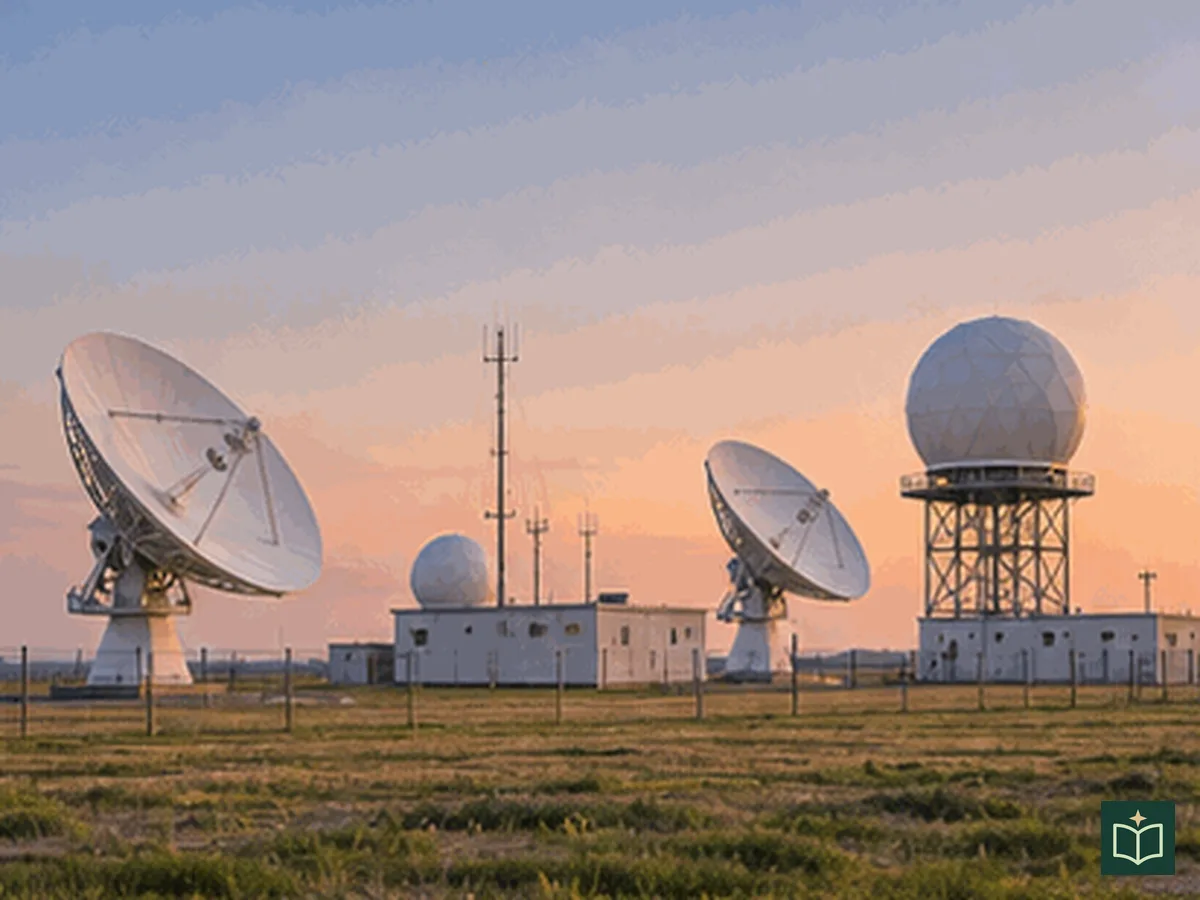
The earliest strategic arms agreements, signed by the United States and the Soviet Union in 1972, relied on national technical means, a term that mainly meant reconnaissance satellites, along with radar and other sensors. The treaties committed each side not to interfere with the other's national technical means and not to use deliberate concealment that would impede verification. Satellites can count missile silos, bombers and submarines in port, and observe tests. They remain the backbone of verification today, supplemented by commercial satellite imagery, which since the 2000s has allowed researchers outside governments to examine military sites, adding an independent layer of scrutiny.
Data, notifications and inspectors
Satellites cannot see inside buildings or count warheads on a missile, so later treaties added cooperative measures. The 1987 Intermediate-Range Nuclear Forces Treaty eliminated a whole class of missiles and introduced intrusive on-site inspections, including continuous monitoring at the gates of missile production plants. The New START treaty of 2010 limited each side to 1,550 deployed strategic warheads and 700 deployed missiles and heavy bombers. It required exchanges of data twice a year, a stream of notifications about movements and changes, unique identifiers on each missile and bomber, and up to 18 short-notice on-site inspections a year, in which inspectors could count warheads on a selected missile.
Confidence-building in Europe
Verification is not only about nuclear weapons. In Europe, the 1990 Treaty on Conventional Armed Forces set limits on tanks, artillery and combat aircraft, backed by inspections. The Vienna Document, agreed within the OSCE, requires participating states to exchange information about their forces, notify large exercises and accept inspection and evaluation visits. The Treaty on Open Skies, which entered into force in 2002, allowed member states to fly unarmed observation flights over each other's territory with agreed cameras. Such measures aim to reduce the risk of surprise attack and misunderstanding by making military activity more transparent, even between states that distrust each other.
Fragile foundations
Verification regimes depend on political will. The Intermediate-Range Nuclear Forces Treaty ended in 2019 after the United States and Russia accused each other of violations. The United States withdrew from the Open Skies Treaty in 2020, and Russia followed in 2021. In 2023 Russia announced it was suspending its participation in New START, halting inspections and data exchanges, and the treaty was due to expire in February 2026. These developments show that even well-designed verification systems cannot survive a breakdown in relations. They also illustrate how quickly transparency can be lost, leaving governments more dependent on satellites and intelligence estimates.
Why it matters
When news reports discuss a new arms-control proposal, the verification provisions are often the hardest part to negotiate and the best guide to how meaningful an agreement will be. A limit with inspections and data exchanges offers far more assurance than a political pledge with no means of checking. New technologies, from hypersonic missiles to artificial intelligence and cyber capabilities, raise difficult questions about what can be counted at all. Researchers are exploring new approaches, including remote sensors, tamper-proof seals and cryptographic methods. The underlying challenge remains the same: giving each side enough confidence in the other's behaviour to accept limits on its own.
Sources & further reading
Figures are rounded and widely published; check the linked organisations for the latest editions. These organisations do not endorse this website.