A camera in a sliver
A traditional camera has a large sensor and a lens that may be longer than your hand. A phone must fit its cameras into a body less than a centimetre thick, so its sensors are small and its lenses short. Physics punishes that: smaller sensors gather less light, and less light means more visual noise, the grainy speckle seen in dim photos. Yet phone photos today often look remarkably good. The explanation lies in two developments: highly efficient silicon sensors, and software powerful enough to treat each photograph as a calculation rather than a single exposure. Together they have made the phone the world's most used camera.
Counting photons
The heart of the camera is an image sensor, usually of a type called CMOS. It is a grid of millions of photosites, or pixels, each a tiny light detector. When photons strike a pixel, they free electrons in the silicon, and the more light, the more electrons. At the end of the exposure, circuits read out each pixel's charge and convert it to a number. Earlier digital cameras often used a related device, the charge-coupled device, whose inventors shared the 2009 Nobel Prize in Physics. CMOS sensors became dominant because they are cheaper to make, use less power and can be read out very fast.
How colour is captured
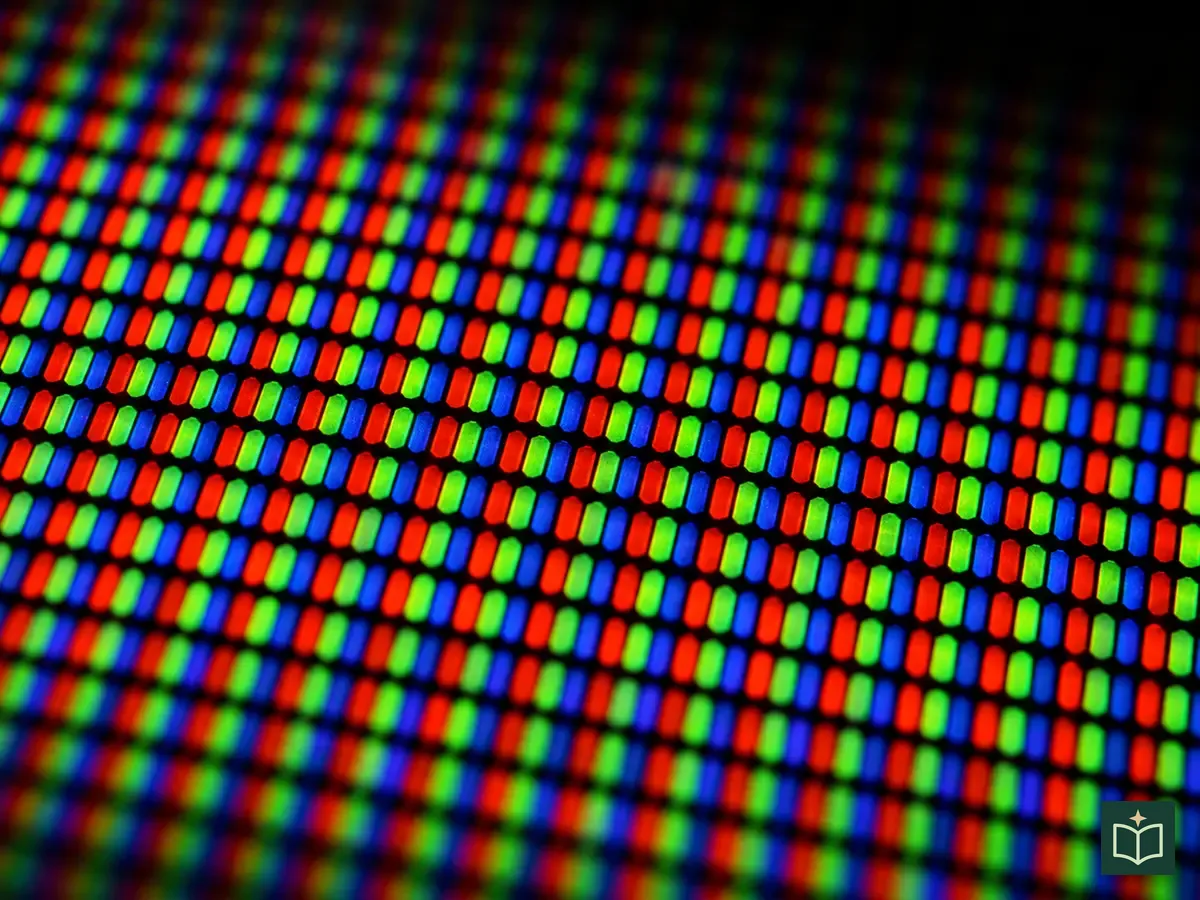
A pixel measures brightness, not colour. To capture colour, a mosaic of tiny filters sits over the sensor, so each pixel sees only red, green or blue light. The most common arrangement, the Bayer pattern, uses twice as many green filters as red or blue, because human vision is most sensitive to green. The phone then estimates the two missing colours at each pixel by looking at its neighbours, a step called demosaicing. Many sensors also group neighbouring pixels together in low light, trading resolution for cleaner images. That is why a phone advertised with a very high megapixel count often saves smaller photos by default.
Computational photography
When you press the shutter, the phone has often already been capturing frames continuously. It selects several, aligns them to correct for hand shake, and merges them. Averaging many frames cancels out random noise, which is how night modes produce bright, clean pictures without a flash. Combining short and long exposures captures detail in both bright skies and dark shadows, a technique known as high dynamic range. Portrait modes estimate depth, from two cameras or from machine learning, and blur the background artificially. Dedicated image-processing chips perform billions of operations for each photo in a fraction of a second, mostly without the user noticing.
Several lenses, one camera
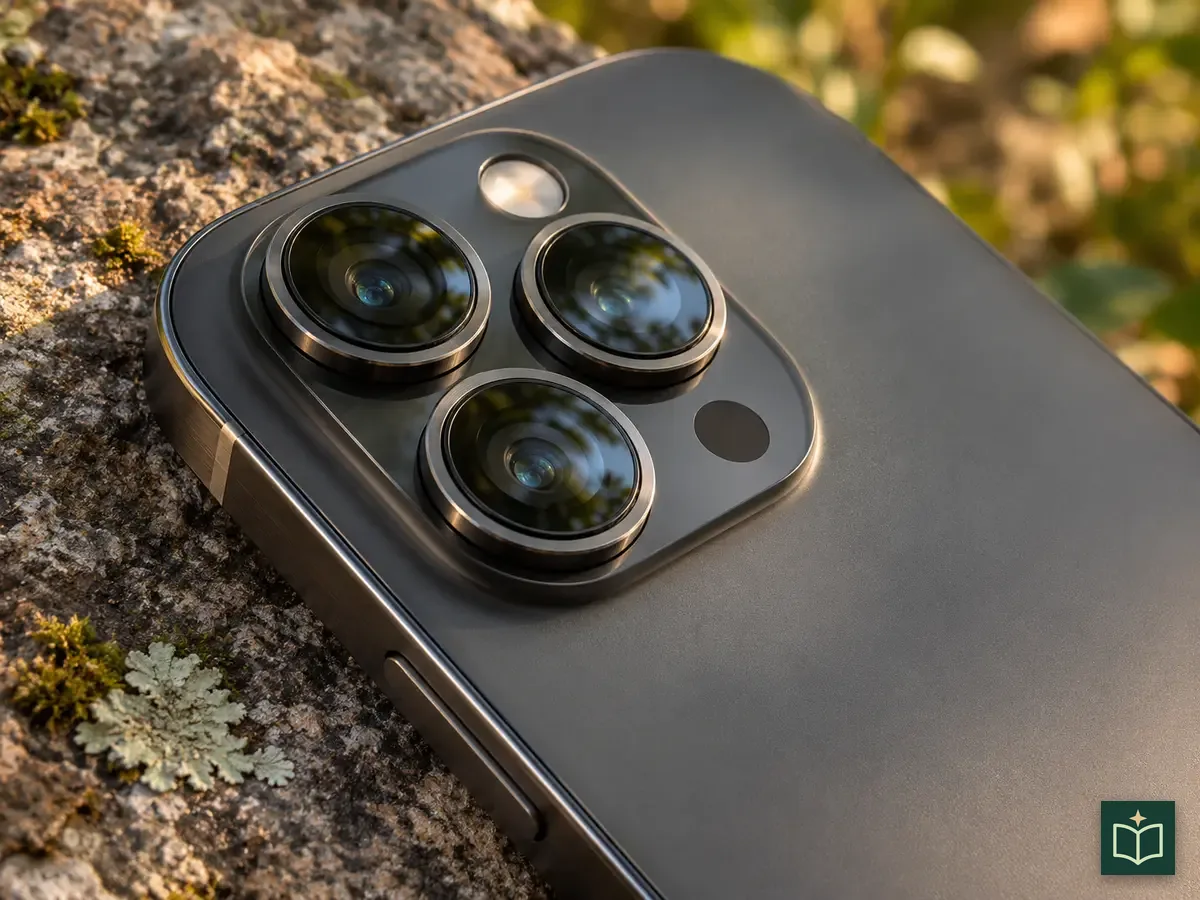
Phone lenses cannot zoom optically the way a large camera lens does, because there is no room for the moving glass. Instead, phones carry several cameras with fixed focal lengths, typically ultra-wide, standard and telephoto, and switch between them as you zoom. Some telephoto designs fold the light path sideways with a prism, fitting a longer lens inside the slim body. Between those fixed steps, the phone crops and enhances the image digitally. Optical image stabilisation, which moves the lens or sensor slightly to counter hand tremor, helps in dim light. Bright Gulf sunshine, by contrast, rarely challenges the sensor; harsh contrast and heat haze are more common problems.
Limits and authenticity
Computation brings trade-offs. Heavy processing can make skin look unnaturally smooth, skies too vivid and fine textures smeared. Fast motion in low light can still blur because frames must be merged. Some features add detail the sensor did not strictly capture, using models trained on other images, which raises questions about how faithful a photo is to reality. Many phones offer raw or 'pro' modes that keep more of the sensor's original data for those who prefer to edit themselves. For everyday users, cleaning the lens, holding steady and letting the phone choose exposure usually improve results more than any setting.
Sources & further reading
Figures are rounded and widely published; check the linked organisations for the latest editions. These organisations do not endorse this website.