An old idea
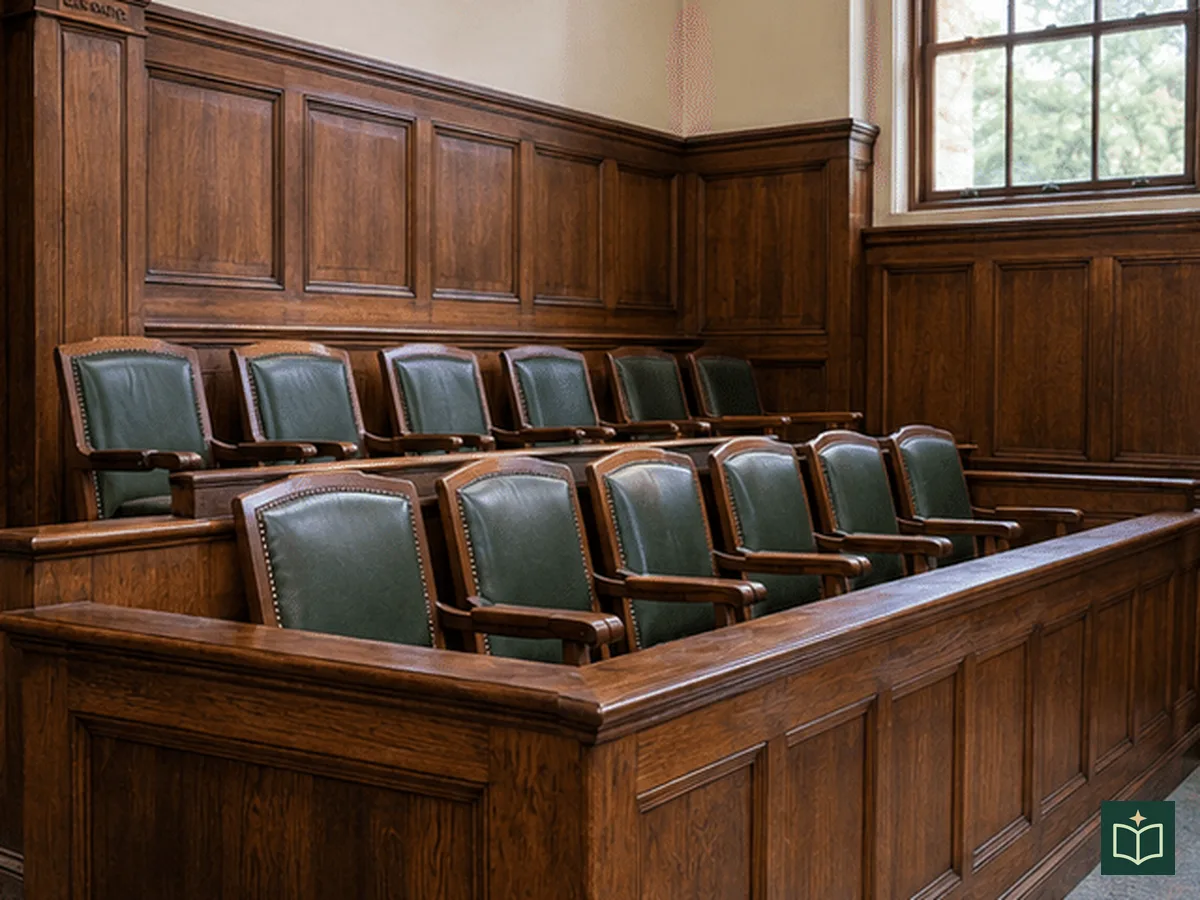
Trial by jury places the decision about guilt or liability in the hands of ordinary citizens rather than professional judges. Its roots in English law go back to the medieval period, and Magna Carta's 1215 promise of judgment by one's peers became a powerful symbol of it. The model spread with English common law to the United States, Canada, Australia, Ireland, New Zealand and other countries. Supporters see juries as a check on state power and a way to bring community standards into the courtroom. Critics point to cost, delay and the difficulty some jurors face with complex evidence. Today juries are used mainly for serious criminal cases.
Choosing the jurors
Jurors are usually drawn at random from electoral registers or similar lists. In England and Wales, most registered voters aged 18 to 75 can be summoned, with some exceptions for people with certain criminal convictions or mental-health conditions. Twelve are chosen for each criminal trial in the Crown Court. In the United States, a process called voir dire lets the judge and lawyers question potential jurors. Either side may challenge a candidate for cause, for example because of a connection to the case, and may also use a limited number of peremptory challenges without giving a reason, though these cannot be used to exclude people on grounds of race or sex.
Facts for the jury, law for the judge
The division of labour is central. The judge decides what evidence may be heard, rules on legal arguments and, at the end, sums up the case and directs the jury on the law, including what the prosecution must prove. The jury decides the facts: which witnesses are believable, what the evidence shows and whether the legal test is met. In criminal trials in common-law countries, the prosecution must prove guilt beyond reasonable doubt, and the jury must be sure before convicting. After a guilty verdict, the judge almost always decides the sentence, although in some US states juries play a role in sentencing for the most serious crimes.
Behind closed doors
Once the evidence and speeches are finished, the jury retires to deliberate in private. Its discussions are secret, and in many countries it is a criminal offence for jurors to reveal what was said. Jurors are told to decide only on the evidence heard in court and not to research the case themselves, a rule that has become harder to police in the age of smartphones. Many systems expect a unanimous verdict. In England and Wales, a judge may accept a majority of 10 to 2 after at least two hours and ten minutes of deliberation. If the jury cannot agree, it is a hung jury, and a retrial may follow.
Where juries are used
Juries are mostly a feature of common-law systems, and even there their use has narrowed. Civil juries remain common in the United States, where the Seventh Amendment protects them in many federal cases, but have almost disappeared from civil cases in England. Many civil-law countries use mixed courts instead, where lay citizens sit alongside professional judges and decide together. France uses such panels for its most serious crimes, Germany uses lay judges in many criminal courts, and Japan introduced a system in 2009 in which six citizens sit with three judges. Courts in the UAE and most Gulf states do not use juries; professional judges decide both law and facts.
Limits and debates
Juries do not give reasons for their verdicts, which makes appeals harder and outcomes less transparent than a judge's written ruling. Some governments have proposed removing juries for long fraud trials, complex technical cases or situations where jurors might be intimidated, and alternatives such as trial by judge alone already exist in some circumstances. Research into jury decision-making is limited by the secrecy of deliberations. Supporters argue that the system's legitimacy rests precisely on ordinary people reaching a shared judgement. Whatever the model, the jury remains one of the few places where citizens exercise state power directly, by deciding whether another person is guilty.
Sources & further reading
Figures are rounded and widely published; check the linked organisations for the latest editions. These organisations do not endorse this website.