How the table is built
The Alps contain 82 summits above 4,000 metres on the official list of the UIAA, but many are minor tops on the same ridge. Monte Rosa alone has several summits above 4,500 metres, including Nordend and Signalkuppe, which would crowd a simple height list. This table counts each mountain by its highest summit and includes peaks generally treated as separate mountains in climbing guides. On that basis, Mont Blanc stands alone at the top, followed by Monte Rosa’s Dufourspitze and a run of famous Swiss peaks. Lists that include every subsidiary top look different, which is why rankings of the Alps vary between sources.
Mont Blanc and its massif
Mont Blanc rises on the border of France and Italy, above Chamonix on one side and Courmayeur on the other. Its summit is a dome of ice whose thickness changes with snowfall, so surveys every two years give slightly different heights; recent measurements place it at about 4,806 metres. It is about 172 metres higher than Dufourspitze. Neighbouring Mont Maudit, at about 4,465 metres, is part of the same massif, and the ridge between them is crossed on one of the classic routes to the summit. The first ascent of Mont Blanc in 1786 is often said to mark the birth of mountaineering, and the area remains one of Europe’s busiest climbing centres.
Zermatt’s crown
Eight of the ten summits stand in the Pennine Alps around the Swiss resort of Zermatt. Dufourspitze, the highest point of Monte Rosa and of Switzerland, lies just inside the Swiss border. The Dom, at about 4,545 metres, is the highest mountain entirely within Switzerland, and the neighbouring Täschhorn and Nadelhorn belong to the same Mischabel group. Lyskamm, a long, corniced ridge on the Italian border, has a reputation for dangerous snow overhangs. The Weisshorn, first climbed in 1861, is often called one of the most beautiful peaks in the Alps, and the Dent Blanche rises to the west. All are visible from viewpoints above Zermatt on a clear day.
The Matterhorn
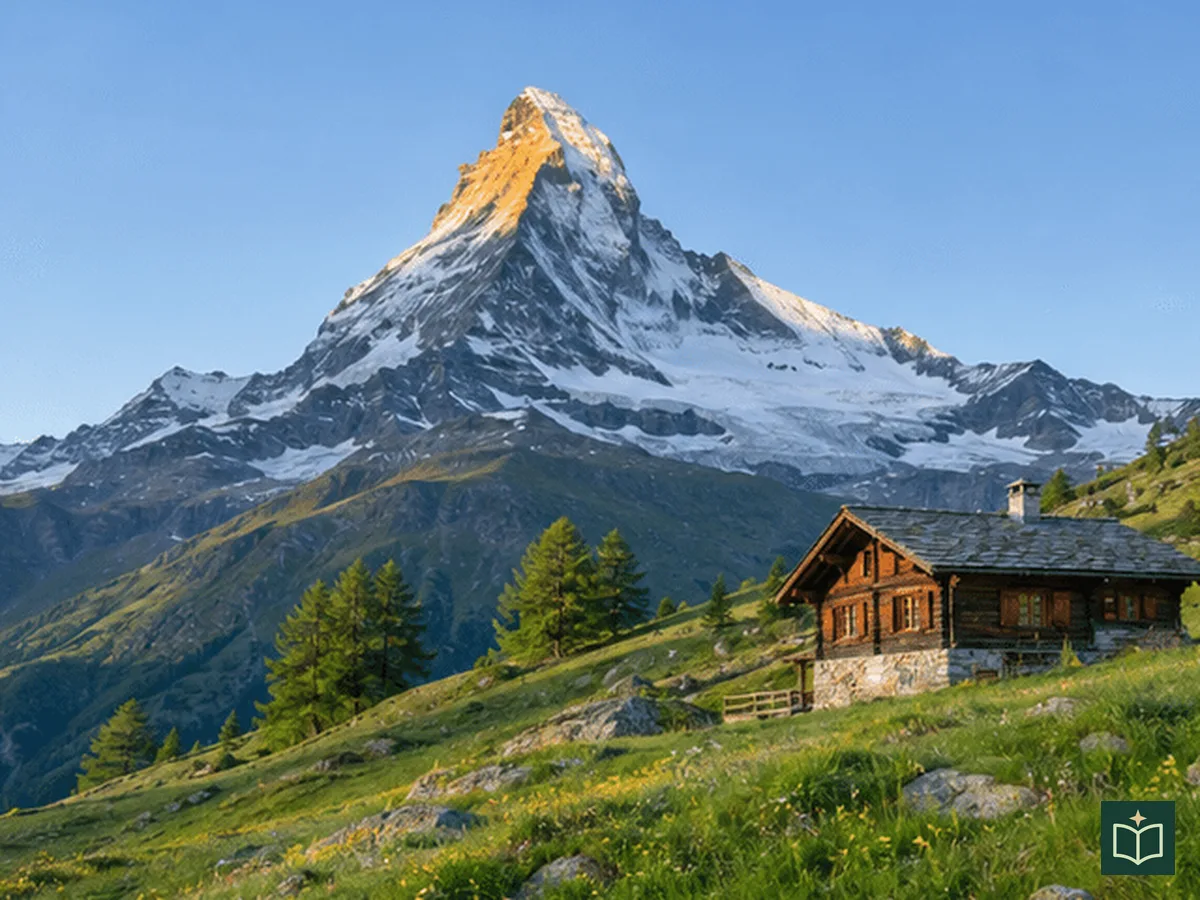
The Matterhorn, about 4,478 metres, ranks only seventh but is the most recognisable mountain in the Alps, its pyramid shape carved by glaciers eroding it from several sides. Its first ascent in July 1865, by a party led by the English climber Edward Whymper, ended in tragedy when four of the seven men fell to their deaths on the descent. The event shocked Victorian Britain and drew wide attention to the dangers of climbing. Today thousands attempt the mountain each summer, most from the Hörnli hut on the Swiss side. For many visitors from the Gulf, Zermatt and its car-free streets are a popular summer escape from the heat.
Why heights change
Alpine heights are not fixed. Ice-capped summits such as Mont Blanc and Dufourspitze rise and fall slightly as snow accumulates or melts. Better surveying, using satellite positioning, has also adjusted older figures by a few metres. The underlying rock is still moving too: the Alps are being pushed upwards by the slow collision of the African and European plates, by roughly a millimetre or two a year in places, though erosion wears much of that away. Because of these effects, published heights can differ by several metres between sources. The order in the table is widely agreed, except that Grand Combin, at about 4,314 metres, falls just outside it.
Glaciers in retreat
The highest Alps hold the range’s largest glaciers, including the Gorner Glacier below Monte Rosa and the Mer de Glace on Mont Blanc. These glaciers have been shrinking since the mid-nineteenth century, and the pace has increased in recent decades. Swiss monitoring found that the country’s glaciers lost around a tenth of their remaining volume in the two hot years of 2022 and 2023 alone. Melting ice affects river flows, hydropower and the stability of slopes, and has made some classic climbing routes more dangerous as rock is exposed and loosened. The high peaks themselves will remain, but their appearance in summer is steadily changing.
Sources & further reading
Figures are rounded and widely published; check the linked organisations for the latest editions. These organisations do not endorse this website.