How ice becomes a glacier
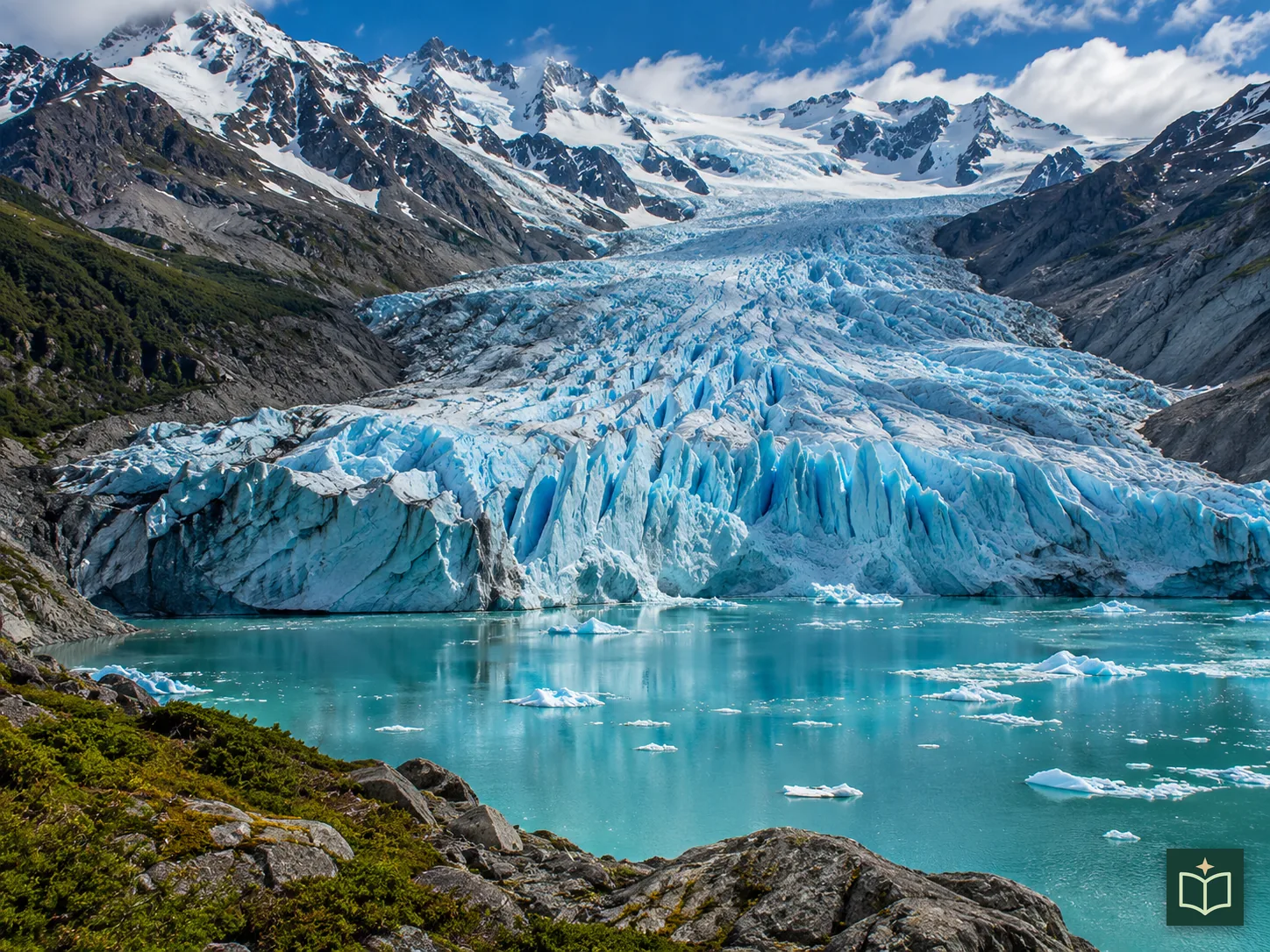
Where more snow falls than melts each year, it builds up. Over time, buried snow recrystallises into granular firn and then into dense glacial ice, squeezing out most of the air. Once thick enough—often tens of metres—the ice begins to flow under gravity, deforming internally and sliding over its bed.
Sculptors of landscape
Glaciers carry rocks frozen into their base, scraping and plucking the land beneath. They carve U-shaped valleys, bowl-shaped cirques and sharp ridges, and leave behind piles of debris called moraines. Norway’s fjords, Switzerland’s Alpine valleys and the Great Lakes in North America were shaped by ice during past ice ages.
Water towers
Mountain glaciers in the Himalaya, Andes and Alps release meltwater during warm, dry seasons, helping feed rivers relied on by hundreds of millions of people. The Antarctic and Greenland ice sheets store most of Earth’s fresh water; if both melted completely, sea level would rise by more than 60 metres—though that would take many centuries or longer.
A shrinking world of ice
Most of the world’s glaciers are losing mass. Monitoring by the World Glacier Monitoring Service shows decades of thinning, accelerating in recent years. Melting glaciers and ice sheets now contribute a significant share of global sea-level rise. Some small glaciers, such as Okjökull in Iceland, have already disappeared.
Sources & further reading
Figures are rounded and widely published; check the linked organisations for the latest editions. These organisations do not endorse this website.