Two kinds of definition
The confusion between fruits and vegetables comes from two vocabularies. Botany, the science of plants, defines a fruit precisely: it is the mature ovary of a flowering plant, usually containing seeds. By that definition, apples and dates are fruits, but so are tomatoes, cucumbers, aubergines, okra, peppers, pumpkins and even grains of wheat. Vegetable, by contrast, has no strict botanical meaning. It is a culinary and everyday term for edible parts of plants that are usually eaten savoury, whether roots, stems, leaves, flower buds or botanical fruits. So a single food can be a fruit in a biology lesson and a vegetable in a recipe, and both statements are correct.
What the plant is doing
From the plant's point of view, a fruit has a job: to protect seeds and help them spread. Sweet, colourful flesh attracts animals that eat the fruit and carry the seeds elsewhere, depositing them some distance away. Other fruits rely on wind, water or hooks that catch on fur. Vegetables come from many different organs with different purposes. Carrots and beetroot are swollen roots storing energy, potatoes are underground stems called tubers, spinach and lettuce are leaves that capture sunlight, celery is a leaf stalk, and broccoli and cauliflower are clusters of immature flower buds. Onions and garlic are bulbs made of layered, fleshy leaves.
Examples on a Gulf table
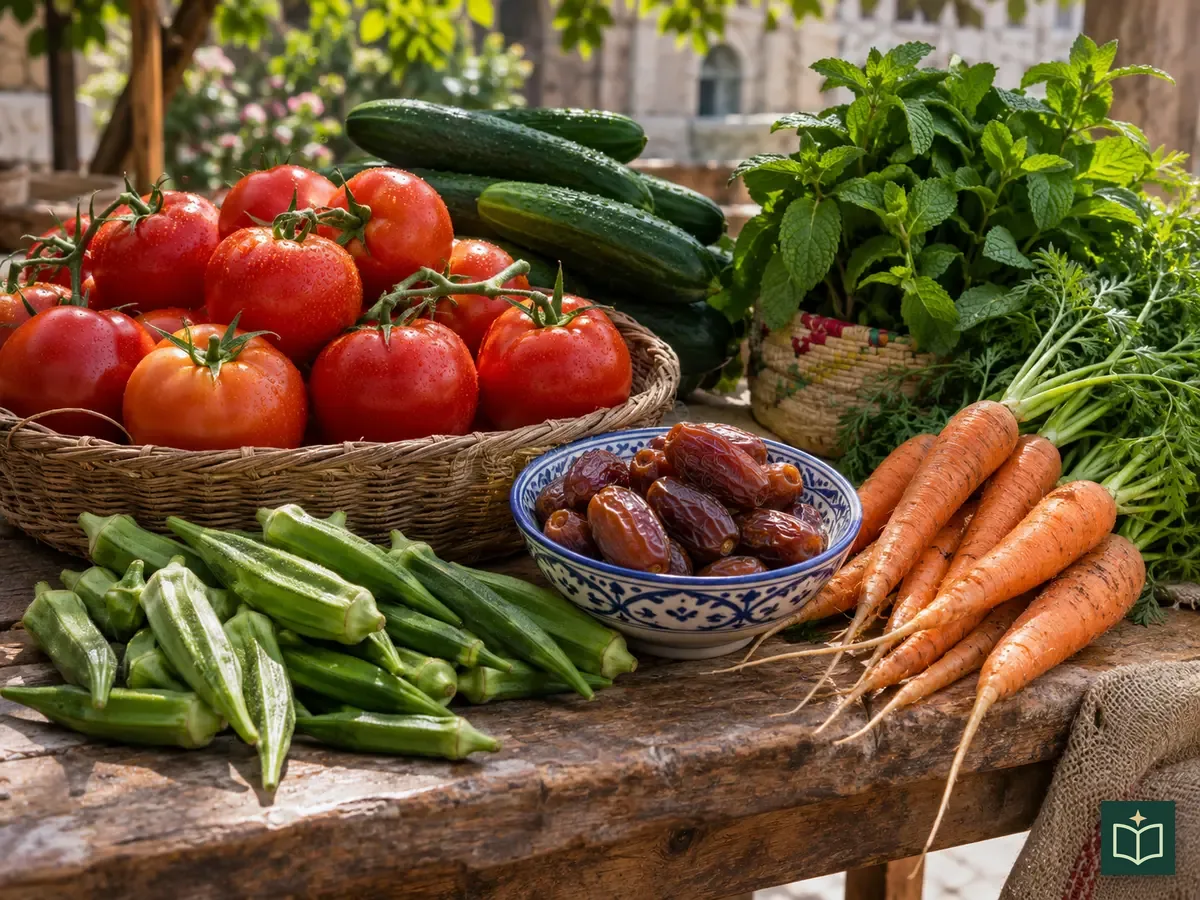
A typical meal in the region illustrates the overlap. Dates, the iconic fruit of the date palm, are botanical fruits eaten sweet. Tomatoes, cucumbers and peppers in a fattoush salad are botanical fruits used as vegetables. Okra in bamia stew is also a fruit, a seed pod. Mint and parsley are leaves, onions are bulbs and chickpeas, the base of hummus, are seeds. Even the pomegranate seeds scattered over many dishes are fruit parts. Cooks sort ingredients by flavour and use, which is entirely practical; botanists sort them by the part of the flower they come from, which explains how plants reproduce.
Where they are similar
Nutritionally, fruits and vegetables play similar roles. Both supply dietary fibre, vitamins such as vitamin C and folate, minerals such as potassium, and many plant compounds that are studied for their potential health effects. Both are generally low in fat and, apart from starchy roots and some fruits, relatively low in energy for their volume. Both are grown, harvested, stored and traded in similar ways, and both spoil relatively quickly unless chilled, dried or preserved. Health guidance usually groups them together, as in the WHO's recommendation of at least 400 grams a day, because a varied mix of both is what matters most for a healthy diet.
Misconceptions and legal oddities
Many people believe fruits must be sweet, yet lemons, olives and chillies are all fruits. Others assume that anything called a nut or berry is botanically one. Strawberries are not true berries, while bananas, grapes and tomatoes are. Legal definitions add another layer. In 1893 the US Supreme Court ruled in Nix v. Hedden that tomatoes should be taxed as vegetables, because that is how people use them, even though botanically they are fruits. Rhubarb shows the reverse: it is a leaf stalk, but in some places it was classed as a fruit for customs purposes because it is cooked with sugar in desserts.
Why it matters
The distinction is more than a quiz question. Understanding which part of a plant we eat helps explain how it is grown, when it is harvested and how it should be stored. Root vegetables keep for months in cool, dark conditions, while leafy greens wilt within days. Fruits that continue to ripen after picking, such as bananas and avocados, behave differently from those that do not, such as grapes. For health, the key message is simpler: eat a wide range of both, in different colours. This is general information; anyone with specific dietary needs should seek advice from a doctor or registered dietitian.
Sources & further reading
Figures are rounded and widely published; check the linked organisations for the latest editions. These organisations do not endorse this website.