What frankincense is
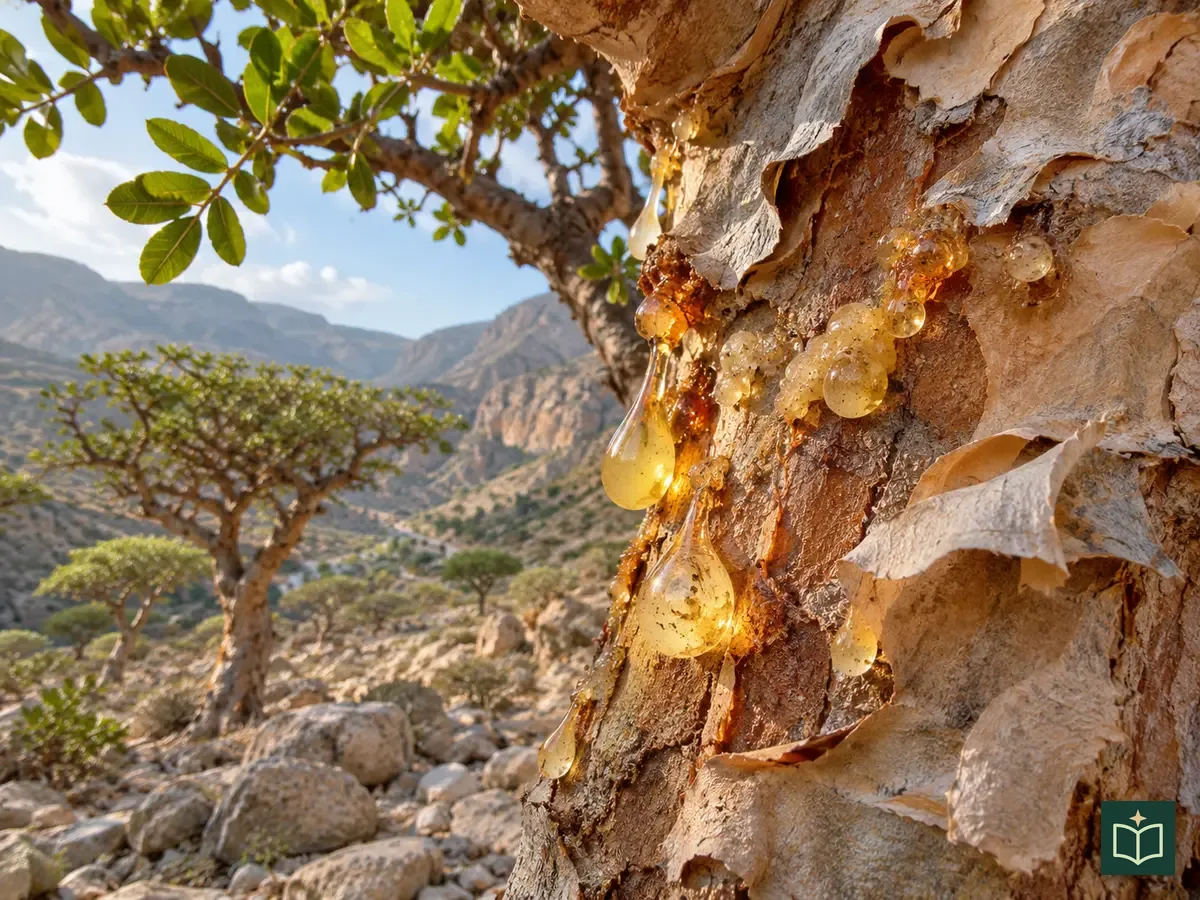
Frankincense is a fragrant gum resin produced by trees of the genus Boswellia. The most prized species, Boswellia sacra, grows in a narrow band of southern Arabia, especially Dhofar in southern Oman and neighbouring parts of Yemen, as well as in Somalia across the Gulf of Aden. These hardy trees thrive in dry, rocky ground touched by the seasonal monsoon mists. When burned, the hardened resin releases a sweet, aromatic smoke. Ancient peoples used it in religious rituals, funerals, medicine and perfume, which made demand steady and widespread across many cultures and centuries. Few natural products have been traded so far, for so long, by so many peoples.
From bark to market
Harvesting is simple but skilled. Workers scrape small sections of bark, and a milky resin seeps out to protect the wound. Over days it hardens into droplets, often called tears, which are collected and the tree is cut again. Several rounds of tapping across the warm season produce lumps of different colour and purity, and the clearest, palest grades fetch the highest prices. Because the trees grow in only a few places and cannot easily be cultivated elsewhere, the supply was naturally limited. That scarcity, combined with constant demand, turned frankincense into one of the ancient world’s luxury goods. Harvesting rights were often tied to families and tribes.
The incense routes
From the producing regions, frankincense moved by land and sea. Camel caravans carried it north along routes through western Arabia, passing kingdoms such as Saba, Ma’in and Qataban in Yemen and towns that taxed and protected the traffic, until it reached markets in the Levant, Egypt and the Mediterranean. Ports on the southern Arabian coast shipped it by sea to Egypt, the Gulf and India. The domestication of the camel, likely during the late second millennium BCE, made long desert crossings practical. Taxes and tolls along the route funded cities and temples, making incense a source of political power. Control of the route meant a share of the profits.
Dhofar’s ancient ports
In Oman, UNESCO’s Land of Frankincense World Heritage Site, inscribed in 2000, preserves this economy. It includes the frankincense trees of Wadi Dawkah, the caravan oasis of Shisr, often linked with the legendary lost city of Ubar, and the port cities of Khor Rori, ancient Sumhuram, and Al-Baleed. Khor Rori was founded around the late first millennium BCE as an outpost of a South Arabian kingdom and controlled the export of resin. Al-Baleed flourished much later, in the medieval Islamic period, showing that the trade endured for well over a thousand years. Visitors can still see the ruins and the trees that fed this trade.
Rome’s expensive habit
Classical authors were well aware of Arabia’s fragrance trade. The Roman writer Pliny the Elder, in the first century CE, complained about the huge sums the empire spent on luxuries from Arabia, India and China, and described southern Arabia as wealthy because of incense. Rome burned frankincense in temples and at funerals in large quantities. Earlier, Egyptian records describe expeditions to the land of Punt, probably on the African side of the Red Sea, to bring back incense trees and resin. Christianity later inherited the custom of burning incense in worship, sustaining demand even after Rome’s decline. The fragrance outlived the empires that first prized it.
Myths and modern uses
Frankincense is often presented as worth its weight in gold. That makes a vivid story, but prices varied greatly by grade, period and place, and there is no reliable evidence of a fixed equivalence. The trade also declined gradually rather than suddenly, as sea routes shifted and religious practices changed. Today, frankincense is still burned in homes across the Gulf and used in perfumes and traditional remedies; any medical claims should be discussed with a qualified professional. Researchers also warn that wild Boswellia populations face pressure from overtapping, grazing and land change, so sustainable harvesting has become an important concern.
Sources & further reading
Figures are rounded and widely published; check the linked organisations for the latest editions. These organisations do not endorse this website.