An old idea, modernised
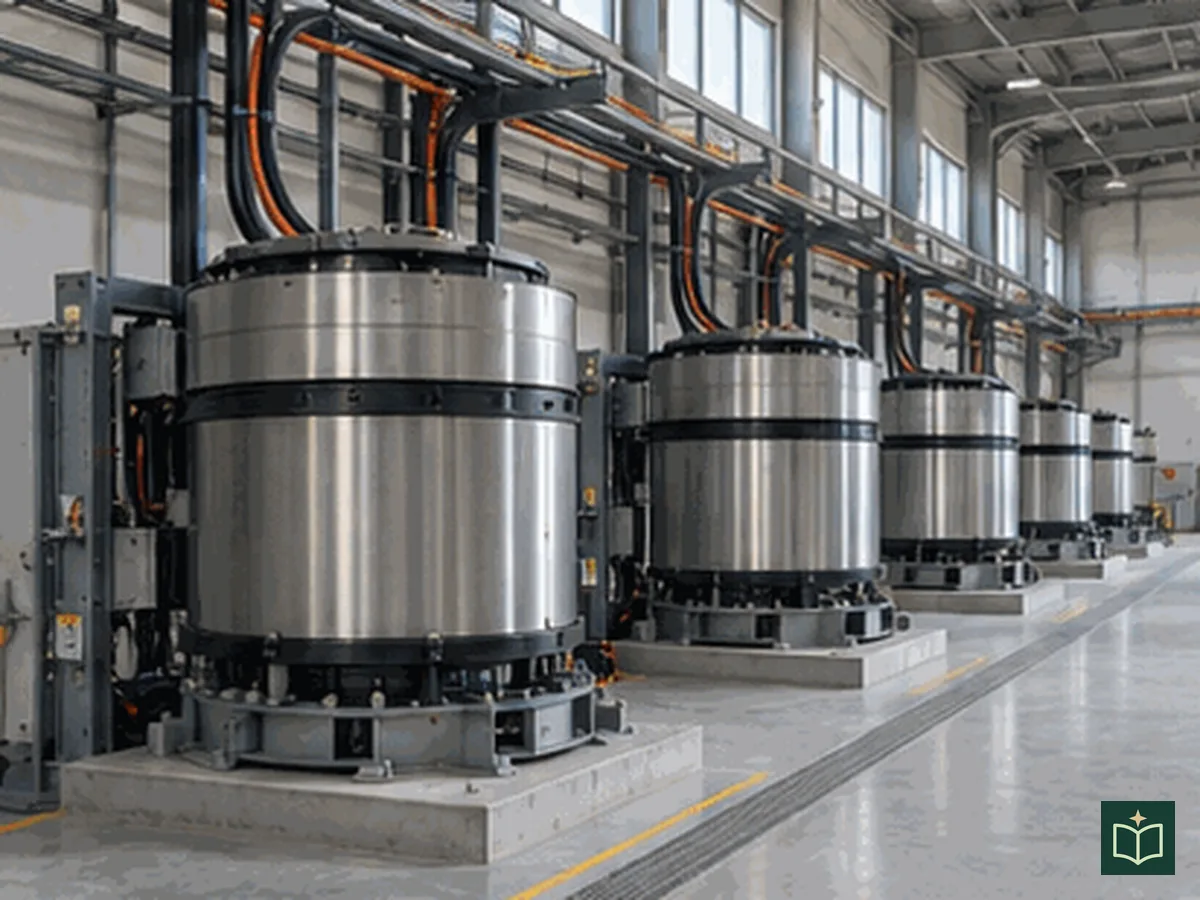
Flywheels are among the oldest energy-storage devices. Potters' wheels and steam engines used heavy wheels to smooth out uneven pushes, carrying momentum from one stroke to the next. A modern storage flywheel does the same job for electricity. An electric motor spins a rotor, storing energy as motion. When power is needed, the motor runs in reverse as a generator, and the slowing rotor feeds electricity back to the grid or to a building. Power electronics manage the flow in both directions. Unlike a chemical battery, nothing reacts or degrades inside, so a well-built flywheel can be charged and discharged hundreds of thousands of times.
Speed matters most
The energy in a spinning rotor depends on its mass, how that mass is spread out, and above all its speed. Energy rises with the square of rotational speed, so doubling the speed quadruples the stored energy, while doubling the mass only doubles it. Designers therefore chase speed. Older steel flywheels turn at a few thousand revolutions per minute; advanced rotors wound from carbon fibre can spin far faster because the material is strong and light. The limit is the rotor's own strength: spin too fast and the outer rim would tear itself apart. That is why flywheels sit in strong containment housings, often below ground.
A worked example
Consider a solid steel disc weighing 1,000 kg with a radius of 0.5 metres. Its moment of inertia, a measure of how its mass is spread, is half the mass times the radius squared: 125 kg m². At 5,000 revolutions per minute, about 524 radians per second, it stores roughly 17 megajoules, or about 4.8 kilowatt-hours. That is a modest amount of energy for a tonne of steel. Spin the same disc at 10,000 rpm and it would hold about 19 kWh, though its rim would then be travelling at more than 500 metres per second, beyond what a plain steel disc can safely bear.
Fighting friction
A spinning rotor slowly loses energy to air drag and bearing friction. Modern flywheels fight both. The rotor sits in a vacuum chamber so that there is almost no air to push against, and many designs use magnetic bearings that levitate the shaft instead of letting it rub on balls or rollers. Even so, losses continue around the clock. A flywheel left alone will gradually coast down, losing a significant share of its stored energy within hours. That self-discharge is acceptable when energy goes in and out every few seconds or minutes, but it makes flywheels a poor choice for holding solar power from the afternoon until the next morning.
Where flywheels earn their keep
Flywheels shine where speed and endurance matter more than duration. Data centres and hospitals use them in uninterruptible power supplies: when mains power fails, the flywheel supplies the load for the seconds it takes diesel generators to start. Grid operators use flywheel plants for frequency regulation, absorbing and injecting power second by second to keep the system steady; a 20-megawatt plant at Stephentown in New York has done this since 2011. Rail systems and cranes can capture braking energy in them, and racing cars have tested them for energy recovery. In each case the flywheel cycles constantly, which would wear out many batteries but barely troubles a spinning rotor.
Limits and outlook
Compared with lithium-ion batteries, flywheels store little energy for their size and cost more per kilowatt-hour of capacity. They also need careful engineering to contain a rotor if it ever fails. Their advantages are long life, fast response, tolerance of heat and a lack of hazardous chemicals. That makes them a niche rather than a rival to batteries for long-duration storage. As grids add more solar and wind, which provide less natural inertia, demand grows for devices that can react within fractions of a second. Flywheels are one option for that job, alongside batteries and synchronous condensers, and their future depends on how cheaply they can deliver it.
Sources & further reading
Figures are rounded and widely published; check the linked organisations for the latest editions. These organisations do not endorse this website.