Rain shadow
The Gobi is dry because the Himalaya and Tibetan Plateau block moist air from the Indian Ocean. Annual rainfall is generally low, and some areas receive very little.
Extreme seasons
Winters bring Siberian cold, with temperatures far below freezing and occasional snow, while summers can be very hot. Spring winds raise dust storms that can reach Beijing and beyond.
Fossils
The Gobi's sedimentary rocks are rich in fossils. Expeditions in the 1920s led by Roy Chapman Andrews found the first dinosaur eggs recognised by science, along with Velociraptor and Protoceratops fossils.
People and change
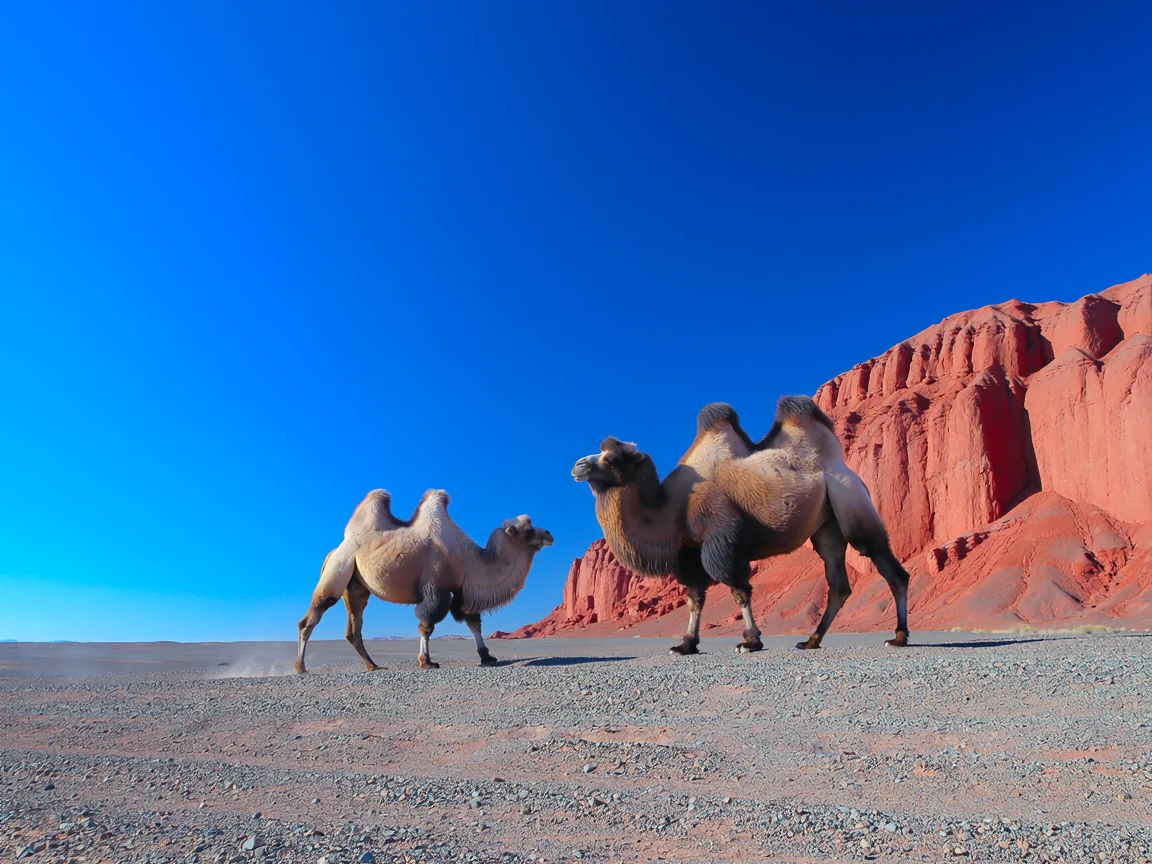
Mongolian herders have long raised camels, goats, sheep and horses here. Mining for copper, gold and coal has grown, while land degradation and desertification are concerns along the desert's edges.
Sources & further reading
Temperature extremes are approximate. Photograph: original AI-generated illustration (Adobe Firefly). Reference organisations do not endorse this website.