Two kinds of subsidy
An energy subsidy is any government measure that lowers the cost of producing energy or the price consumers pay for it. Consumption subsidies are the most visible: petrol, diesel, electricity or cooking gas sold below its market value. They are common in fuel-exporting countries and in many developing economies. Production subsidies work further upstream, through tax breaks, cheap loans, guaranteed prices or public spending that helps companies extract, refine or generate energy. They are common in richer countries and are often harder to spot, because no price tag looks unusually low. Both types shift costs from the energy user or producer onto taxpayers, state budgets or society more widely.
The price-gap method
Consumption subsidies are usually measured with the price-gap approach used by the IEA and IMF. Analysts first set a reference price: what the fuel would cost at international market value, plus transport, distribution and normal taxes. They then subtract the price consumers actually pay. The difference, multiplied by the volume consumed, gives the subsidy. In an exporting country the gap may never appear as a cash payment. Instead it is an opportunity cost, because fuel sold cheaply at home could have been exported at full price. The method is simple and comparable across countries, but results swing with world prices, so estimates can rise or fall sharply from one year to the next.
A worked example
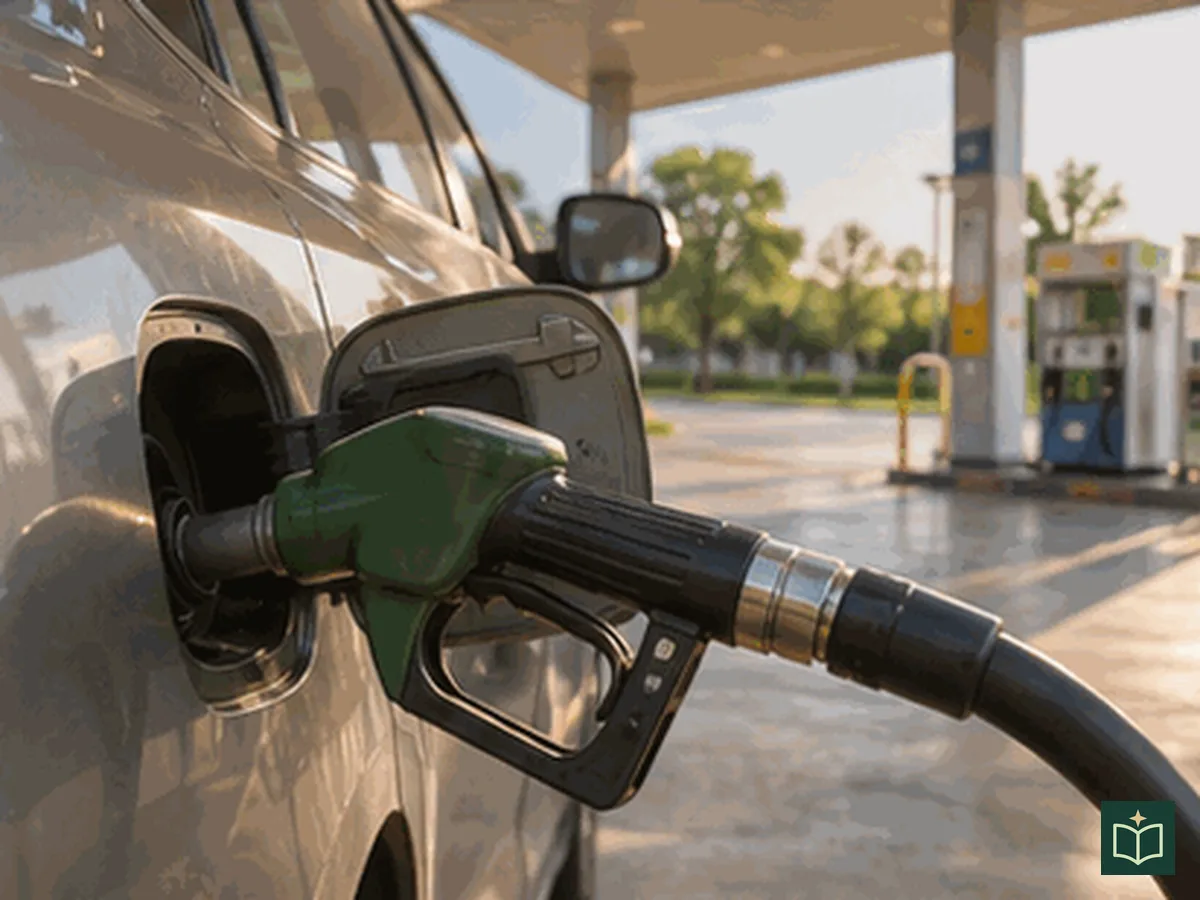
Take a hypothetical country where the reference price of petrol is AED 3.00 a litre but drivers pay AED 2.10. The price gap is AED 0.90 a litre. If the country uses 10 billion litres a year, the subsidy comes to AED 9 billion, money that is either spent from the budget or forgone in export sales. Broader estimates go further. The IMF also counts implicit subsidies, the unpriced costs of air pollution, climate change and road congestion. On that wider definition it put global fossil-fuel subsidies at about $7 trillion in 2022, of which roughly $1.3 trillion were explicit subsidies of the price-gap kind.
Why they persist
Subsidies are popular because their benefits are immediate and visible, while their costs are spread out. Cheap fuel and power ease household budgets, support industries and can be seen as a fair share of national resource wealth. Yet they carry heavy costs. They strain public finances, encourage wasteful use, and favour richer households, which own more cars and larger homes and so capture more of the benefit. They also blunt the signal to invest in efficiency. Removing them is politically sensitive: sudden price rises have triggered protests in several countries, which is why reforms are usually phased in and paired with support for poorer households.
How the Gulf reformed
Gulf states have moved steadily since the oil price fall of 2014. In August 2015 the UAE deregulated retail petrol and diesel prices, which a committee now sets each month in line with global markets. Oman, Bahrain, Kuwait and Qatar raised or liberalised fuel prices in the following years. Saudi Arabia increased fuel and electricity prices in stages from 2016 and introduced a Citizen's Account programme of cash transfers to help lower- and middle-income households absorb the change. Several countries also raised electricity and water tariffs, often keeping lower rates for nationals or for the first slabs of consumption, so that essential use stays affordable.
What to watch
Subsidy figures should be read with care. A rise in a country's estimate may reflect higher world prices rather than any new policy, and totals differ depending on whether implicit costs are included. The more telling questions are about design. Are prices linked to markets automatically, so that reforms are not quietly reversed when oil climbs? Is support aimed at people who need it, through cash transfers or lifeline tariffs, rather than through cheap fuel for all? This piece is educational and does not judge any country's choices; it simply explains how subsidies are defined, measured and reformed, so headlines about them make more sense.
Sources & further reading
Figures are rounded and widely published; check the linked organisations for the latest editions. These organisations do not endorse this website.