Swans
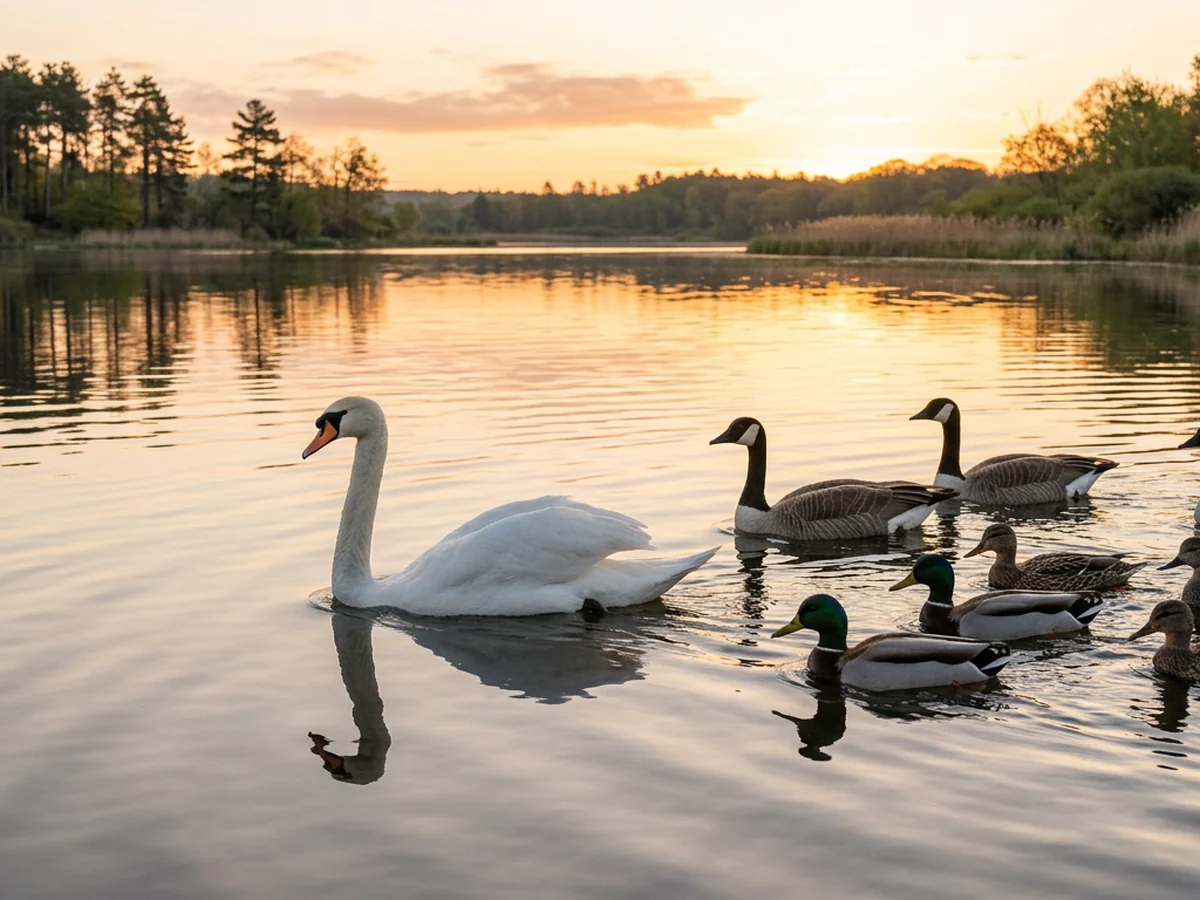
Swans use their long necks to reach plants on lake and river beds without diving. The mute swan of Europe and Asia, the whooper swan and the black swan of Australia are familiar species. Many pairs stay together for years.
Geese
Geese have stout bills suited to grazing grass and grain and spend much time on land. They migrate in V formations, which save energy by letting birds ride the updraft from those ahead.
Ducks
Ducks are the most diverse group. Dabbling ducks such as mallards tip forward to feed at the surface, while diving ducks swim underwater. Males often have bright breeding plumage; females are camouflaged brown.
Waterproof feathers
All waterfowl keep their feathers waterproof by preening with oil from a gland near the tail. Webbed feet make them strong swimmers, and many can sleep while floating.
Sources & further reading
Sizes are approximate. Photograph: original AI-generated illustration (Adobe Firefly). Reference organisations do not endorse this website.