What they are
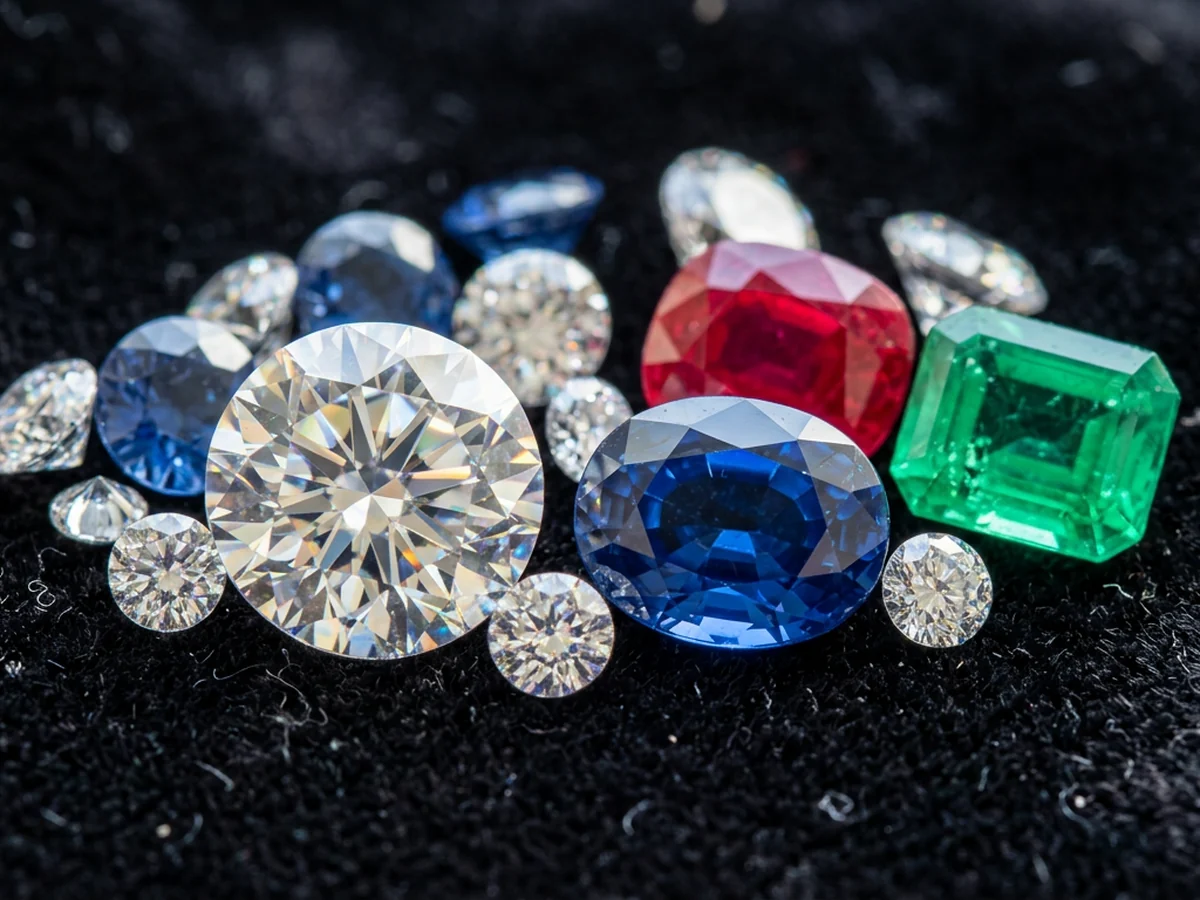
Diamonds form from carbon under enormous heat and pressure deep in Earth's mantle, or in laboratories that recreate those conditions. Cubic zirconia is grown from zirconium oxide melted at very high temperature and stabilised with other oxides.
How they look
Both are colourless and brilliant. Cubic zirconia has slightly lower refractive index but higher dispersion, so it flashes more rainbow colours. Over time it can scratch and look cloudy, while diamonds stay sharp.
Weight and heat
Cubic zirconia is about 1.7 times as dense as diamond, so a stone of the same size weighs more. Diamond conducts heat extremely well; handheld thermal testers use this to distinguish them.
Value
A diamond's price depends on the four Cs: cut, colour, clarity and carat weight. Cubic zirconia costs a tiny fraction and has little resale value. Lab-grown diamonds are genuine diamonds but are usually much cheaper than mined ones.
Sources & further reading
Hardness values are approximate. Photograph: original AI-generated illustration (Adobe Firefly). Reference organisations do not endorse this website.