How they form
Granite forms when magma cools slowly deep underground, giving crystals time to grow, which creates its speckled look. Marble forms when limestone or dolomite is subjected to heat and pressure, recrystallising into interlocking calcite crystals.
Appearance
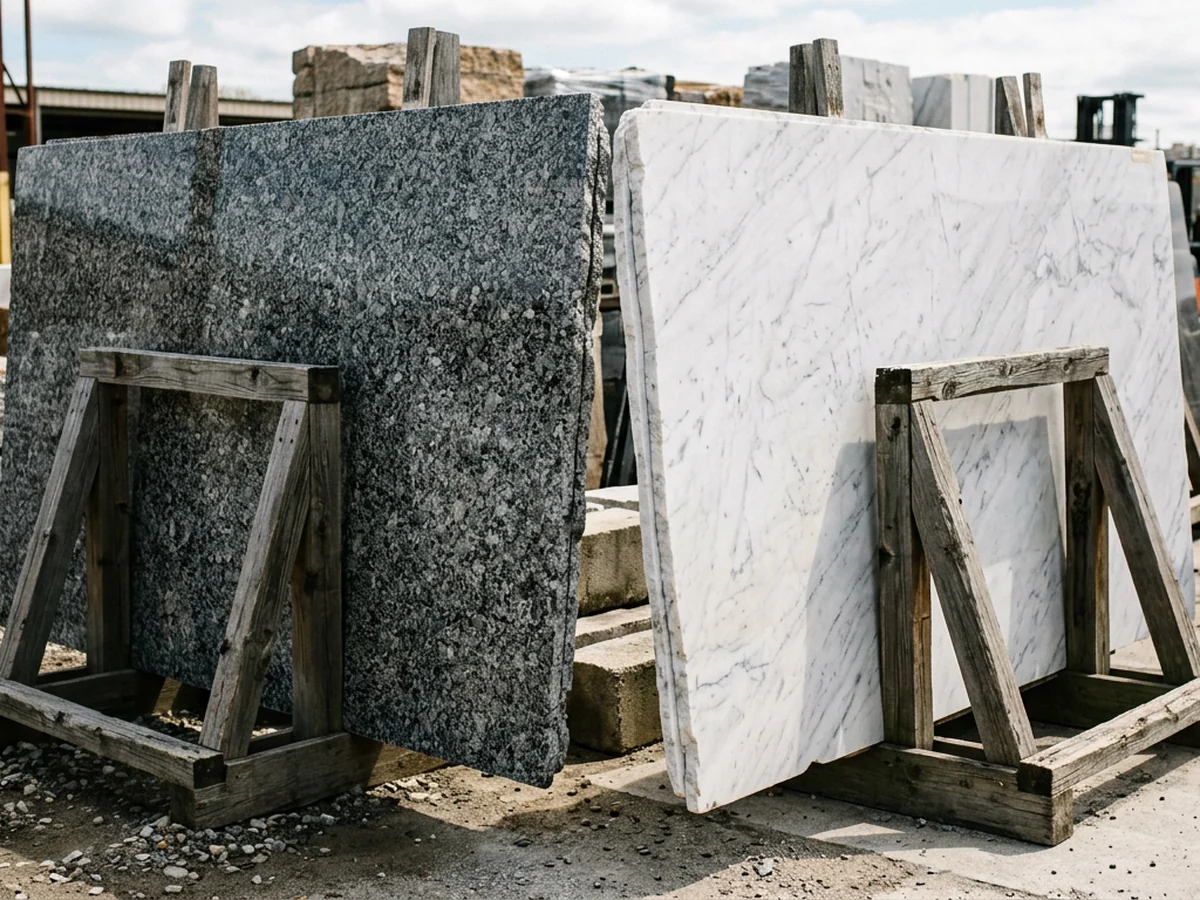
Granite has a granular, flecked pattern in greys, pinks, blacks and other colours. Marble often has a soft white or coloured background with flowing veins, prized since ancient Greece and Rome.
Durability
Granite resists scratches, heat and most stains when sealed. Marble is softer and reacts with acids, so it can scratch and etch, but it develops a patina many people value.
Uses
Granite is used for worktops, building facades, monuments and kerbstones. Marble is used in sculpture, floors, wall cladding and bathrooms, and in buildings such as the Sheikh Zayed Grand Mosque.
Sources & further reading
Hardness values are approximate. Photograph: original AI-generated illustration (Adobe Firefly). Reference organisations do not endorse this website.