A market priced by weight
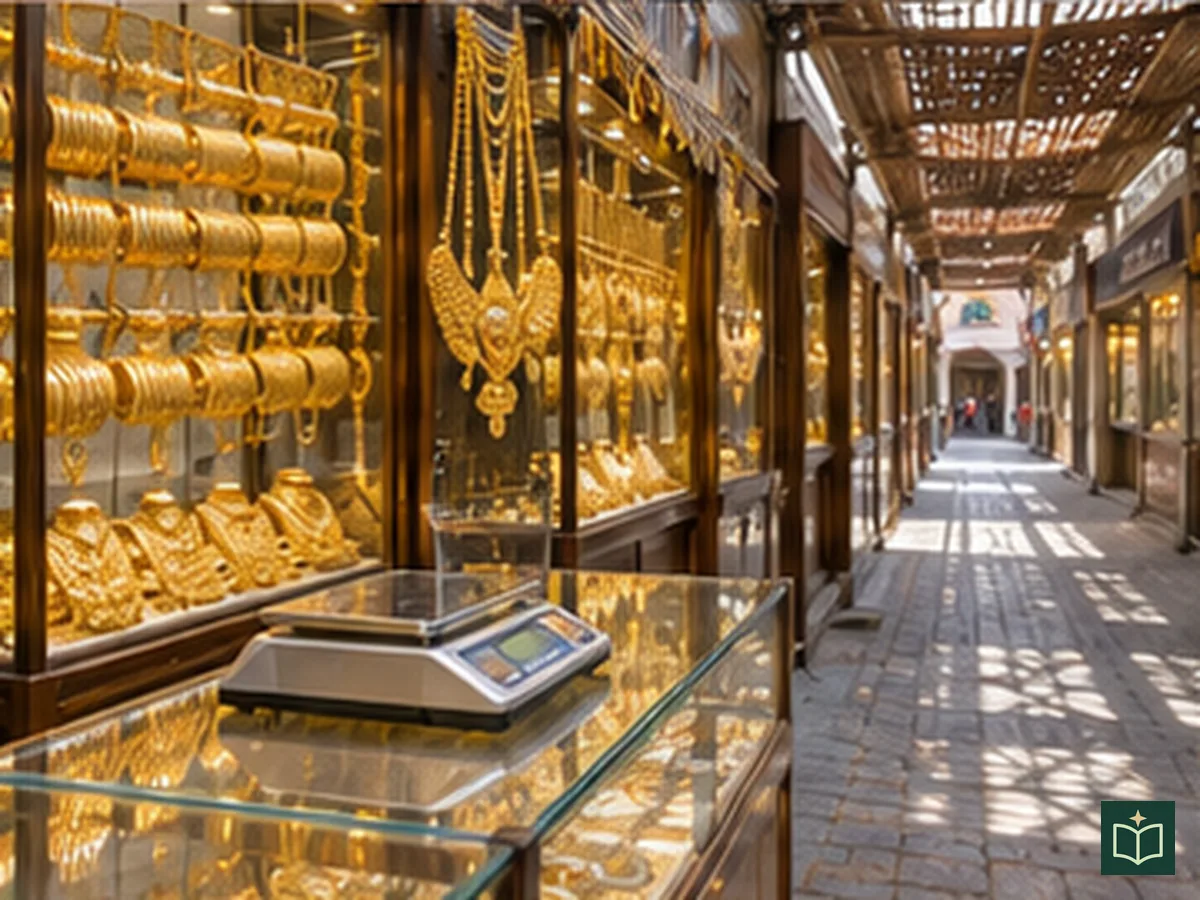
Deira's Gold Souk, a few covered lanes near Dubai Creek, holds hundreds of jewellery shops whose windows are crowded with bangles, chains and bridal sets. Unlike most fashion jewellery, the pieces are not sold mainly by design or brand. They are sold by weight. Every item is placed on a scale, and its price starts from the number of grams of gold it contains. That habit comes from a long regional tradition of treating jewellery as savings that can be worn, sold or melted down, so buyers expect the gold content to be transparent and the craftsmanship to be priced separately.
Where the daily rate comes from
Each morning, and again during the day, the Dubai Gold and Jewellery Group publishes reference rates in dirhams per gram for 24, 22, 21 and 18 karat gold. These follow the international gold price, quoted in US dollars per troy ounce of 31.1 grams. Because the dirham is pegged to the dollar, the conversion is simple: the dollar price is turned into dirhams and divided by the grams in an ounce, giving the 24-karat rate. Lower karats are scaled by their gold share, so 22-karat, at 91.6% gold, costs about 92% as much per gram. Shops display these rates on screens and generally follow them closely.
The making charge
On top of the gold value comes the making charge, which pays for design, labour and the retailer's margin. It may be quoted per gram or as a fixed sum for the piece. A plain machine-made chain might carry a modest charge, while a hand-finished necklace, filigree work or a piece set with stones can carry a much higher one. Stones themselves are usually priced separately, and their weight should be excluded from the gold weight. This charge is where prices between shops differ most, and it is the part that sellers expect to discuss. The gram rate, tied to the world market, leaves little room for movement.
A worked example
Imagine a 10-gram 22-karat chain on a day when the illustrative 22-karat rate is AED 300 a gram. The gold value is 10 × 300, or AED 3,000. The shop quotes a making charge of AED 15 a gram, adding AED 150, for a subtotal of AED 3,150. VAT at 5% adds AED 157.50, so the bill comes to AED 3,307.50. If the buyer negotiates the making charge down to AED 10 a gram, the subtotal falls to AED 3,100 and the total to AED 3,255. These figures are for illustration only; actual rates change daily with the world gold price.
Selling it back
The same logic works in reverse. When jewellery is sold back or exchanged, shops normally pay for the gold content at a buying rate close to the day's market price, sometimes less a small deduction. The making charge is not refunded, because the workmanship has no value to a refiner who will melt the piece. That is why heavily worked jewellery tends to lose more value on resale than simple pieces. Buyers who see jewellery partly as savings often choose plain, high-karat designs for this reason. Keeping the receipt and checking the karat stamp makes any later sale or exchange smoother. This is general information, not investment advice.
Common misunderstandings
Visitors sometimes assume souk gold is cheaper because the metal itself is discounted. In practice the gold is priced near world levels everywhere; savings, where they exist, come from competitive making charges and a wide choice of shops. Another mix-up concerns purity. A 22-karat piece is not 22% gold but 22 parts in 24, about 91.6%, which makes it softer and more yellow than 18-karat. Finally, VAT applies to the whole retail bill for jewellery, although eligible tourists can reclaim part of it through the official refund scheme when they leave the country. Pure investment bars follow different tax rules.
Sources & further reading
- Dubai Gold & Jewellery Group · Dubai City of Gold ↗
- UAE Federal Tax Authority · VAT ↗
- Britannica · Dubai ↗
Figures are rounded and widely published; check the linked organisations for the latest editions. These organisations do not endorse this website.