What density reveals
Density is mass divided by volume. For a planet or moon, astronomers find the mass from the gravitational pull it exerts on moons or passing spacecraft, and the volume from its measured size. The result is an average for the whole body, and it says a great deal about what lies inside. Iron is about eight times as dense as water, common rocks about three times, and ice slightly less than water. A world with a high average density must have a large metal core; a low one points to ice, water or gas. This ranking covers the eight planets and the seven moons that are more than 2,000 kilometres across.
Earth, Mercury and Venus
Earth comes first, at 5.51 grams per cubic centimetre, followed closely by Mercury and Venus. All three have large iron cores beneath rocky mantles. Earth edges ahead partly because of its size: its greater gravity squeezes its interior, compressing the rock and metal more than in smaller planets. If that compression were removed, Mercury would be the densest, because its iron core makes up an unusually large share of the planet, perhaps the result of a giant impact that stripped away much of its outer rock. Mars, much smaller, has a smaller core relative to its size and a density of only 3.93.
Rocky moons
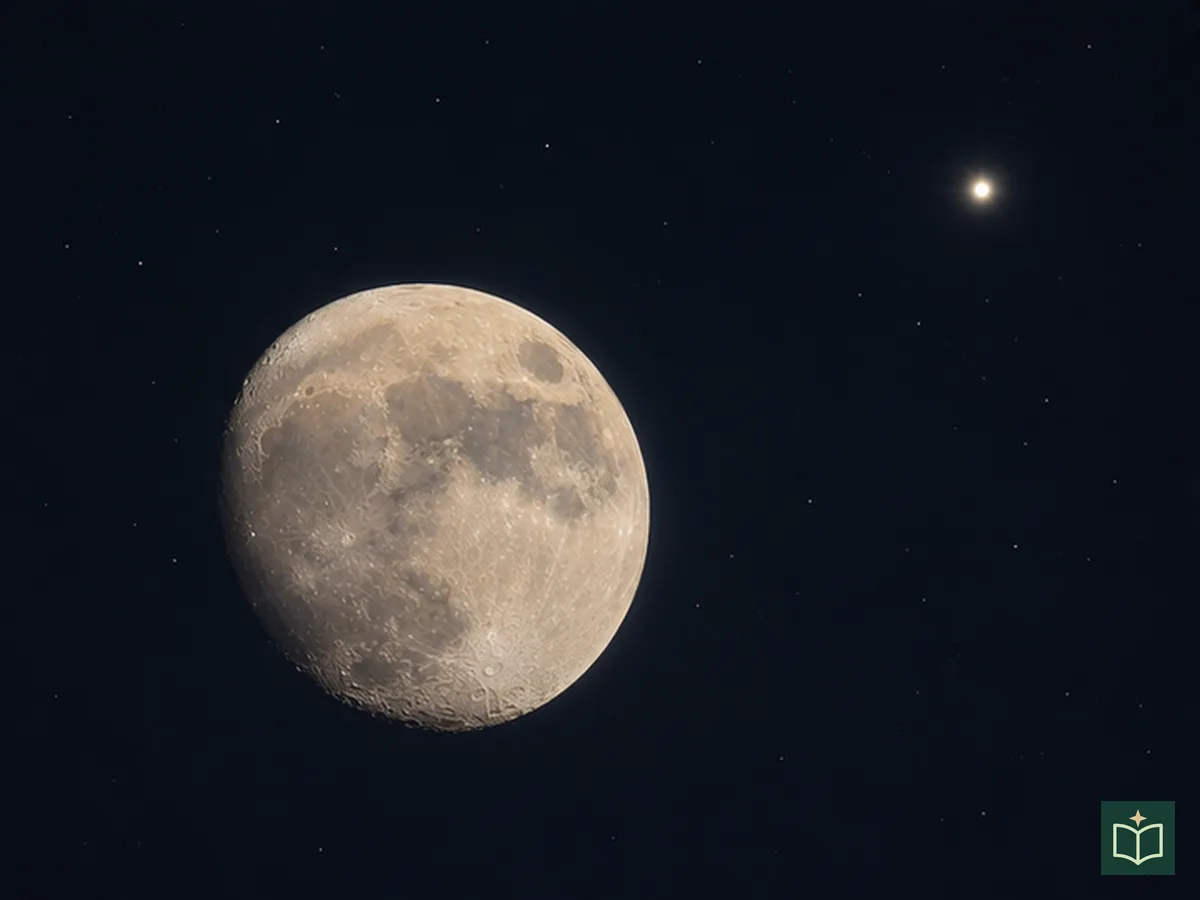
Jupiter’s moon Io is the densest moon in the solar system. It is made of rock and iron with almost no water, which has been driven off by intense heating from tidal forces. That heat also makes Io the most volcanically active world known. Earth’s Moon follows at 3.34, a low figure for a rocky body because it has only a small iron core. That supports the idea that the Moon formed from debris thrown out when a Mars-sized body struck the early Earth, a collision that mainly sent rocky mantle material into orbit. Europa, with a rocky interior under a shell of ice and ocean, comes next.
Icy moons
Further from the Sun, water was frozen when the moons formed, and ice became a major building material. Ganymede, Titan and Callisto are roughly half rock and half ice by mass, giving densities just below 2. Triton, Neptune’s largest moon, is a little denser at 2.06, closer to Pluto in make-up, which fits the view that it was captured from the outer solar system rather than formed around Neptune. Several of these moons are thought to hide oceans of liquid water beneath their surfaces. Smaller dwarf planets show the same pattern: Ceres has a density of about 2.2 and Pluto about 1.9.
Giants that would almost float
The gas giants are made mostly of hydrogen and helium, the lightest elements, compressed by enormous pressure inside. Neptune is the densest of the four at 1.64, because it contains more ice and rock relative to its gas. Jupiter’s average is 1.33, and Saturn’s is only 0.69, lower than water. That has given rise to the popular claim that Saturn would float in a big enough bathtub. The image is useful but not literal: a planet made of gas would not hold together as a floating ball. Earth’s density is about eight times Saturn’s, which shows how differently rocky and gas worlds are built.
Why it matters
Density is one of the first things astronomers estimate for a newly discovered planet around another star. If a planet’s size and mass can both be measured, its density shows whether it is likely to be rocky like Earth, rich in water, or wrapped in a thick envelope of gas. Space missions refine the figures for worlds in our own system. Gravity measurements by spacecraft orbiting Mercury, Jupiter and Saturn have shown how mass is spread inside each body, not just its average. Those details help explain how the solar system formed, with dense rocky planets near the Sun and lighter icy and gaseous worlds further out.
Sources & further reading
Figures are rounded and widely published; check the linked organisations for the latest editions. These organisations do not endorse this website.