Craters and calderas
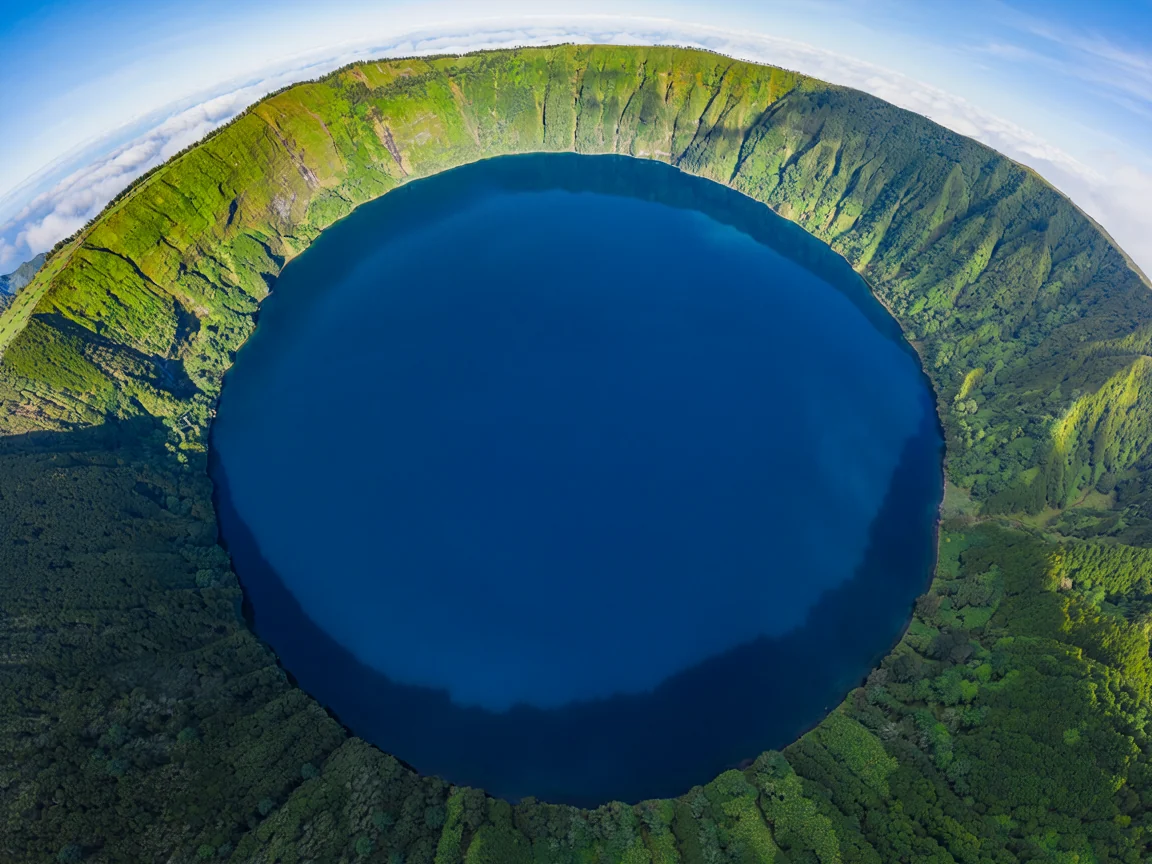
Small crater lakes fill the vents of volcanoes. Larger ones fill calderas—huge depressions formed when a massive eruption empties the magma chamber and the volcano collapses into it. Oregon's Crater Lake formed this way when Mount Mazama erupted around 7,700 years ago.
Water from the sky
Many crater lakes have no inflowing rivers. They fill slowly with rain and melting snow until evaporation and seepage balance the inflow. With little sediment washing in, the water can be extraordinarily clear and blue. Crater Lake in Oregon is the deepest lake in the United States, at 594 metres.
Giants of the world
Lake Toba in Sumatra fills the caldera of a super-eruption about 74,000 years ago, one of the largest known in the last few million years. New Zealand's Lake Taupō occupies a caldera formed by repeated eruptions, the most recent major one about 1,800 years ago.
Hidden hazards
Some crater lakes sit above active volcanoes. Acidic lakes such as Kawah Ijen in Indonesia are among the most acidic on Earth. In 1986, Lake Nyos in Cameroon suddenly released a cloud of carbon dioxide that killed about 1,700 people, which is why degassing pipes now vent the gas safely.
Sources & further reading
Depths and dates are approximate published values. Photograph: original AI-generated illustration (Adobe Firefly). Reference organisations do not endorse this website.