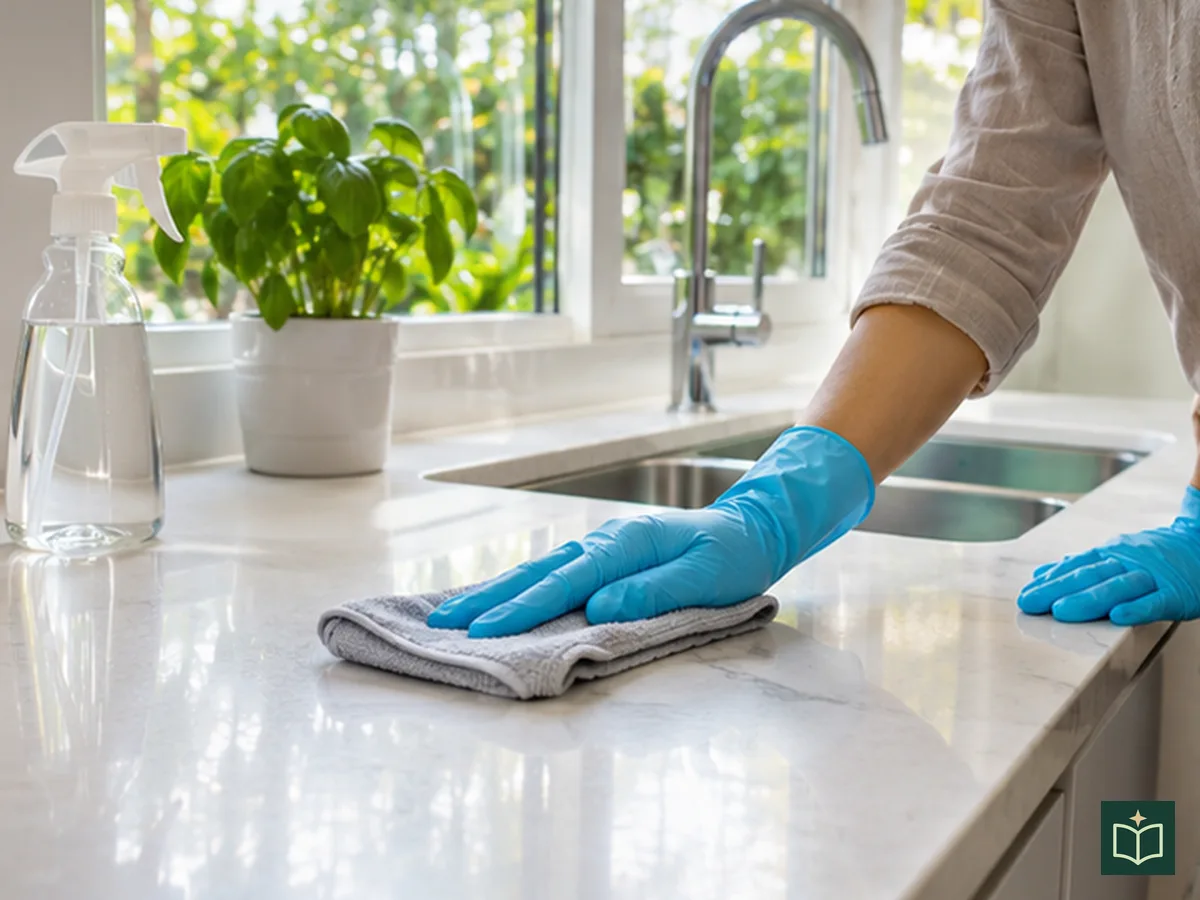
Three different jobs
Cleaning, disinfecting and sterilising are often used as if they meant the same thing, but public health agencies treat them as distinct steps. Cleaning means physically removing dirt, grease and many germs from a surface, usually with soap or detergent, water and friction. Disinfecting means using chemicals or heat to kill most disease-causing microbes on a surface, though not necessarily all. Sterilising means destroying every form of microbial life, including bacterial spores, which can survive boiling and many disinfectants. Some agencies add a fourth term, sanitising, for reducing germs to levels judged safe, often on food-contact surfaces. Each step goes further than the last, and each has its place.
Why cleaning comes first
Cleaning is the foundation, and skipping it undermines the other steps. Detergents loosen grime and grease so that it can be wiped or rinsed away, taking many germs with it. Dirt left behind acts as a shield: organic matter such as food residue, blood or mud can protect microbes and react with disinfectants, weakening them. That is why disinfectant labels typically say to clean visible soiling first. For most surfaces in a home, such as floors, shelves and tables, regular cleaning with ordinary detergent is enough to keep germs at a level that rarely causes harm, because healthy people constantly live alongside vast numbers of harmless microbes.
What disinfecting does
Disinfectants include bleach solutions, alcohols around 70% strength, hydrogen peroxide and quaternary ammonium compounds. They damage the membranes, proteins or genetic material of microbes. Two details matter. First, contact time: most products must stay wet on a surface for a stated period, often from one to ten minutes, to work as claimed; wiping on and immediately off may achieve little. Second, the kill claims. A product that kills 99.9% of bacteria removes all but one in a thousand, so a surface with a million bacteria would still hold about a thousand. Never mix bleach with ammonia or acidic cleaners, since the combination releases toxic gases.
What sterilising takes
Sterilising is the highest level, needed when instruments enter sterile parts of the body, such as during surgery or injections. The most common method is the autoclave, which uses steam under pressure. A typical cycle holds 121°C for at least 15 minutes, or a higher temperature for less time; the pressure lets water stay liquid and steam carry heat well above the normal boiling point. Hospitals also use dry heat, ethylene oxide gas, hydrogen peroxide plasma and radiation for items that cannot tolerate steam. Ordinary boiling at 100°C kills most bacteria and viruses but cannot be relied on to destroy every heat-resistant spore.
What a home actually needs
For a typical household, regular cleaning does most of the work. Disinfection makes sense in specific situations: kitchen surfaces after handling raw meat, poultry or fish; bathrooms and door handles when someone at home has a stomach bug or another infection; and surfaces touched by people with weakened immune systems. Health services such as the NHS advise sterilising babies' bottles and feeding equipment until about 12 months, using boiling, steam sterilisers or cold-water sterilising solutions, because infants' immune systems are still developing. Beyond that, true sterility at home is neither achievable nor necessary, since surfaces are recontaminated from the air and from hands within moments.
The limits of more
More is not always better. Heavy, routine use of disinfectants on every surface adds cost, can irritate skin and lungs, and in enclosed spaces with poor ventilation may worsen asthma symptoms. Scientists are also studying whether overuse of some antimicrobial chemicals could encourage resistant microbes. Products marketed as killing 99.9% of germs are not sterilising, and most germs in a home are harmless anyway. The sensible approach, endorsed by public health agencies, is targeted hygiene: clean routinely, wash hands well, disinfect the places and moments where infection risk is genuinely higher, and leave sterilisation to equipment that truly needs it, mostly in clinics and hospitals.
Sources & further reading
- US CDC · Hygiene ↗
- NHS · Sterilising baby bottles ↗
- World Health Organization · Infection prevention and control ↗
Figures are rounded and widely published; check the linked organisations for the latest editions. These organisations do not endorse this website.