From recommendation to examination
Early Chinese dynasties filled government posts mainly through recommendation, which favoured powerful families. The Sui dynasty, which reunified China in 589, introduced written examinations for officials around 605. The Tang dynasty kept and expanded them, although aristocratic connections still mattered. The real turning point came under the Song dynasty, from 960, when the examinations became the main route into the upper bureaucracy and the number of candidates soared. Printing made books cheaper, schools spread and families of modest wealth could hope to see a son succeed. The system, with interruptions, lasted until 1905, when the Qing government abolished it while trying to modernise education. That gives a span of about 1,300 years.
What candidates studied
The core curriculum was Confucian. Candidates memorised the Four Books, including the Analects of Confucius and the Mencius, and the Five Classics, which covered poetry, history, rites and divination. From the fourteenth century the official commentaries of the Song scholar Zhu Xi became the accepted interpretation. Under the Ming and Qing dynasties, answers had to follow a rigid format known as the eight-legged essay, with a fixed sequence of parts and balanced phrasing. Poetry, calligraphy and policy questions also featured at various times. Preparation could take twenty years or more, often starting in early childhood, and many candidates sat the examinations repeatedly well into middle age.
A ladder of tests
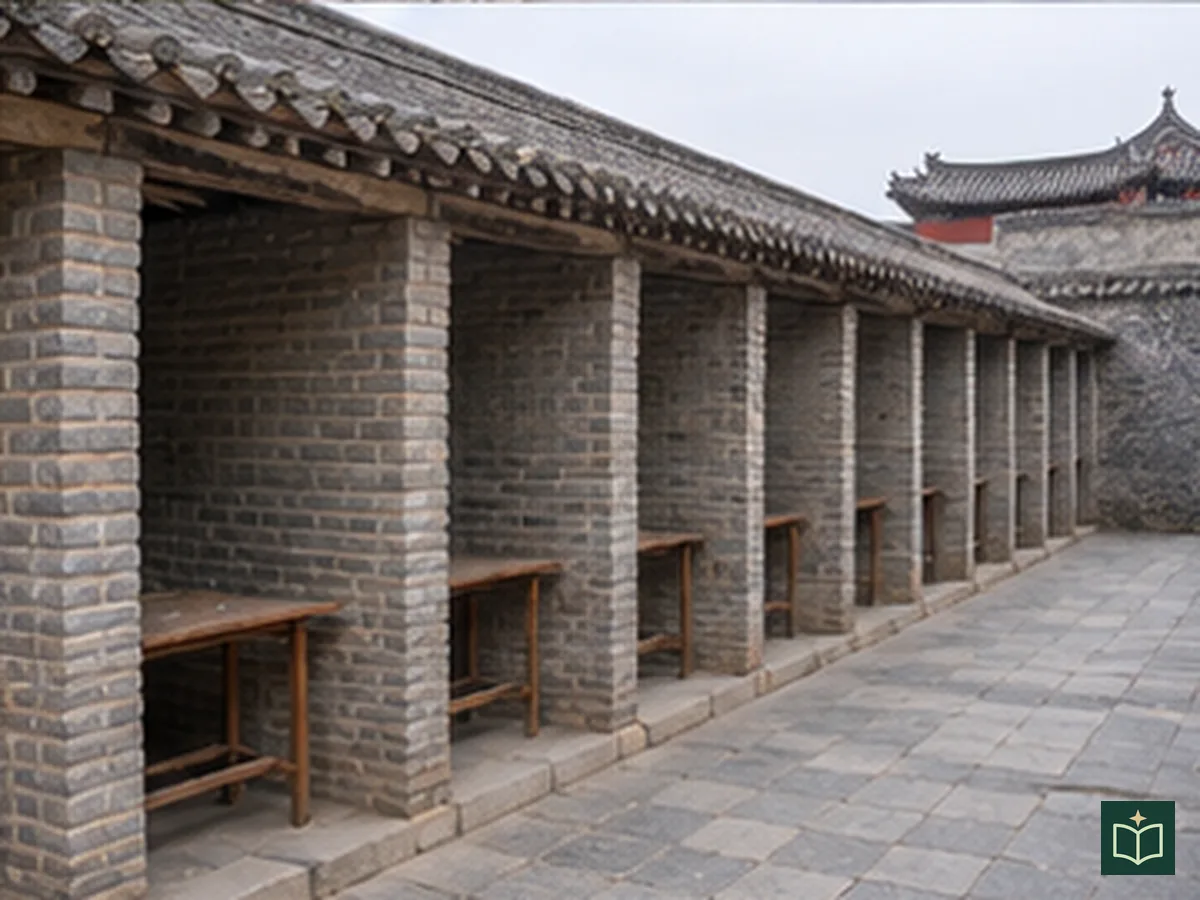
In the late imperial period the examinations formed a ladder. Local examinations produced licentiates, who gained status and legal privileges. Every three years, provincial examinations were held in walled compounds, where candidates spent several days in tiny individual cells, writing, eating and sleeping there. The compound in Nanjing had more than 20,000 cells. Those who passed, known as juren, could travel to the capital for the metropolitan examination, followed by a palace examination ranked under the emperor’s authority. Only a few hundred men a time earned the highest degree, jinshi. To limit cheating, names were covered, and in some periods clerks recopied every answer so that examiners could not recognise handwriting.
Who could compete
In principle the examinations were open to most adult men, regardless of birth, and some famous officials did rise from modest backgrounds. In practice, years of study without earning a living required family support, so landowning and scholarly families dominated. Women were excluded throughout. At times merchants, actors and some other groups faced restrictions. Pass rates were very low, and most candidates never gained a degree. Those who failed did not simply disappear, though: they became teachers, clerks, writers and local leaders, spreading a shared literary culture across a vast territory. Large lineages pooled money to support promising boys, treating examination success as a family investment that could pay off for generations.
How it shaped China
The examinations created a governing class with a common education, language of writing and set of values, which helped hold together an empire of enormous size and diversity. Officials appointed far from home applied similar principles everywhere. The system also gave the state a peaceful channel for ambition, which may have added to stability. Critics, then and later, argued that the focus on memorisation and set essay forms rewarded conformity over practical skill. By the nineteenth century, when China faced industrialised powers, reformers saw the syllabus as unsuited to engineering, science and modern administration. Its abolition in 1905 removed a pillar of the old order shortly before the dynasty itself fell in 1912.
A model others borrowed
China’s examinations influenced its neighbours. Korea held civil service examinations for nearly a thousand years, and Vietnam used them into the early twentieth century. European writers who learned of the system through missionaries and travellers admired its principle of selection by merit. In Britain, reforms following the Northcote–Trevelyan report of 1854 introduced competitive examinations for the civil service, and Chinese practice is often cited as part of the inspiration. Today, entrance examinations for universities and public service in many countries echo the same idea. China’s national university entrance exam, the gaokao, is sometimes compared with its imperial ancestor, though its content and purpose are very different.
Sources & further reading
Figures are rounded and widely published; check the linked organisations for the latest editions. These organisations do not endorse this website.