A colony from Tyre
Carthage was founded on the coast of today's Tunisia by Phoenicians from Tyre, in modern Lebanon. Tradition sets the date at 814 BC, and archaeology places the earliest settlement not long after. Its Phoenician name, Qart-hadasht, simply means 'new city'. The site had a sheltered bay and a position at the narrow waist of the Mediterranean, close to Sicily. As Tyre itself fell under the power of Assyrian and Babylonian empires, Carthage became the leading city of the Phoenician west. Its people spoke Punic, a form of Phoenician, which is why the Romans called them Poeni and the later wars Punic.
An empire of harbours
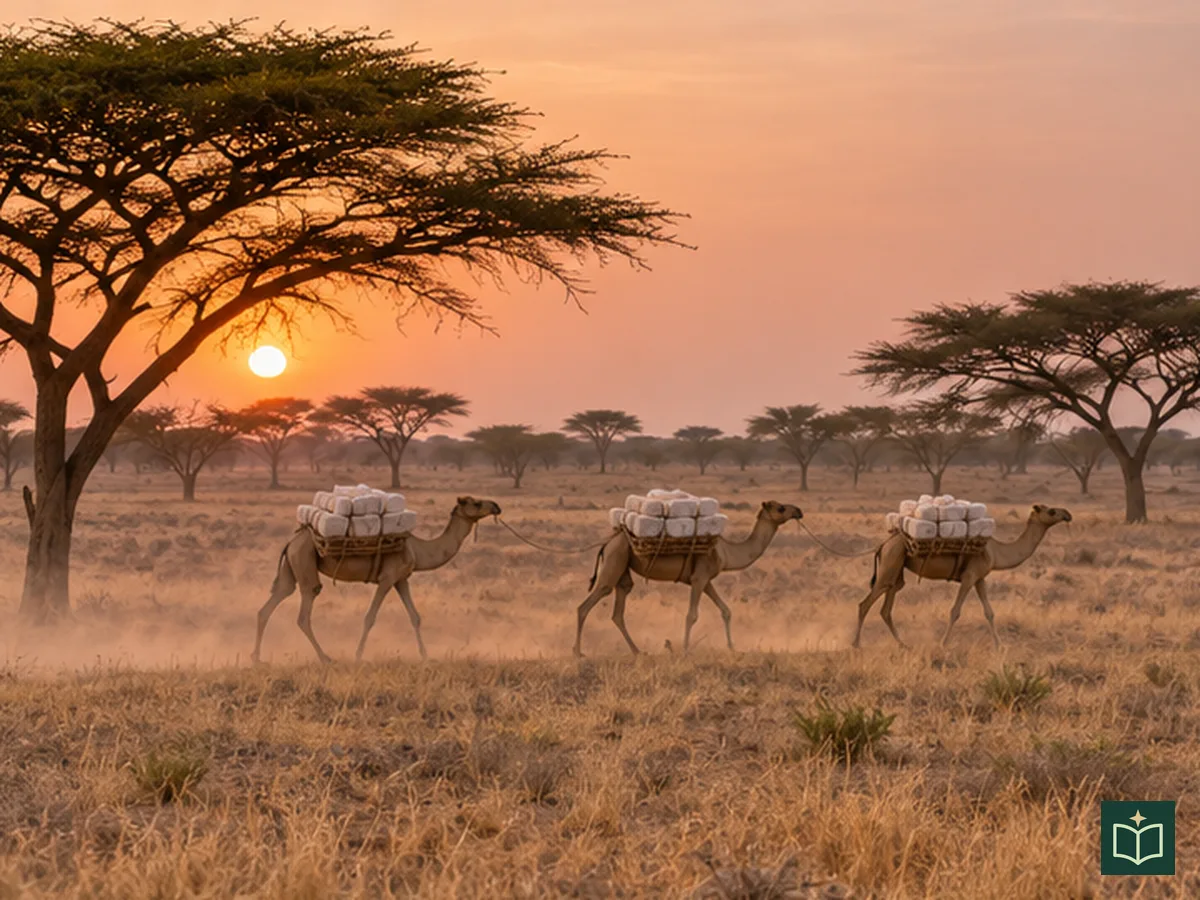
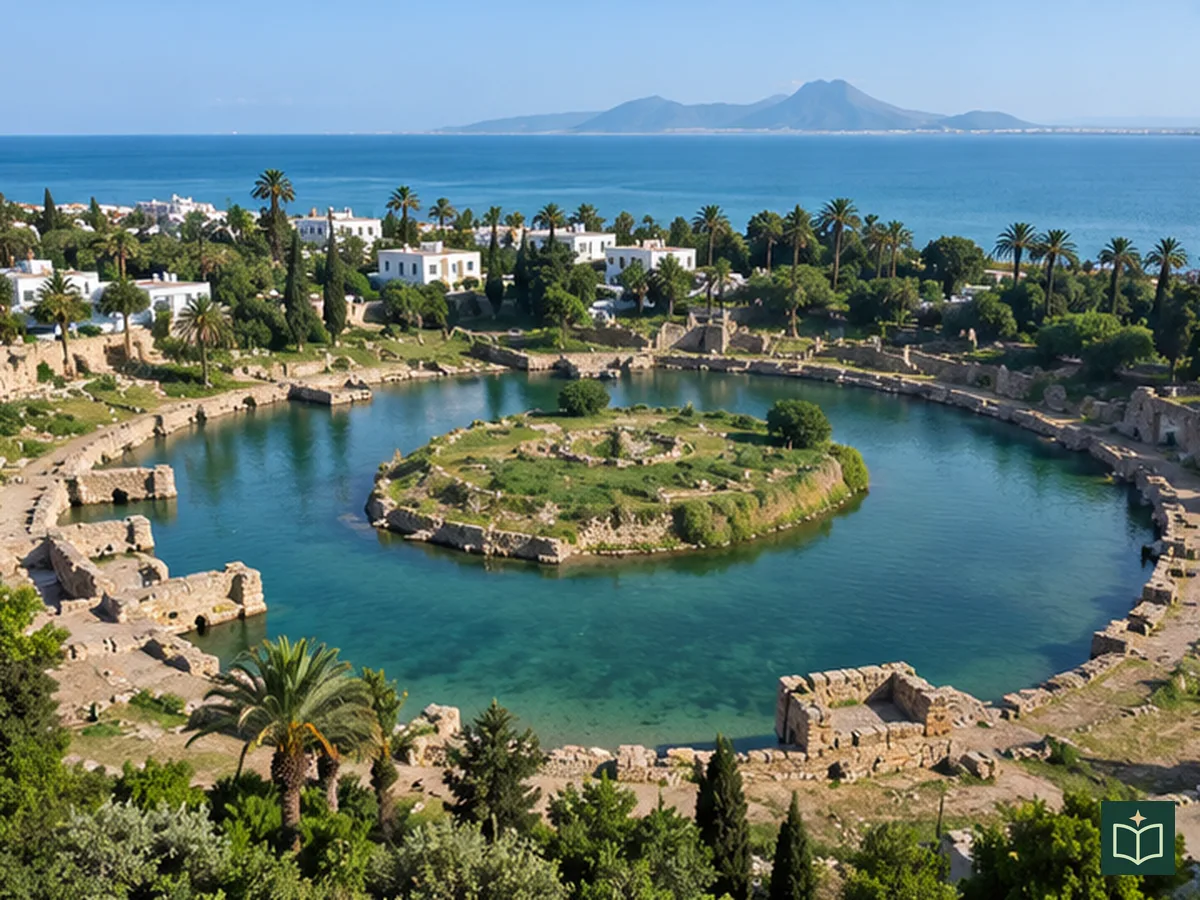
Carthage built its power on trade rather than conquest of large territories. By the fourth century BC it controlled or influenced ports across North Africa, western Sicily, Sardinia, the Balearic Islands and southern Spain, trading metals, textiles, wine, olive oil and luxury goods. It also farmed rich land in its hinterland. The city's famous harbours included a circular naval port with a central island and sheds for well over a hundred warships. Carthage hired much of its army from Libyans, Iberians, Gauls and other peoples, while its own citizens crewed the fleet. That model worked well, until it met a rival that never ran short of soldiers.
The First Punic War
Rome and Carthage had signed treaties for centuries, but after Rome took control of southern Italy the two met in Sicily. War broke out in 264 BC over the city of Messana. Rome, a land power, built its first large fleet, reportedly copying a captured Carthaginian warship, and added a boarding bridge, the corvus, that let its soldiers fight at sea as if on land. After 23 years of costly fighting and several fleets lost to storms, Carthage was defeated off Sicily in 241 BC. It gave up the island and paid a heavy indemnity, and soon afterwards Rome also seized Sardinia and Corsica.
Hannibal's war
Carthage rebuilt its strength in Spain, led by the Barca family. In 218 BC Hannibal Barca marched an army with war elephants from Spain over the Pyrenees and the Alps into Italy. He won a series of crushing victories, most famously at Cannae in 216 BC, where his smaller force encircled a much larger Roman army. Yet Rome refused to make peace, and most of its Italian allies stayed loyal. A Roman army under Scipio eventually invaded Africa, and Hannibal was recalled and defeated at Zama in 202 BC. The peace stripped Carthage of its fleet, its overseas territory and its right to wage war without Rome's consent.
Destruction in 146 BC
Carthage recovered economically, which alarmed some Romans. The senator Cato the Elder is said to have ended his speeches by insisting that Carthage must be destroyed. When Carthage fought back against raids by the neighbouring Numidian king, Rome treated it as a breach of the treaty and declared war in 149 BC. The city withstood a siege for nearly three years. In 146 BC Roman troops under Scipio Aemilianus broke in, fought street by street, burned much of the city and enslaved the survivors. The popular story that the Romans sowed the ground with salt has no ancient source and appears to be a much later invention.
After Carthage
Rome did not leave the site empty for long. A century later Julius Caesar and Augustus refounded Carthage as a Roman colony, and it grew into one of the largest cities of the western empire and an important centre of early Christianity. The victory over Carthage made Rome master of the western Mediterranean and pulled it towards an empire spanning the whole sea. Much of what we know about Carthage comes from its enemies, especially Greek and Roman historians, so modern archaeology matters greatly. The ruins at Carthage, now in the suburbs of Tunis, became a UNESCO World Heritage Site in 1979.
Sources & further reading
Figures are rounded and widely published; check the linked organisations for the latest editions. These organisations do not endorse this website.