Food security in the desert
The UAE has a hot, dry climate, very little fresh water and limited farmland, so it imports the great majority of its food. Global events such as the COVID-19 pandemic showed how supply chains can be disrupted. The UAE's National Food Security Strategy aims to make the country one of the world's most food-secure nations, partly by supporting technologies that grow more food locally with less water.
What vertical farming is
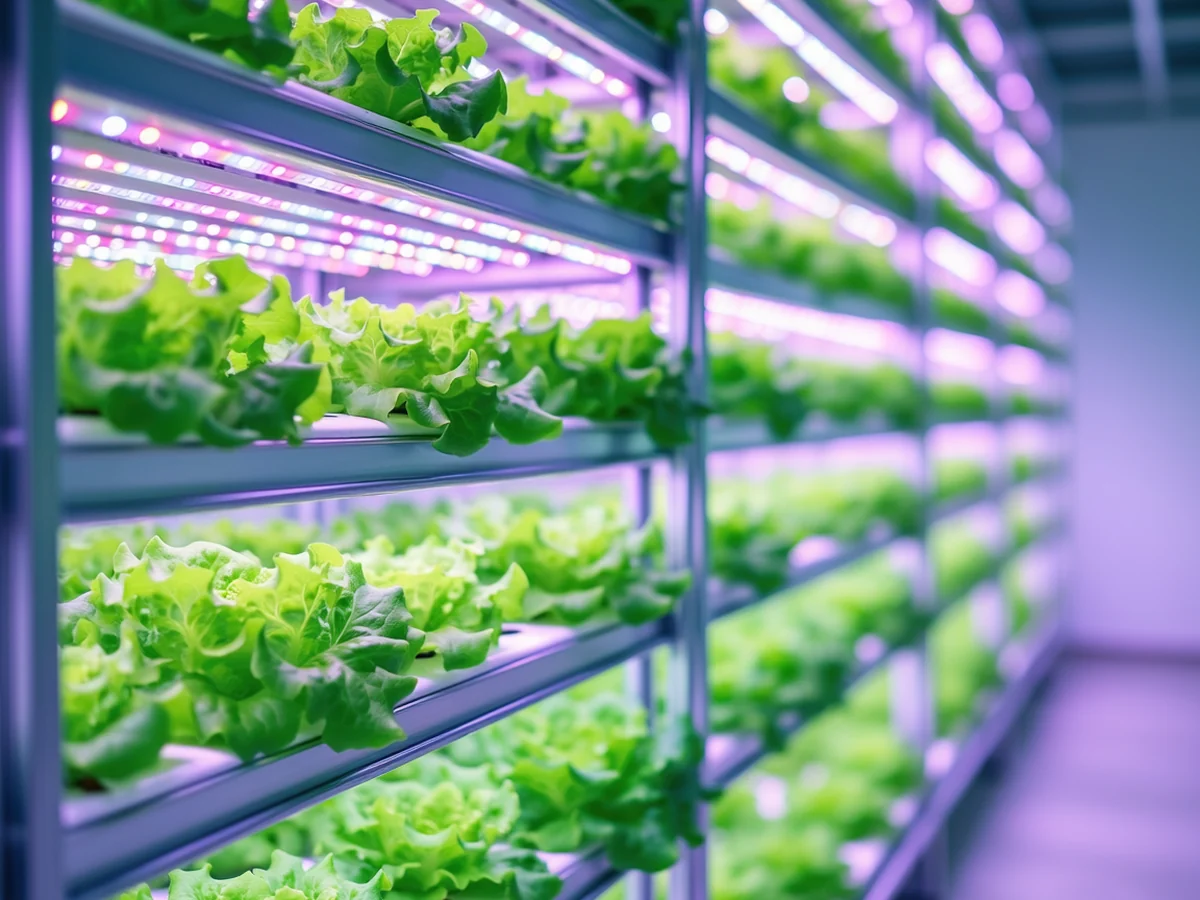
Vertical farms grow crops indoors on shelves stacked many layers high, under LED lights, often using hydroponics, where plant roots are fed with water containing nutrients instead of soil. Because conditions are fully controlled, crops can be grown all year round regardless of the weather outside, even in the summer heat, without pesticides, and close to where they will be eaten, reducing transport and spoilage.
Bustanica opens
In July 2022, Emirates Flight Catering, which prepares meals for Emirates and many other airlines, and the US company Crop One opened Bustanica, the first farm of their joint venture Emirates Crop One. Located near Al Maktoum International Airport at Dubai World Central, the 40-million-dollar facility covers about 330,000 square feet and was described at its opening as the world's largest vertical farm.
What it grows
Bustanica grows leafy greens such as lettuces, rocket, mixed salad greens and spinach. At launch, it was designed to produce more than a million kilograms of greens a year, with around three tonnes harvested each day. The produce supplies meals on Emirates and other airlines, and is also sold in supermarkets in the UAE under the Bustanica brand. The operators said they planned to expand into other fruits and vegetables.
AI in the farm
Bustanica uses machine learning, artificial intelligence and automation to manage its crops, according to its operators. Sensors monitor conditions such as light, temperature, humidity, carbon dioxide and nutrient levels, and software adjusts them to optimise growth. Data from each growing cycle helps refine recipes for different crops. Siemens supplied automation and control technology to help run the facility efficiently.
Saving water
Because water in a closed hydroponic system is captured, recycled and reused, Bustanica's operators say it uses about 95% less water than conventional outdoor farming. In a country where much drinking water comes from energy-intensive desalination, this is a major advantage. The controlled environment also means crops do not need pesticides or herbicides, and fewer greens are wasted.
The energy question
Vertical farms use a lot of electricity for lighting, cooling and climate control, especially in a hot climate. This is one of the main challenges for the industry, and several vertical farming companies in other countries have struggled financially because of high energy costs. Improvements in LED efficiency, AI-based optimisation and access to cheaper clean electricity, such as solar power in the UAE, can help make vertical farming more sustainable.
Other UAE agritech
Bustanica is part of a wider push for agricultural technology in the UAE. Other companies operate vertical farms and high-tech greenhouses across the country, and Abu Dhabi has supported agritech companies through investment and research programmes. Researchers in the UAE also use AI to monitor date palms, manage irrigation and develop crops that tolerate heat and salty water.
Beyond greens
Today, vertical farms are best suited to fast-growing, high-value crops such as leafy greens and herbs, which have short growing cycles and are expensive to transport fresh. Growing staple crops such as wheat or rice indoors remains far too costly. Researchers and companies around the world are working on expanding the range of crops, such as strawberries and tomatoes, and using AI and robotics to reduce labour and energy costs.
Why it matters
Bustanica shows how AI and controlled-environment agriculture can help a desert country grow fresh food locally, using far less water and no pesticides. It contributes to the UAE's food security goals and offers lessons for other dry regions facing climate change. Making such farms affordable and energy-efficient at larger scale is the next challenge, and AI is likely to play a central role. Each improvement in efficiency brings fresh, locally grown food within reach of more families at lower cost.
Sources & further reading
- Dubai Media Office · Emirates Flight Catering opens world's largest vertical farm in Dubai (2022) ↗
- Siemens · Bustanica: smart, sustainable food production ↗
- Arabian Business · Emirates unit opens world's largest 40 million dollar vertical farm in Dubai (2022) ↗
Figures are as reported at launch and may have changed. Photograph: original AI-generated illustration (Adobe Firefly). Reference organisations do not endorse this website.