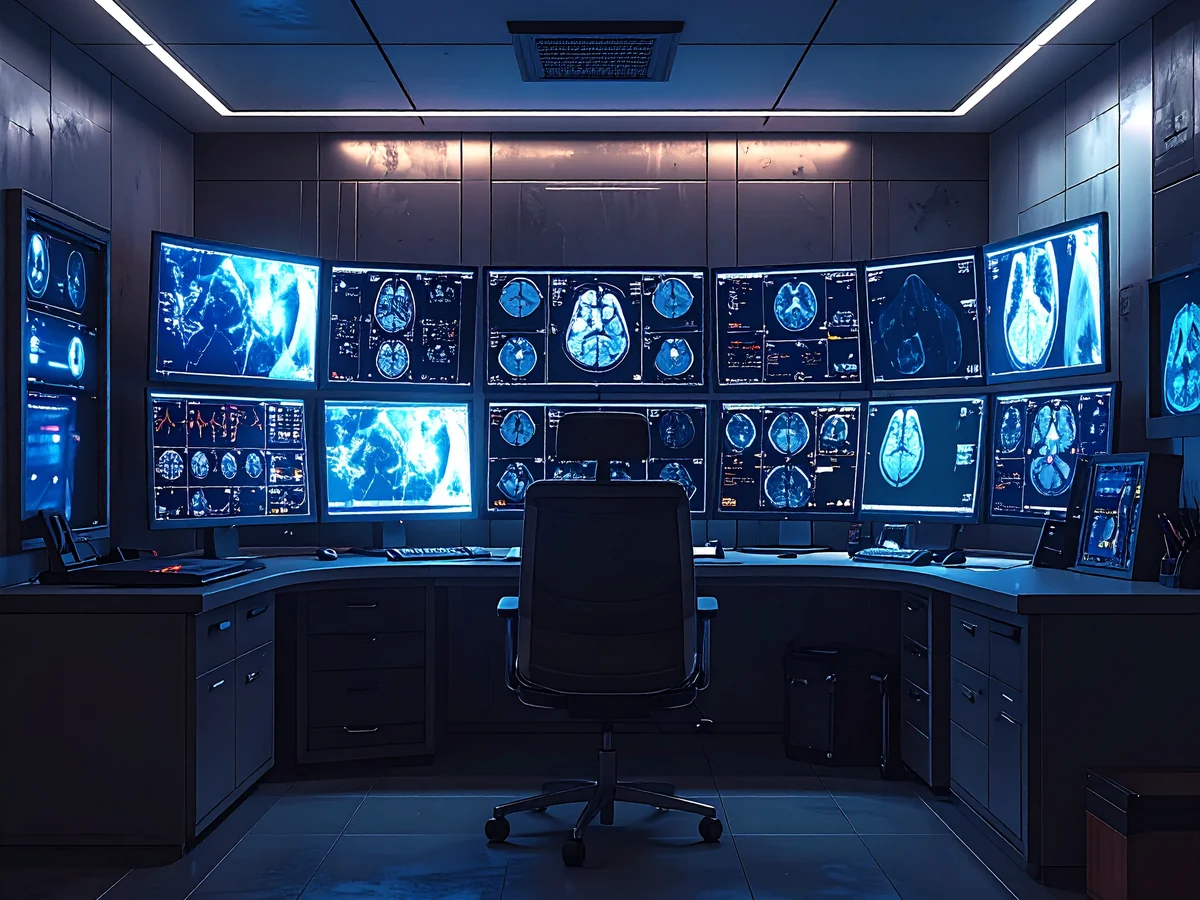
A bold prediction
In 2016, at a conference in Toronto, Geoffrey Hinton, one of the pioneers of deep learning, said that people should stop training radiologists now. He argued it was completely obvious that within five years, or ten at most, deep learning would do better than radiologists at analysing medical images, comparing radiologists to a cartoon coyote that has run off a cliff but has not yet looked down. The remark became one of the most quoted predictions about AI and jobs.
AI did improve
Hinton was right that AI would become very good at analysing medical images. AI systems now detect lung nodules, fractures, brain bleeds, breast cancers and many other conditions, sometimes matching or exceeding specialists on specific tasks. Radiology has more AI tools cleared by the US Food and Drug Administration than any other medical specialty, accounting for the large majority of AI-enabled medical devices on the FDA's list.
But demand grew
Yet radiologists were not replaced. In the United States, demand for imaging grew rapidly as populations aged and scans became more common, with radiology caseloads rising by about 25% between 2018 and early 2025, according to the Journal of the American College of Radiology, as reported by Fortune. Many countries report shortages of radiologists, with patients in some places waiting weeks or months for scan results.
The Mayo Clinic example
The New York Times reported in 2025 that the Mayo Clinic in the United States, rather than cutting radiologists, had increased their number by about 55% since 2016, to around 400. At the same time, it built a team of AI scientists and engineers and was using more than 250 AI models, mostly in radiology and cardiology. Its radiology chair said the goal was to use AI to make radiologists better, not to replace them.
Rising pay
With demand outstripping supply, radiologists' pay has risen. According to Medscape data reported by Fortune, the average salary for radiologists in the United States reached about 571,000 dollars in 2025, up 9% from the previous year, among the highest of any medical specialty. Rather than a dying profession, radiology has become one of the most sought-after, though many radiologists report heavy workloads and burnout.
What radiologists really do
One reason the prediction failed is that radiologists do much more than look at images. They decide which scans are appropriate, interpret findings in the context of a patient's history and other tests, consult with other doctors, perform image-guided procedures, such as biopsies, communicate results and take responsibility for diagnoses. AI can handle specific tasks, but combining all of these requires human judgement.
Hinton revisits
In 2025, Hinton told The New York Times that he had spoken too broadly and had focused narrowly on image analysis, overestimating how quickly AI would change the field. He said the future would be a combination of AI and radiologists, making radiologists much more efficient and improving accuracy. His original prediction has become a widely cited lesson in humility about forecasting AI's impact on jobs.
Tasks, not jobs
Economists who study automation often distinguish between tasks and jobs. Most jobs consist of many tasks, and technology typically automates some of them while leaving others, sometimes changing the job rather than eliminating it. In radiology, AI can speed up reading, flag urgent cases and reduce routine work, potentially allowing radiologists to handle more scans and focus on complex cases. The same pattern may apply in many professions.
Not the final word
This does not mean AI will never reduce the need for radiologists or other professionals. AI is improving quickly, and future systems that can interpret entire scans, write reports and integrate patient information could take on much more of the work. Health systems facing shortages, including in the Gulf, are looking to AI to help radiologists keep up. How the profession evolves will depend on technology, regulation, costs and patient trust.
Why it matters
The radiology story shows that predicting AI's impact on work is harder than it seems. Even when AI masters a key task, jobs can survive and even grow, because people do more than any single task, and because cheaper, faster services can increase demand. For workers worried about AI, the lesson is to understand which parts of their job AI can help with, and to build the human skills that remain valuable.
Sources & further reading
- Fortune · A decade after the 'Godfather of AI' said radiologists were obsolete, demand is growing (2026) ↗
- Radiology Business · NY Times revisits Nobel Prize winner's prediction (2025) ↗
- US FDA · Artificial Intelligence-Enabled Medical Devices ↗
A discussion of AI and work; figures are as reported by the sources. Photograph: original AI-generated illustration (Adobe Firefly). Reference organisations do not endorse this website.