Heir to a vast empire
Ashoka was the grandson of Chandragupta Maurya, who founded the Mauryan dynasty in the late fourth century BC. By the time Ashoka came to the throne, around 268 BC, the Mauryan Empire stretched across most of the Indian subcontinent and into present-day Afghanistan, ruled from the capital Pataliputra, near modern Patna. Its administration, described in later texts, included tax officials, spies and a large army. Early Buddhist chronicles portray the young Ashoka as harsh and ambitious, though they were written centuries later and may exaggerate to make his change more dramatic. What is certain is that he continued expanding the empire in the early years of his reign.
The war in Kalinga
Around 261 BC, about eight years into his reign, Ashoka invaded Kalinga, a powerful state on the eastern coast roughly corresponding to modern Odisha. The campaign succeeded but at enormous human cost. In his own words, carved later in what is known as Rock Edict XIII, 150,000 people were deported, 100,000 were killed, and many times that number died. The inscription goes on to express deep remorse, saying that the suffering of ordinary people, including priests, ascetics and families, weighed heavily on him. It is a rare document: a ruler of the ancient world publicly describing the costs of his own victory and declaring his regret.
What dhamma meant
After Kalinga, Ashoka committed himself to dhamma, a word linked to the Sanskrit dharma, meaning moral duty or right conduct. He became a lay follower of Buddhism, but the dhamma of his edicts is broad rather than narrowly sectarian. It urges respect for parents and teachers, generosity, honesty, kindness to servants and slaves, and tolerance of all religious groups. He restricted the killing of animals, including at the royal kitchens, and discouraged animal sacrifice. He reported building wells, planting shade trees along roads and providing medical treatment for people and animals. He appointed special officers to promote dhamma and to check that officials treated people fairly.
Messages in stone
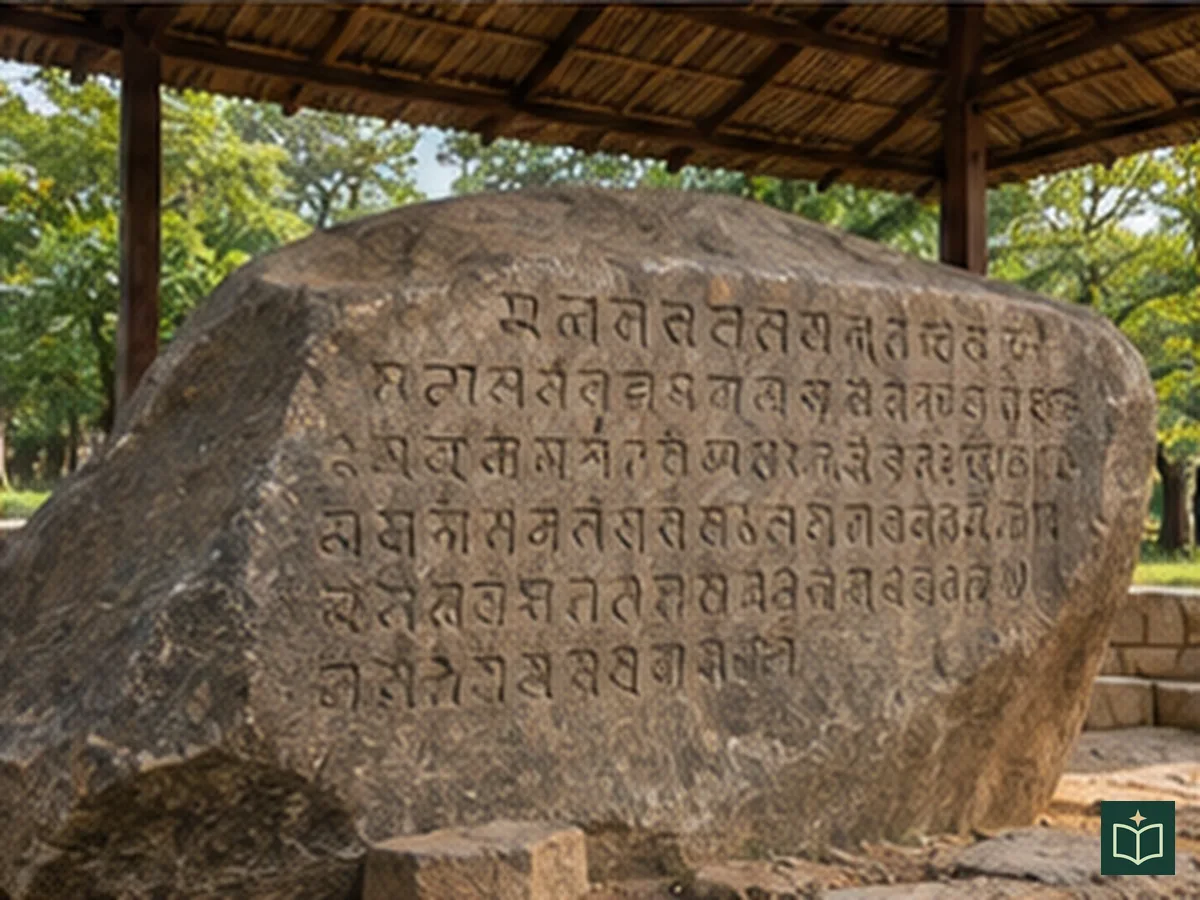
Ashoka’s inscriptions are among the earliest deciphered written records in India. They fall into groups: Major Rock Edicts cut into large boulders or rock faces, Minor Rock Edicts, and Pillar Edicts carved on tall, polished sandstone columns topped with animal capitals. Most are written in Prakrit, everyday languages of the time, in the Brahmi script. In the north-west they use the Kharosthi script, and near Kandahar, in Afghanistan, versions appear in Greek and Aramaic, so that local people could read them. Ashoka refers to himself as Devanampiya Piyadasi, “Beloved of the Gods, of gracious appearance”. The scattered locations roughly map the reach of his empire.
A forgotten king, rediscovered
After the Mauryan dynasty declined in the second century BC, Brahmi fell out of use and the inscriptions became unreadable. Ashoka survived mainly in Buddhist traditions from Sri Lanka and elsewhere, which celebrated him as an ideal Buddhist king who sent missionaries abroad, including, by tradition, his son Mahinda to Sri Lanka. In 1837 the British scholar James Prinsep deciphered the Brahmi script, and the edicts could be read again. Scholars then connected the author of the inscriptions with the Ashoka of the chronicles. Historians still debate how far his policies were applied in practice, and note that he kept his army and warned forest peoples against rebellion.
Why Ashoka still matters
Ashoka is often cited as an early example of a ruler who tried to govern by moral persuasion and religious tolerance. His symbols remain visible in modern India: the lion capital from the pillar at Sarnath is the national emblem, and the wheel from it, the Ashoka Chakra, appears on the national flag. His encouragement of Buddhism helped it spread across Asia. Historians are careful not to romanticise him: he was still an autocrat ruling a vast state, and his edicts were also a form of political communication. Yet the inscriptions remain remarkable as a direct voice from the third century BC, addressing ordinary subjects across a huge, diverse empire.
Sources & further reading
Figures are rounded and widely published; check the linked organisations for the latest editions. These organisations do not endorse this website.