Two species of the same genus
Almost all commercial coffee comes from two plants in the genus Coffea. Arabica, Coffea arabica, originated in the highlands of south-western Ethiopia. Robusta is the common name for Coffea canephora, native to the forests of central and western Africa. Both are shrubs or small trees whose red fruits, called cherries, usually hold two seeds. Those seeds are the coffee beans. Arabica is unusual among coffee plants because it has four sets of chromosomes and can pollinate itself. Robusta has two sets and needs pollen from another plant. That genetic difference shapes how each is bred, how uniform the crops are and how they respond to disease.
Where and how they grow
Arabica prefers cool conditions, typically between about 15°C and 24°C, which in the tropics means higher altitudes, often above 1,000 metres. It is relatively vulnerable to frost, heat and diseases such as coffee leaf rust. Robusta tolerates heat and humidity, grows well at lower altitudes and resists many pests, which is how it earned its name. It also tends to yield more coffee per tree. Brazil is the largest grower of Arabica, while Vietnam is the leading producer of Robusta. Arabica accounts for roughly 60% of world output and Robusta for most of the rest, although the share varies from year to year.
Inside the bean
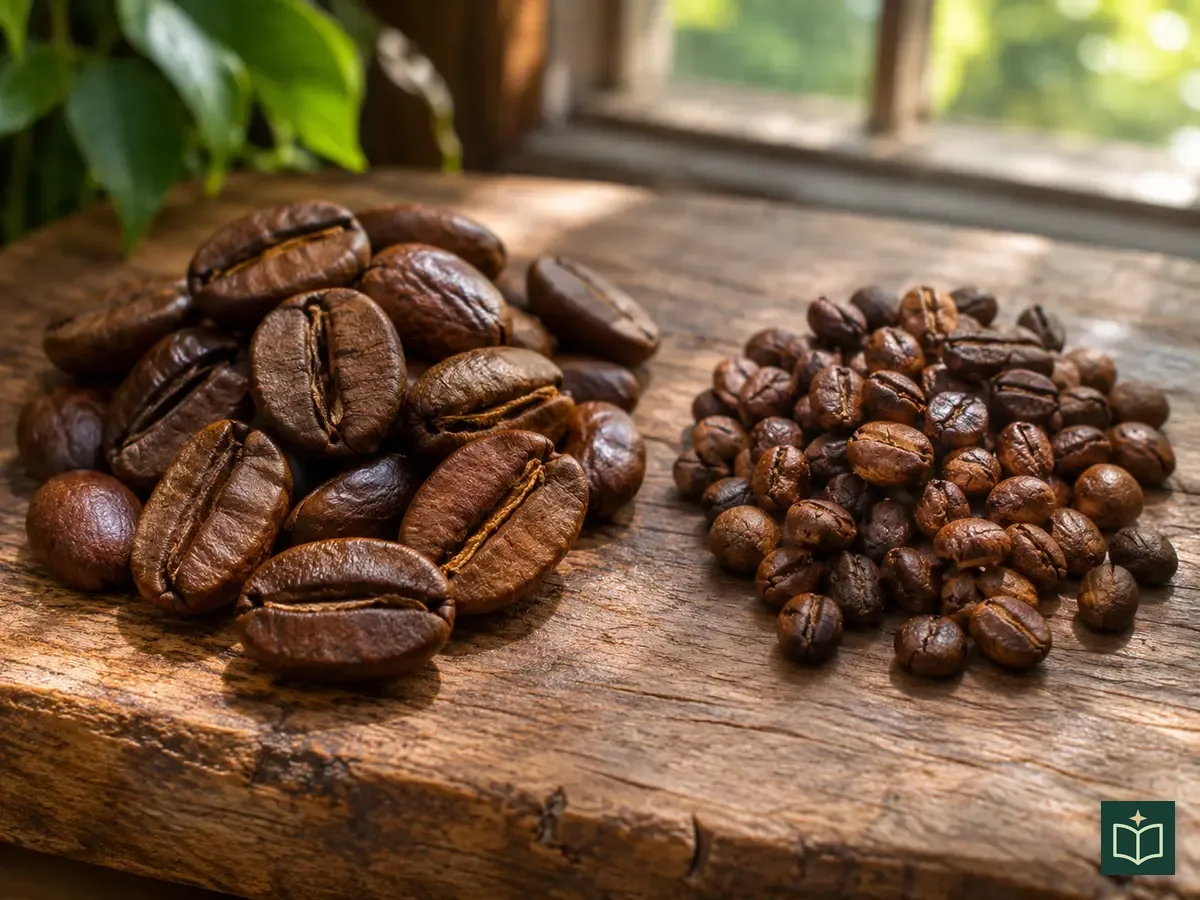
The chemistry explains the taste. Robusta typically contains around 2% or more caffeine by weight, compared with roughly 1 to 1.5% for Arabica. Caffeine is bitter and also acts as a natural defence against insects, which partly explains Robusta's resilience. Arabica contains more sugars and more lipids, which contribute to sweetness, aroma and a smoother body. Arabica beans are usually oval with a curved central crease, while Robusta beans are smaller, rounder and have a straighter crease. Neither is chemically superior; each has a profile that suits different drinks, roast levels and preparation methods, from filter coffee to espresso. Robusta also contains more chlorogenic acids, which add to its bitterness.
In the cup
Many speciality cafés across the Gulf advertise single-origin Arabica, served as pour-over or flat whites, because its fruit, floral and acidic notes come through clearly in lighter roasts. Robusta is common in instant coffee and in many espresso blends, where it adds body, bitterness and a thick crema. In Vietnam, strong Robusta brewed through a metal filter and sweetened with condensed milk is a national staple. Arabic coffee, or qahwa, is traditionally made from lightly roasted Arabica beans spiced with cardamom, a style recognised by UNESCO as part of the region's intangible cultural heritage. In many Gulf homes it is poured in small cups and served with dates as a gesture of hospitality.
Where they are similar
Despite their differences, the two follow the same path from farm to cup. Both are harvested as cherries, processed by washing or sun-drying, hulled into green beans, then roasted, ground and brewed. Both are traded internationally as commodities, with separate benchmark futures markets in New York for Arabica and London for Robusta. Quality varies widely within each species: a carefully grown and processed Robusta can taste better than a poor Arabica. Roasting also has a large influence, so dark roasts of either species can taste similar, with much of the origin character replaced by roast flavours. Price is a clearer difference: Arabica usually trades at a premium, though neither price is fixed.
Why it matters
Coffee supports the livelihoods of millions of smallholder farmers, mostly in tropical countries. Research suggests that rising temperatures could reduce the land suitable for Arabica, which has encouraged interest in heat-tolerant Robusta and in lesser-known species such as Liberica. Breeders are also crossing the two to combine Arabica's flavour with Robusta's hardiness. For drinkers, knowing the difference helps in reading labels, choosing a stronger or gentler cup, and understanding why prices change. The two species are less rivals than partners, each filling a different role in a global drink. This explainer is general information only, not investment advice about coffee markets.
Sources & further reading
Figures are rounded and widely published; check the linked organisations for the latest editions. These organisations do not endorse this website.