A buried library
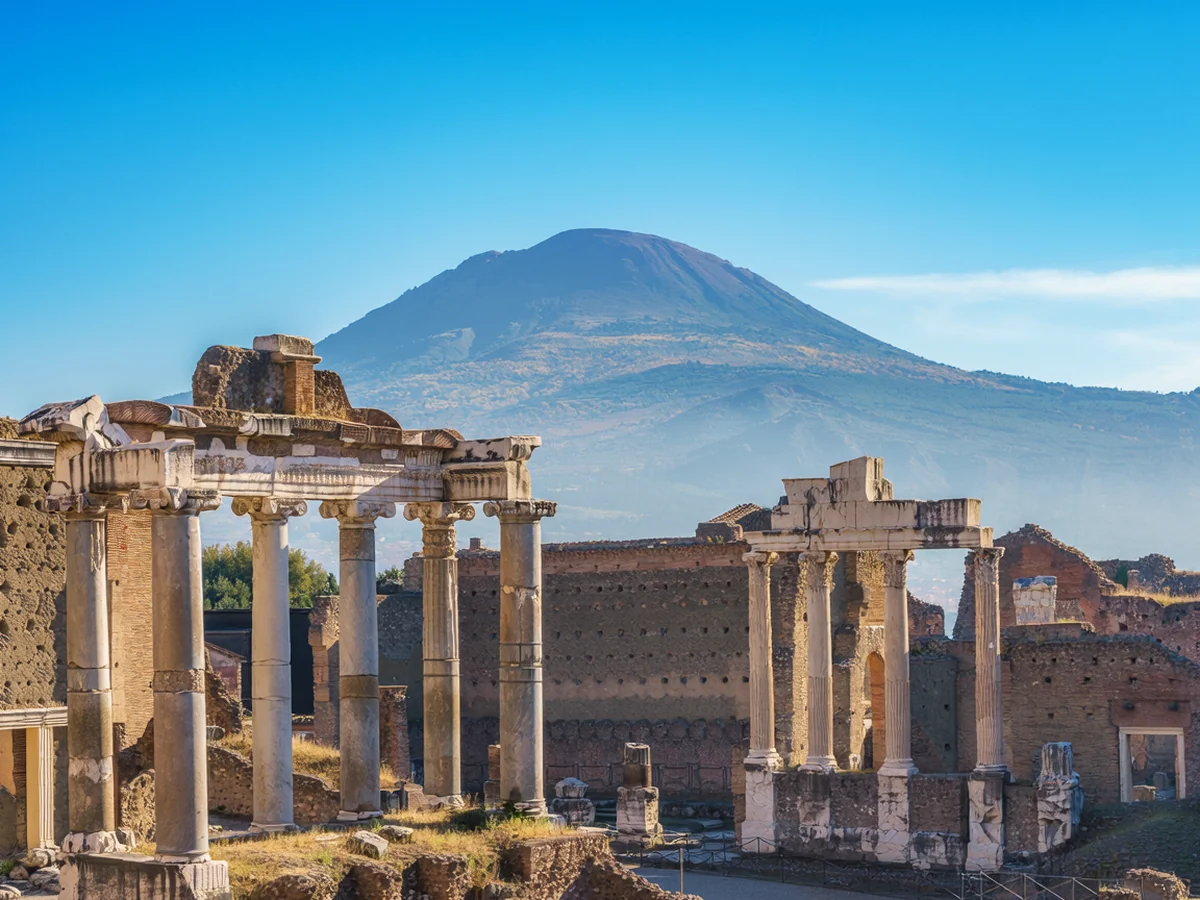
In AD 79, the eruption of Mount Vesuvius buried the Roman towns of Pompeii and Herculaneum. At Herculaneum, a luxurious villa, thought to have belonged to the family of Julius Caesar's father-in-law, contained a library of papyrus scrolls. The volcanic heat carbonised them into blackened lumps. Excavators discovered them in the 1750s. It is the only intact library known to survive from the ancient Greco-Roman world.
Too fragile to open
Early attempts to unroll the scrolls destroyed many of them, and those opened revealed mostly works by the Epicurean philosopher Philodemus. Hundreds of scrolls remained rolled up, too fragile to touch. The ink, made from carbon, is almost indistinguishable from the carbonised papyrus in ordinary X-ray scans, which made reading the text inside without opening the scrolls seem impossible for centuries.
Virtual unwrapping
Computer scientist Brent Seales of the University of Kentucky spent two decades developing techniques to read damaged manuscripts digitally. Scrolls are scanned with powerful X-rays at particle accelerator facilities, producing detailed 3D images. Software then traces the tightly wound layers of papyrus and virtually flattens them into readable surfaces. In 2016, his team used this approach to read a burned scroll from Ein Gedi in Israel containing part of the Book of Leviticus.
The Vesuvius Challenge
In March 2023, Seales, technology entrepreneur Nat Friedman and investor Daniel Gross launched the Vesuvius Challenge, offering prizes to anyone who could read text from the scans, which were released publicly. Thousands of people joined. Participants discovered that machine learning models could detect a subtle crackle-like texture where ink sat on the papyrus, even when the ink was invisible in the scans, revealing letters.
The first word
In October 2023, Luke Farritor, a 21-year-old student, used a machine learning model to find the first word read from inside an unopened Herculaneum scroll: porphyras, meaning purple in ancient Greek. Youssef Nader, a graduate student in Berlin, independently found the same word. The discovery made headlines worldwide and showed that the approach worked.
The grand prize
In February 2024, the challenge awarded its 700,000 dollar grand prize to Youssef Nader, Luke Farritor and Julian Schilliger, who together read more than 2,000 characters across 15 columns of text from one scroll. Scholars identified it as a previously unknown text, probably by Philodemus, discussing pleasure and the senses, including music and the taste of capers. It was the first time a substantial passage had been read from inside an unopened scroll.
A title revealed
In 2025, researchers using improved scans and AI identified the title and author of another sealed scroll: a work by Philodemus titled On Vices. Being able to read titles, which were often written at the end of scrolls, helps scholars identify works and prioritise further study. The team has continued to improve automated methods to make reading many more scrolls faster and less dependent on manual work.
What could be inside
Scholars hope the scrolls might contain lost works of ancient literature, philosophy and history, possibly including texts by famous authors that survive only in fragments or not at all. Hundreds of scrolls held in a library in Naples remain unread, and archaeologists believe more scrolls may still lie buried in unexcavated parts of the villa. AI could make it possible to read an entire ancient library.
AI and heritage
The Vesuvius Challenge is part of a wider use of AI in archaeology and history. AI helps decipher damaged inscriptions, translate ancient languages, reconstruct broken pottery, identify archaeological sites in satellite images and digitise and search historical archives. In 2022, DeepMind's Ithaca model helped historians restore and date damaged ancient Greek inscriptions. These tools allow scholars to explore the past in new ways.
Why it matters
The Herculaneum scrolls show how AI can recover knowledge thought lost forever. The project also demonstrated the power of open science: by releasing data publicly and offering prizes, it drew talented people from around the world, including students, into solving a centuries-old problem. It is a reminder that AI's benefits extend beyond the economy to culture, history and our understanding of who we are. More of the ancient world may soon speak again.
Sources & further reading
- Vesuvius Challenge · 2023 Grand Prize awarded ↗
- Nature · Ancient scroll mystery solved: the first words from a charred Herculaneum papyrus (2023) ↗
- Nature · Restoring and attributing ancient texts using deep neural networks (Ithaca, 2022) ↗
Interpretations of the texts continue to be refined by scholars. Photograph: original AI-generated illustration (Adobe Firefly). Reference organisations do not endorse this website.