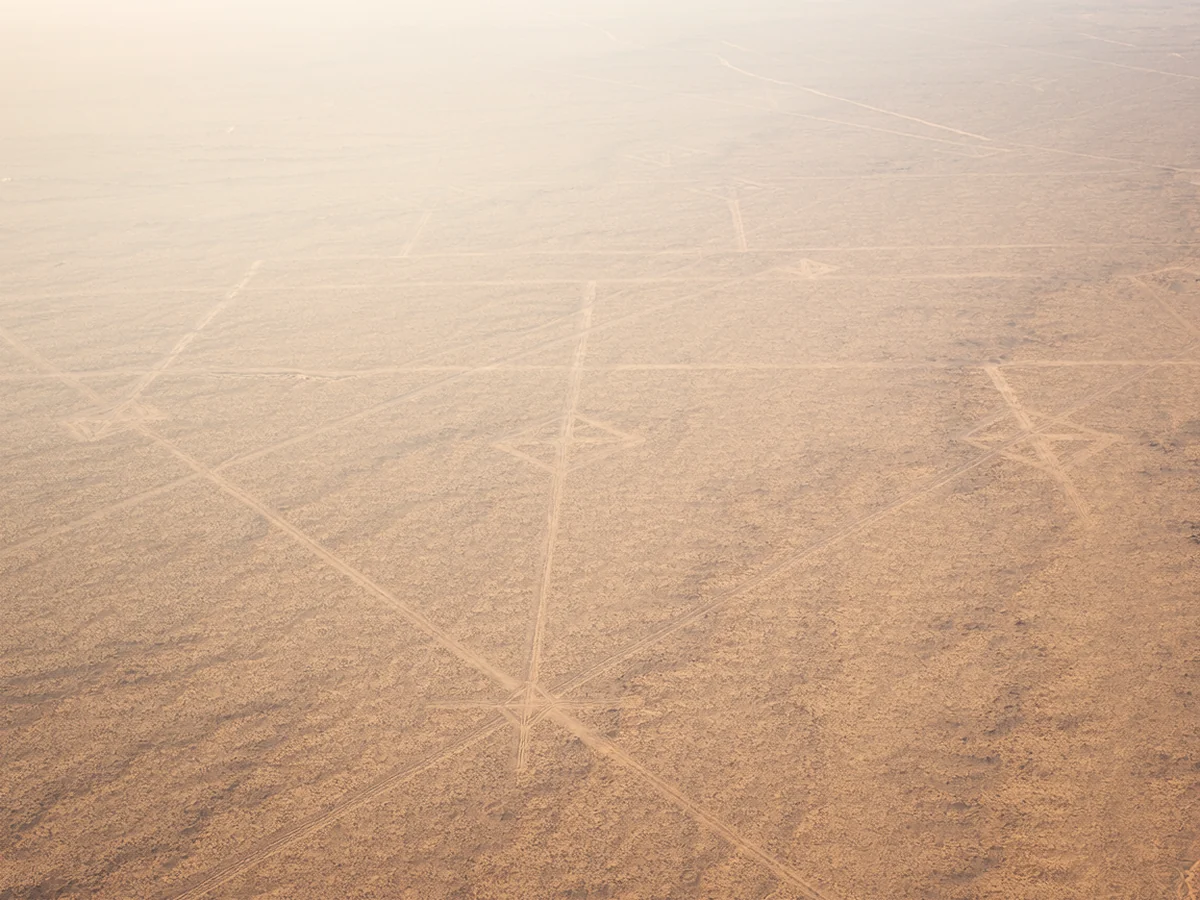
Ancient desert art
Between about 500 BC and AD 500, people of the Nazca culture created enormous designs on the desert plateau of southern Peru by moving dark surface stones to reveal lighter ground beneath. The best-known figures, such as a hummingbird, a monkey and a spider, can be hundreds of metres long and are best seen from the air. The Nazca Lines were designated a UNESCO World Heritage Site in 1994.
Hard to find
Many of the figures are faint, eroded or hidden among countless natural markings and modern tracks. Smaller figures, a few metres across, are especially hard to spot in aerial images. Before 2022, archaeologists had identified around 430 figurative geoglyphs after nearly a century of research. Searching the vast area by eye, image by image, was slow and painstaking, and many figures were likely being missed.
Teaching AI to look
A team led by Masato Sakai of Yamagata University in Japan, which has studied the Nazca Lines for many years, worked with IBM researchers to train an AI model on images of known geoglyphs. The model scanned high-resolution aerial photographs of the region and flagged areas that might contain figures. Because known examples were relatively few, the researchers used techniques to make the most of limited training data.
Checking on the ground
The AI produced many candidate locations, which the team prioritised and then visited during fieldwork between September 2022 and February 2023. Over about six months, they confirmed 303 new figurative geoglyphs, nearly doubling the number known. The researchers reported in the journal PNAS in 2024 that the AI-assisted approach was dramatically faster than traditional surveys, which might have taken decades to find as many.
What they found
Most of the new figures were relief-type geoglyphs, made by removing stones to create outlines, and averaged about nine metres across, much smaller than the famous giant line figures. Many depicted humans or domesticated animals, and some showed decapitated heads. They were found mainly near footpaths, suggesting they were meant to be seen by people walking past, unlike the giant figures that line ritual pathways and may have been used in community ceremonies.
New insights
The researchers proposed that the two types of figures had different purposes. The large line-type geoglyphs, featuring wild animals, were probably made for community rituals, while the smaller relief figures along paths may have conveyed information or stories to travellers. These insights help archaeologists understand how the Nazca people used the landscape and what their images meant, questions that have puzzled researchers for decades.
Protecting heritage
The Nazca geoglyphs are threatened by urban expansion, agriculture, mining, illegal settlements and vehicles driving across the desert. Identifying where figures are located helps authorities protect them. In 2018, a lorry driver damaged several lines after driving onto the protected area. Mapping figures with AI allows heritage managers to plan protection measures before more are lost.
AI in archaeology
The Nazca project is part of a wider trend. Archaeologists use AI to analyse satellite images and lidar scans, which can see through vegetation, to find ancient settlements, roads and burial mounds in forests, deserts and farmland. AI has helped reveal Maya cities hidden under jungle in Mexico and Guatemala and map ancient sites across the Middle East. In the UAE and wider Arabian Peninsula, remote sensing helps locate archaeological sites in vast deserts.
Humans still essential
The researchers stressed that AI does not replace archaeologists. The model produced many false candidates, and only fieldwork and expert judgment could confirm real figures and interpret their meaning. The most effective approach combined AI's ability to scan vast areas quickly with archaeologists' knowledge of the landscape and culture. AI made the search far more efficient, allowing experts to focus their time where it mattered most.
Why it matters
Ancient heritage is an irreplaceable record of human history, and much of it remains undiscovered or under threat. AI is helping archaeologists find and protect sites faster than ever, revealing new details about past civilisations. The Nazca discoveries show how combining modern technology with traditional expertise can deepen our understanding of the people who lived thousands of years ago, and how much remains to be found.
Sources & further reading
- PNAS · AI-accelerated Nazca survey nearly doubles the number of known figurative geoglyphs (2024) ↗
- IBM Research · AI helps discover new Nazca Lines ↗
- UNESCO · Lines and Geoglyphs of Nasca and Palpa ↗
Totals are approximate as research continues. Photograph: original AI-generated illustration (Adobe Firefly). Reference organisations do not endorse this website.