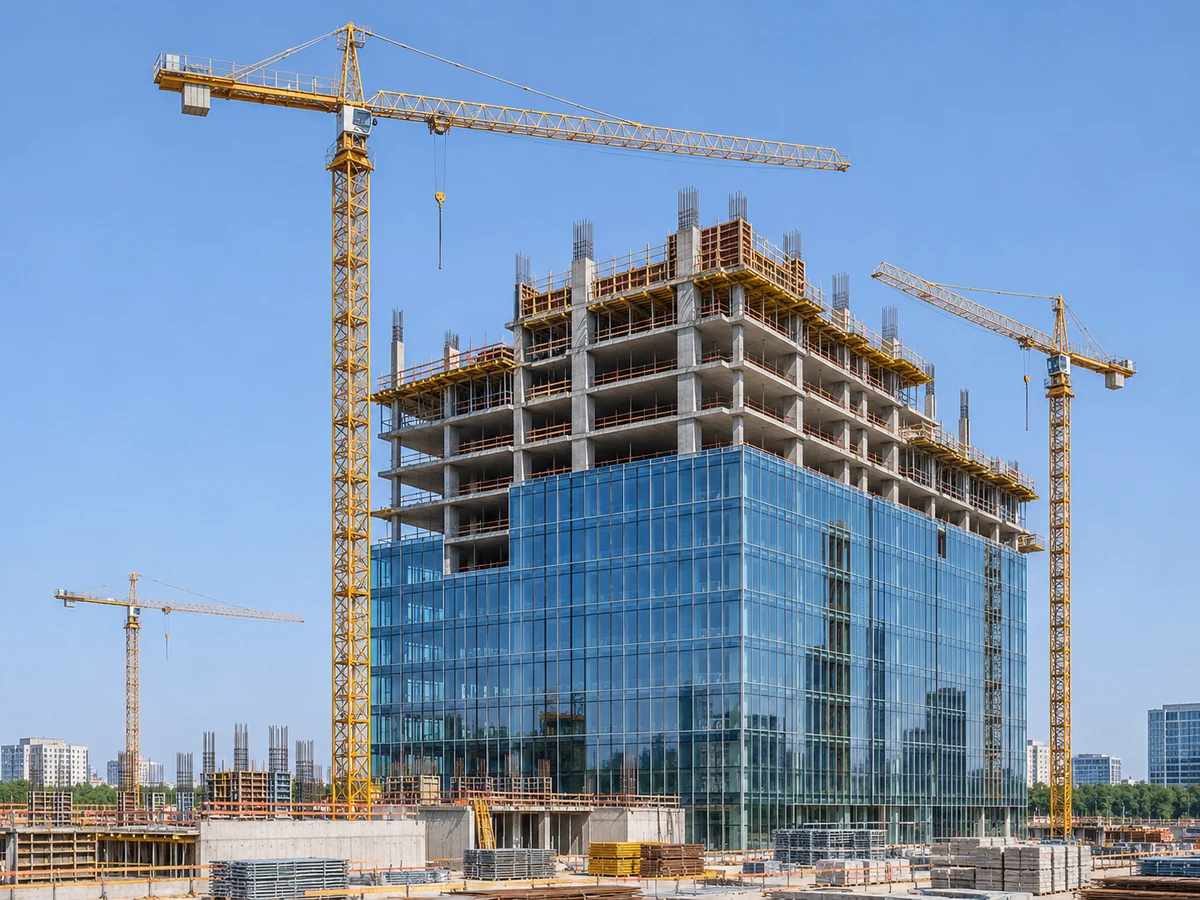
A big, slow-to-change industry
Construction accounts for a large share of global economic activity and employment, yet productivity has grown more slowly than in many other industries. Projects are frequently delayed and over budget, and the sector has a significant environmental footprint. The UN Environment Programme reports that buildings and construction account for a large share of global energy-related carbon emissions. Digital tools, including AI, offer ways to improve.
Generative design
Architects and engineers use generative design software, in which they set goals and constraints, such as floor area, budget, sunlight, structural requirements and energy use, and AI generates many possible designs that meet them. Designers can then compare options and choose the best. AI can also simulate how a building will perform, such as how much energy it will use or how air will flow, early in the design process when changes are cheap.
Planning projects
Construction projects involve thousands of tasks, suppliers and workers. AI tools analyse records of past projects to improve cost estimates and schedules, predict delays and identify risks, such as supply shortages or weather problems. They can scan contracts and specifications to flag issues and automatically check designs for conflicts, such as a pipe running through a beam, before construction begins. This can save time and money.
Watching the site
On construction sites, drones capture aerial images and 3D scans, which AI compares with digital building models to track progress and detect deviations. Cameras with computer vision can quickly identify safety hazards, such as workers without helmets or harnesses, or people entering dangerous areas, and send alerts. These technologies help managers oversee large sites and improve safety in an industry with high accident rates.
Robots on site
Robotics is slowly entering construction. Machines can lay bricks, tie reinforcing steel, drill holes in ceilings and print concrete structures layer by layer. Dubai has promoted 3D printing in construction and set goals for a share of new buildings to use the technology. AI helps robots navigate changing site conditions. Most construction work still depends on skilled human labour, but automation is expected to grow as labour shortages persist.
Smarter buildings
Once built, buildings consume energy for decades. AI-powered building management systems control heating, cooling, lighting and ventilation based on occupancy, weather and energy prices, cutting energy use. In the Gulf, where air conditioning uses large amounts of electricity, smart controls can make a big difference. AI also predicts when lifts, pumps and other equipment need maintenance, reducing breakdowns.
Valuing property
In real estate, automated valuation models use AI to estimate property prices based on location, size, features, recent sales and market trends. Online property platforms use AI to recommend listings, detect fraudulent adverts and generate descriptions. Dubai's real estate market, one of the most active in the world, uses digital platforms and data extensively, and the Dubai Land Department has introduced smart services for property transactions.
Digital twins of cities
Some cities are building digital twins, detailed virtual models updated with real-time data, to plan development, manage infrastructure and test scenarios such as new roads or flood defences. AI analyses the data to support decisions. Dubai and Abu Dhabi have developed advanced geographic information and digital city platforms, supporting urban planning, utilities and transport in rapidly growing metropolitan areas.
Challenges
Adopting AI in construction faces obstacles: fragmented supply chains with many small firms, limited digital skills, data that is scattered or incomplete, and the high cost of new technology. Each site is different, making automation harder than in factories. Questions of liability also arise if AI-assisted designs or decisions go wrong. Industry training, government requirements and standards for digital construction are helping to address these issues over time.
Why it matters
Buildings and infrastructure shape how people live and work and have a huge impact on the environment. AI could help the construction industry deliver projects more safely, faster and with less waste, and help buildings use less energy. For fast-growing cities like Dubai and Abu Dhabi, where construction is a major economic activity, these improvements could have large benefits for residents and the economy, from lower energy bills to safer construction sites.
Sources & further reading
- UNEP · Global Status Report for Buildings and Construction ↗
- McKinsey · Reinventing construction: a route to higher productivity ↗
- Dubai Land Department · Smart services ↗
A general overview of industry practice. Photograph: original AI-generated illustration (Adobe Firefly). Reference organisations do not endorse this website.