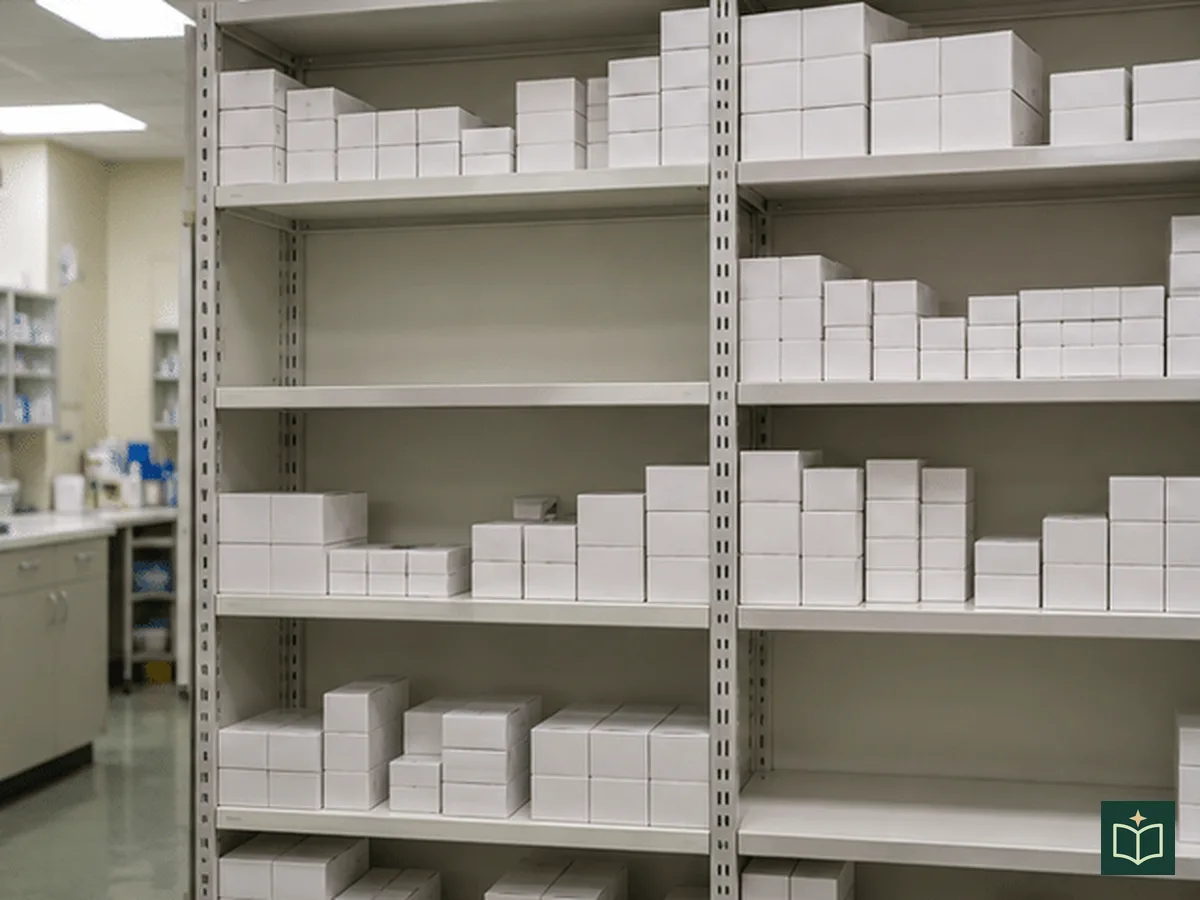
A global supply chain
Most medicines pass through a long chain before reaching a pharmacy. The active pharmaceutical ingredient, the chemical that does the work, is usually manufactured in one place, often in India or China, which together supply a large share of the world’s ingredients for generic drugs. It is then formulated into tablets, capsules or injections, sometimes in another country, packaged and distributed. Each step may depend on a small number of suppliers. Global trade keeps prices low, but it means a fire, a contamination finding, an export restriction or a shipping delay at one point can ripple outwards to patients in many countries at once.
Thin margins, few makers
Many of the medicines most often in short supply are old, off-patent generics such as antibiotics, anaesthetics and cancer drugs given by injection. Because many companies can make them, competition and bulk purchasing push prices down. Contracts are often awarded to whoever offers the lowest price, sometimes to a single supplier. With slim margins, manufacturers have little incentive to invest in spare capacity or modern plants, and some leave the market altogether. When only one or two producers remain, any interruption leaves no one able to fill the gap quickly. Sterile injectable medicines are especially vulnerable because they are complex to make.
Quality failures and demand spikes
Shortages are frequently triggered when a factory is found to have quality problems. Regulators, such as the US Food and Drug Administration, may halt production until contamination or record-keeping failures are fixed, removing a large share of supply overnight. Sudden surges in demand are another cause. In the winter of 2022 to 2023, a rise in childhood infections in Europe and North America left pharmacies short of some antibiotic formulations, including liquid amoxicillin. From 2022, soaring demand for semaglutide, used for diabetes and weight loss, produced shortages that lasted until production expanded. Raw-material shortages and packaging problems can also halt supply.
How regulators respond
Health authorities treat shortages as a public-health issue. In the United States, manufacturers must notify the FDA in advance, normally six months, of discontinuations or interruptions of certain medicines, and the agency publishes a shortage database. In Europe, the European Medicines Agency coordinates monitoring and, from 2023, compiled a list of critical medicines whose supply must be protected. Tools include allowing temporary imports of versions approved elsewhere, extending expiry dates after testing, approving alternative suppliers quickly and asking manufacturers to increase output. Regulators across the Gulf, like others, can authorise alternative sources and guide pharmacists on substitutions when products run short.
Longer-term fixes
Governments are debating structural solutions. Options include paying more for reliability rather than lowest price alone, requiring multiple suppliers in public contracts, building strategic stockpiles of essential medicines, and encouraging manufacturing closer to home. Each carries trade-offs: higher prices, storage costs and the risk that stockpiles expire unused. Some countries now require manufacturers to hold minimum stocks. International coordination also matters, because one country hoarding supplies can deepen shortages elsewhere. The World Health Organization’s list of essential medicines helps governments decide which products to prioritise, while better data on where ingredients are made helps identify weak points before they fail.
What patients should do
If your medicine is listed as in short supply, do not stockpile, which makes shortages worse for others, and do not stop a prescribed treatment on your own. Speak to your pharmacist, who may be able to source a different brand, strength or form, or to your doctor, who can consider a suitable alternative. When reading shortage headlines, check whether the problem affects a specific formulation, such as a liquid version for children, or the medicine in every form. Note whether the cause is a single factory, a demand spike or a wider market failure. Shortages linked to one plant often resolve faster than those rooted in economics.
Sources & further reading
- US FDA · Drug shortages ↗
- European Medicines Agency ↗
- World Health Organization · Essential medicines ↗
Figures are rounded and widely published; check the linked organisations for the latest editions. These organisations do not endorse this website.