The question being asked
After a heatwave, flood or drought, people often ask whether climate change caused it. Scientists usually reframe the question. Weather extremes have always happened, so the useful issue is how much human-caused warming changed the chances or the severity of a particular event. This field, known as extreme event attribution, has grown rapidly since the early 2000s. A landmark 2004 study of the European heatwave of 2003 concluded that human influence had at least doubled the risk of such a hot summer. Today, groups such as World Weather Attribution publish rapid analyses within days or weeks of an event, alongside slower, peer-reviewed studies.
How the method works
Researchers first define the event precisely: for example, the highest three-day temperature in a region, or rainfall totals over a week. They then examine observations to see how often such events have occurred historically and how that has changed as the world warmed. Next, they run climate models twice: once representing today’s climate, and once representing a world without the greenhouse gases added by human activity, roughly 1.1 to 1.3°C cooler. Comparing how often the event occurs in each version gives an estimate of the change. Results are combined across several models and data sets, and only models that reproduce the region’s climate well are used.
Reading the numbers
Findings are usually expressed in two ways. A probability ratio says how many times more likely the event has become. If a heatwave would have been expected once in 100 years in the pre-industrial climate but now occurs about once in 10 years, it has become about 10 times more likely. Equivalently, about 90 per cent of the present-day risk of such an event can be attributed to warming. An intensity statement says how much stronger the event is, such as 2°C hotter or 10 per cent wetter. Both come with uncertainty ranges, and the lower end of the range is often the most robust part of the conclusion.
Why confidence varies
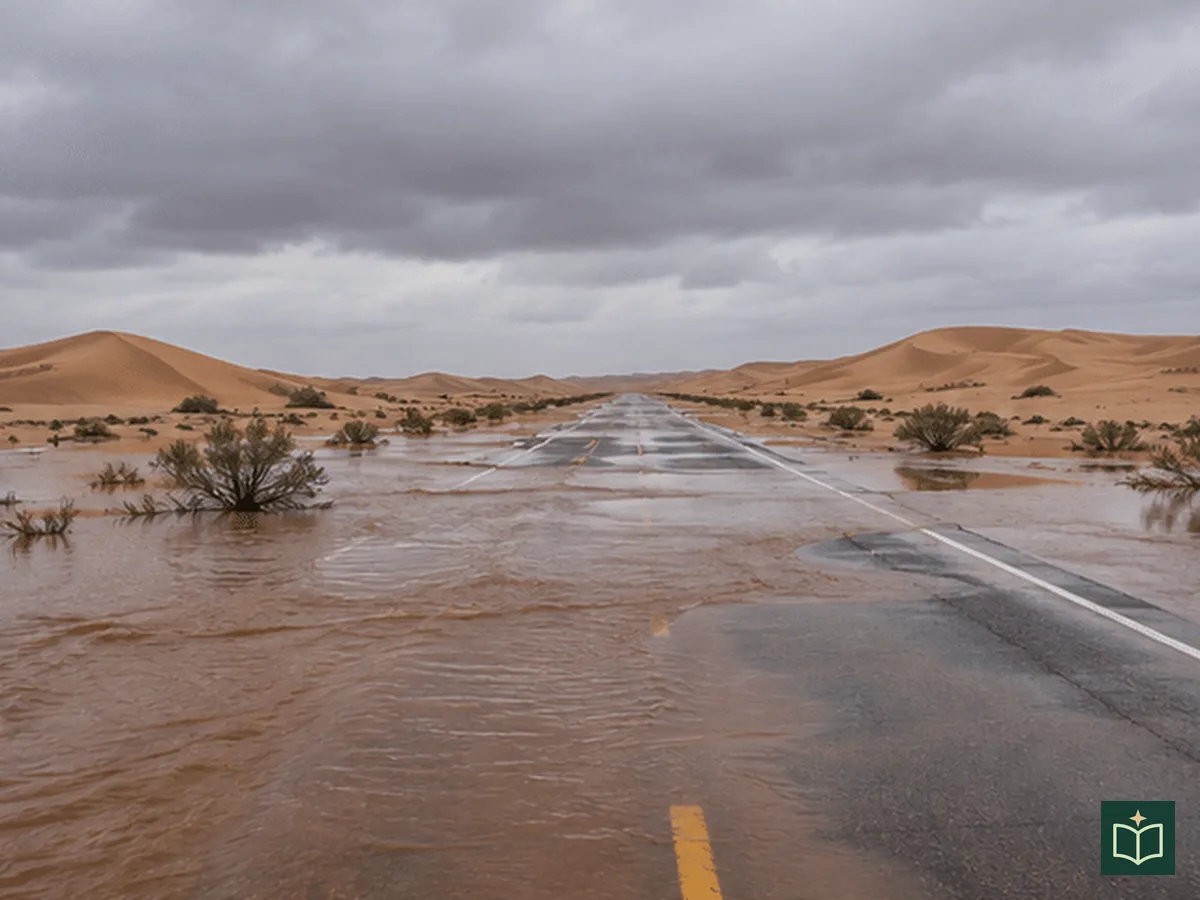
Attribution is most confident for heat, because the link between warming and higher temperatures is direct and well observed. Heavy rainfall comes next: a warmer atmosphere holds about 7 per cent more moisture for every 1°C of warming, so intense downpours tend to become heavier, though local weather patterns complicate the picture. Droughts, wildfires and tropical cyclones involve several factors, such as land use, soil moisture and natural variability, so results are less certain. Data matters too. When record rain hit the UAE in April 2024, scientists noted that desert rainfall records are short and that models handle such rare downpours poorly, which limits how firmly any role for warming can be stated.
Common misunderstandings
A result saying an event was made ten times more likely does not mean climate change caused 90 per cent of the damage. Damage also depends on where people live, how buildings and drains are designed, and how well warnings work. Nor does an inconclusive study mean climate change played no role; it may mean the data or models were not good enough to tell. Some events are found to have been made less likely, such as certain cold extremes. Attribution also does not predict when the next event will happen. It describes how the odds have shifted, which helps planners, insurers and governments prepare for a changed baseline.
Reading an attribution headline
When a headline says climate change made an event more likely, look for the size of the effect and the uncertainty range. Check whether the study is a rapid analysis or a peer-reviewed paper, and whether it explains which part of the event was assessed: temperature, rainfall or the impact. Note what else contributed, such as natural patterns like El Niño, or human factors like urban drainage. A finding stated with confidence for heat is not automatically transferable to a storm. The broad conclusion, confirmed by the IPCC in 2021, is that human-caused warming has made some extremes more frequent or intense; individual studies fill in the detail.
Sources & further reading
- World Weather Attribution ↗
- IPCC · Sixth Assessment Report, Working Group I ↗
- Met Office · Climate attribution ↗
Figures are rounded and widely published; check the linked organisations for the latest editions. These organisations do not endorse this website.