Instructions to the government
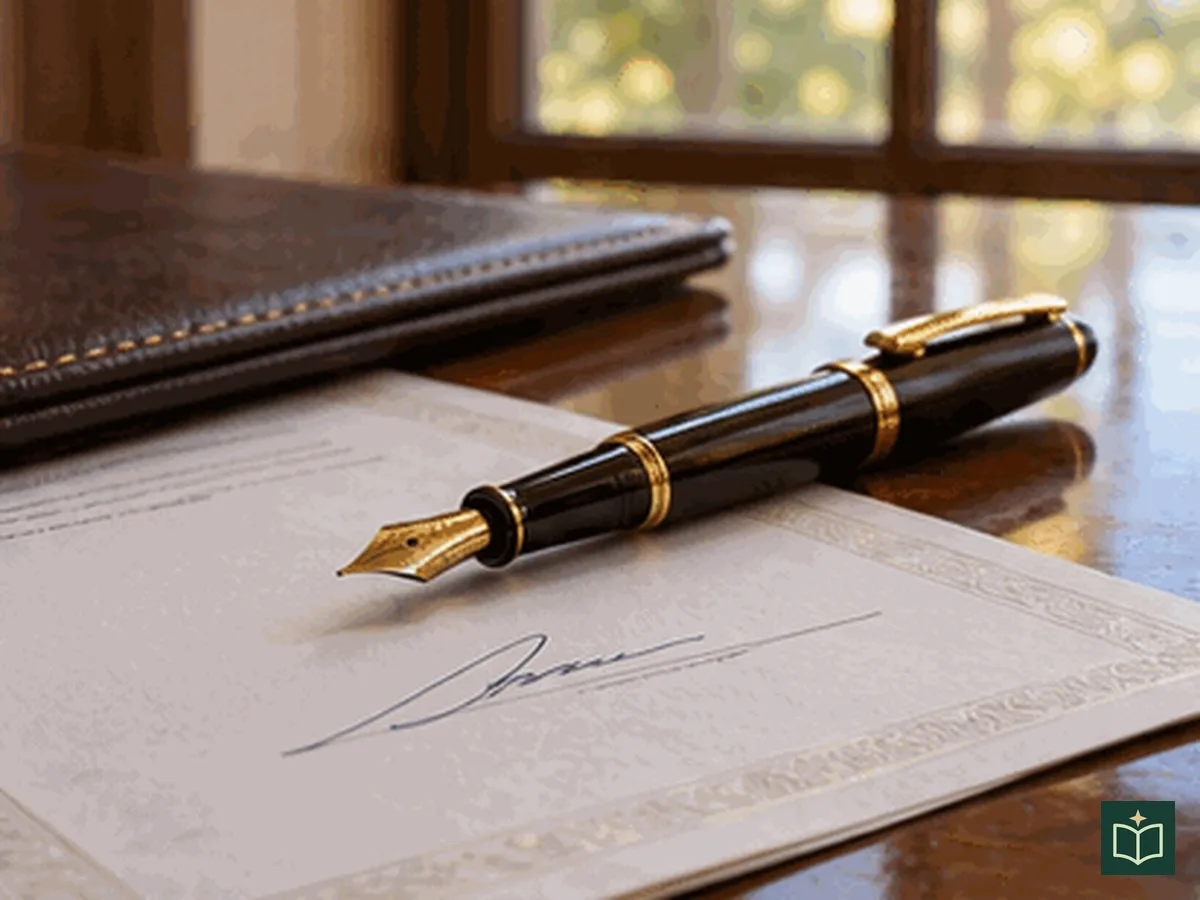
An executive order is a written directive from a head of government or state, most familiar from the United States. It instructs federal agencies how to use their powers: what to prioritise, how to implement laws and how to manage the government's own workforce and operations. Orders can create advisory bodies, set rules for federal contractors, reorganise offices or change how laws are enforced. American executive orders are numbered and published in the Federal Register, the government's official journal. Presidents also use other instruments, such as memoranda and proclamations, which can have similar effects. Headlines often treat all of them as executive orders, though they differ in form.
Where the power comes from
An executive order does not create power on its own. It must rest either on authority given to the president by the Constitution, such as command of the armed forces or the duty to see that laws are faithfully executed, or on authority delegated by Congress through a statute. An order that conflicts with a law passed by Congress is generally invalid. That principle was tested in 1952, when President Harry Truman ordered the seizure of steel mills during a strike in the Korean War. In Youngstown Sheet & Tube Co. v. Sawyer, the Supreme Court ruled that he lacked the authority, and the mills were returned.
Numbers over time
Use of executive orders has varied greatly between presidents. Franklin D. Roosevelt, who governed through the Depression and the Second World War over more than 12 years, signed about 3,700, far more than any other president. Recent presidents have each signed from roughly one hundred to a few hundred, though the pace often rises sharply in the first weeks after taking office, when new leaders reverse their predecessor's orders and signal priorities. Counting orders says little about their significance, however. Some are routine, such as closing federal offices for a holiday, while a single order on immigration, trade or climate policy can affect millions of people and generate years of litigation.
Decrees elsewhere
Many countries give leaders similar instruments under different names. France's government issues décrets to implement laws, and with parliament's authorisation can adopt ordonnances on matters normally reserved to legislation, which parliament must later ratify. Russian presidents issue decrees with wide reach. In the United Kingdom, Orders in Council made by the monarch on ministers' advice carry out both statutory and prerogative powers. In the UAE, the constitution allows the President, with the Council of Ministers, to issue federal decree-laws when urgent legislation is needed between sessions of the Federal Supreme Council; major laws, including the 2021 personal data protection law, have been enacted as federal decree-laws, with full legal force.
How orders are undone
Because executive orders depend on one person's signature, they are vulnerable in several ways. A successor can revoke or amend them with a new order, which is why policies made this way often swing back and forth between administrations. Courts can block orders that exceed legal authority or violate constitutional rights, sometimes within days, through temporary injunctions while cases proceed. Congress can pass a law that overrides an order or refuses to fund its implementation, though a president can veto such a law. By contrast, policies written into legislation are harder to reverse, because changing them requires passing another law through both chambers and securing the president's signature.
Reading the headline
When a leader signs an executive order, ask what legal authority it cites and what it actually directs agencies to do. Many orders launch reviews or set goals rather than change rules immediately, so the effect may come months later through regulations. Check whether lawsuits have been filed and whether any court has paused the order. Consider how easily a future leader could reverse it. Compare the order with legislation on the same subject: an order cannot raise taxes or appropriate money on its own in the American system. Finally, note the difference between signing ceremonies and implementation, which depends on agencies, budgets and the courts.
Sources & further reading
- Federal Register · Executive orders ↗
- The American Presidency Project (UC Santa Barbara) ↗
- US National Archives · Federal Register ↗
Figures are rounded and widely published; check the linked organisations for the latest editions. These organisations do not endorse this website.